
Choosing a solid polycarbonate sheet comes down to three decisions: thickness (set by span, load and impact risk), UV protection (single- or double-sided co-extrusion) and color (clear for maximum light, tinted for glare and heat control). Get these three right and a solid PC sheet will outlast glass and acrylic in almost every glazing and guarding job. This guide gives you the numbers to make each decision quickly.
All of these are covered in our range — our solid polycarbonate range, the 2026 specifications, and the 2026 selection guide — so you can move from specification to ordering on one page.
What is solid polycarbonate sheet
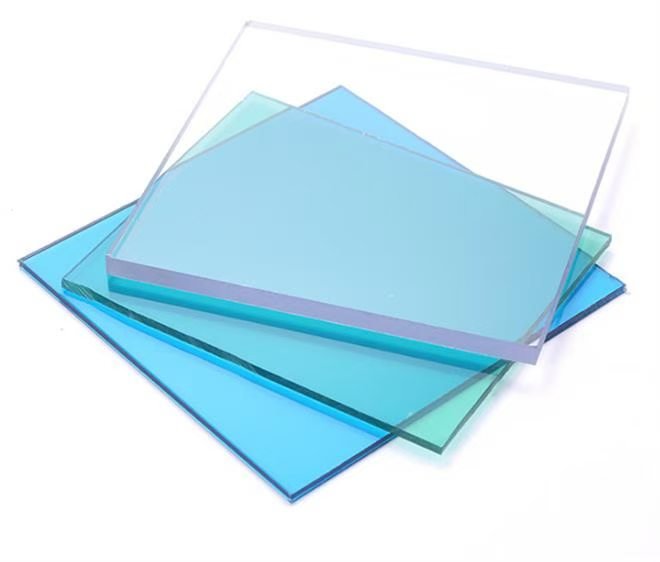
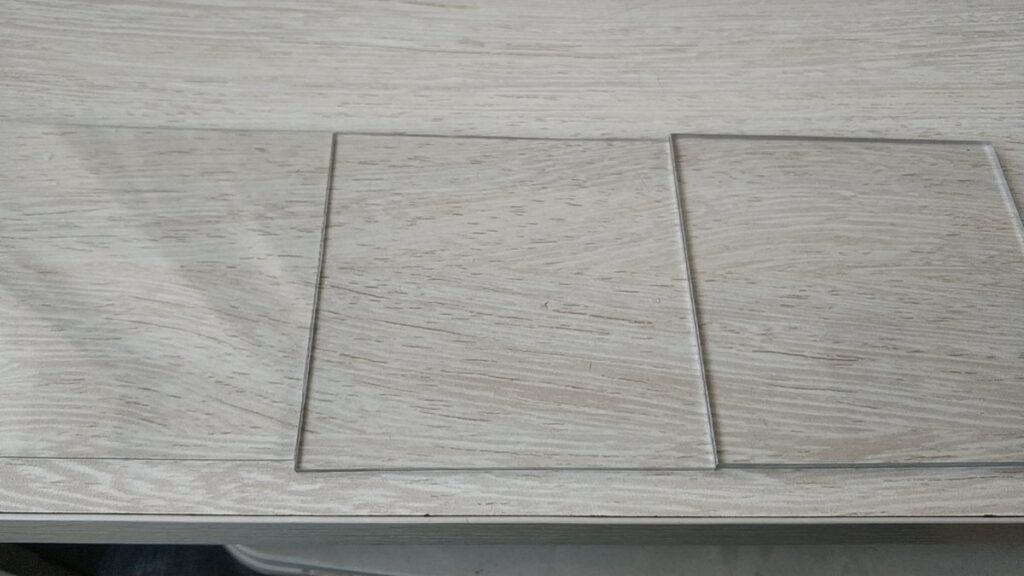
Solid polycarbonate (PC) sheet is a monolithic, non-hollow glazing panel. Unlike multiwall sheet with its air channels, a solid sheet is one homogeneous layer — which is why clear grades transmit up to 89% of light and deliver 200–250 times the impact strength of glass. It will not shatter into sharp fragments, and at roughly half the weight of glass it is far easier to handle and frame.
Key features
- Impact resistance: 200–250× glass and about 30× acrylic
- Light transmission: up to 89% in clear grades
- UV protection: co-extruded UV layer, single- or double-sided
- Fire performance: UL94 V-0 to V-2, B1
- Service temperature: −40 °C to +120 °C
- Weight: 1.2–7.2 kg/m² depending on thickness
Technical specifications
| Property | Range |
|---|---|
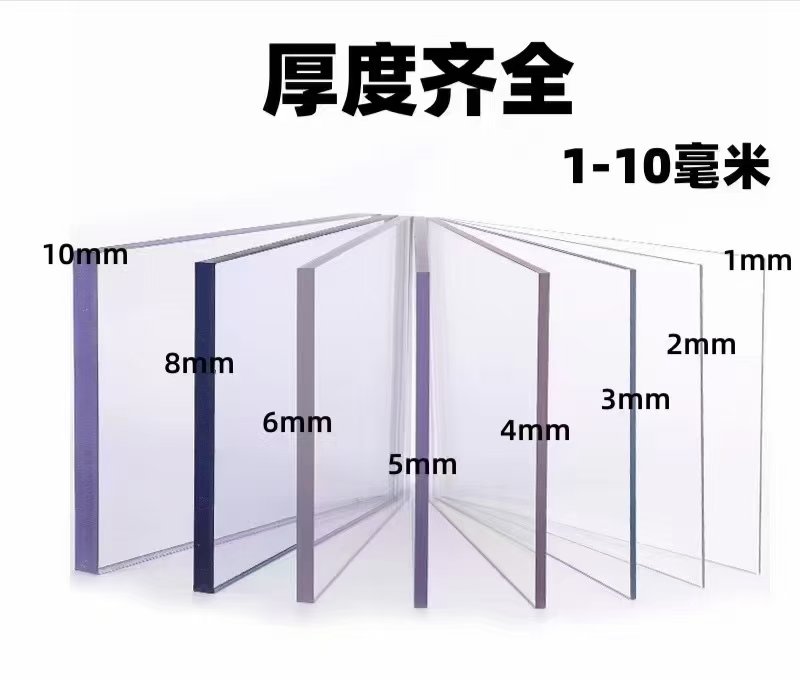
| Thickness | 1, 1.5, 2, 3, 4, 5, 6, 8, 10, 12, 15, 20, 25, 30 mm |
| Standard width | 1220 / 1560 / 1820 / 2100 mm (custom up to 2500 mm) |
| Length | 6 m standard; custom 1–12 m; rolls up to 30 m |
| Weight | 1.2–7.2 kg/m² |
| Light transmission | up to 89% (clear) |
| Impact strength | 200–250× glass |
| Fire rating | UL94 V-0~V-2, B1 |
| Colors | clear, bronze, lake blue, grass green, opal, red, orange, grey, black, custom |
How to choose the right thickness
Thickness is the first and most important choice. Use the table below as a starting point, then confirm against the wind or snow load and the span of your installation.
| Thickness | Typical applications |
|---|---|
| 1–3 mm | Light boxes, signage faces, indoor displays, lamination |
| 4–6 mm | Machine guards, bus shelters, canopy glazing, skylights, pool fencing |
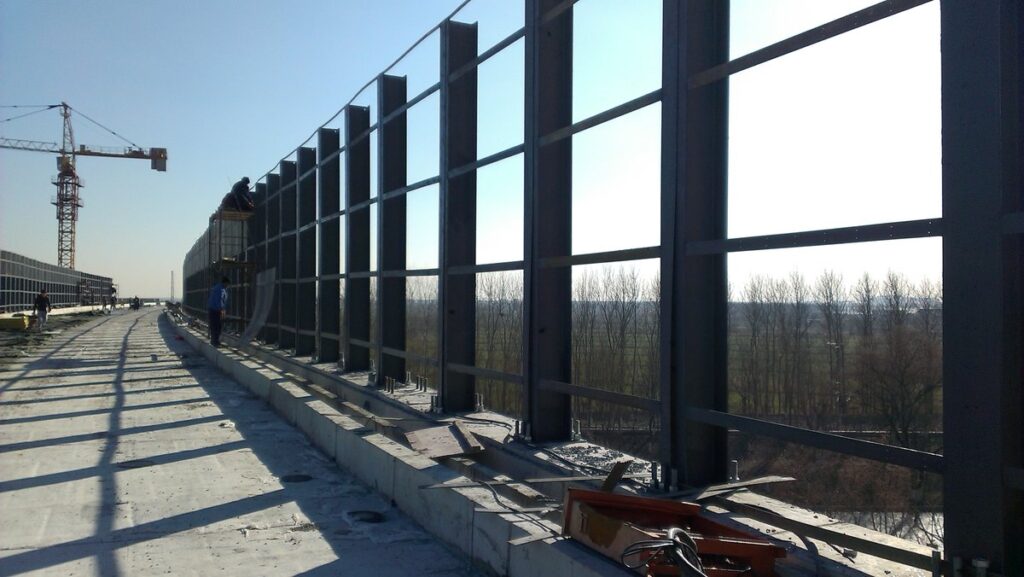
| 8–12 mm | Sound barriers, security glazing, walkway covers, large skylights |
| 15–30 mm | Anti-vandal and forced-entry glazing, ballistic-grade shielding |
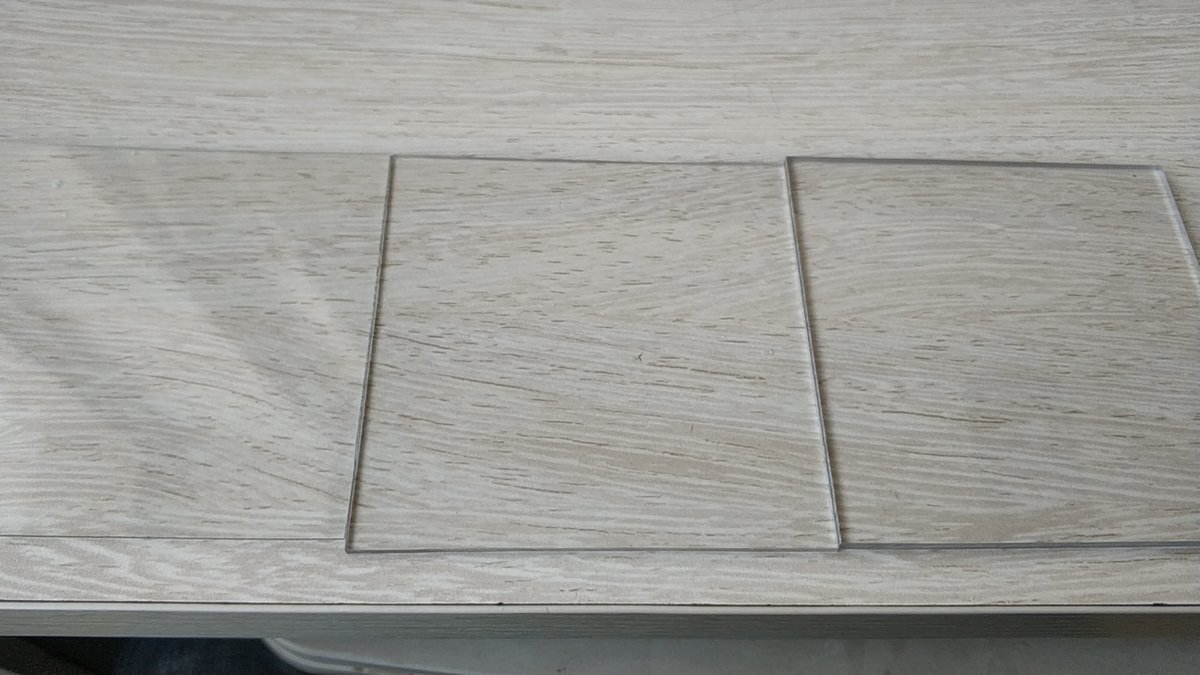
A thinner sheet costs less and transmits more light, but spans shorter and flexes more. A thicker sheet raises impact and load capacity and cuts deflection — the reason sound barriers and security glazing rarely go below 8 mm.
UV coating and color
Always specify a co-extruded UV layer. It is the difference between a sheet that yellows and embrittles in 3–5 years and one that holds its clarity for a decade or more outdoors. Single-sided coating is enough when the coated face points at the sun; double-sided coating is used when both faces see UV or the sheet is thermoformed.
Color does two jobs at once. Clear maximizes light transmission; bronze and grey cut glare and solar heat; opal diffuses light evenly for backlit panels and light boxes.
Applications
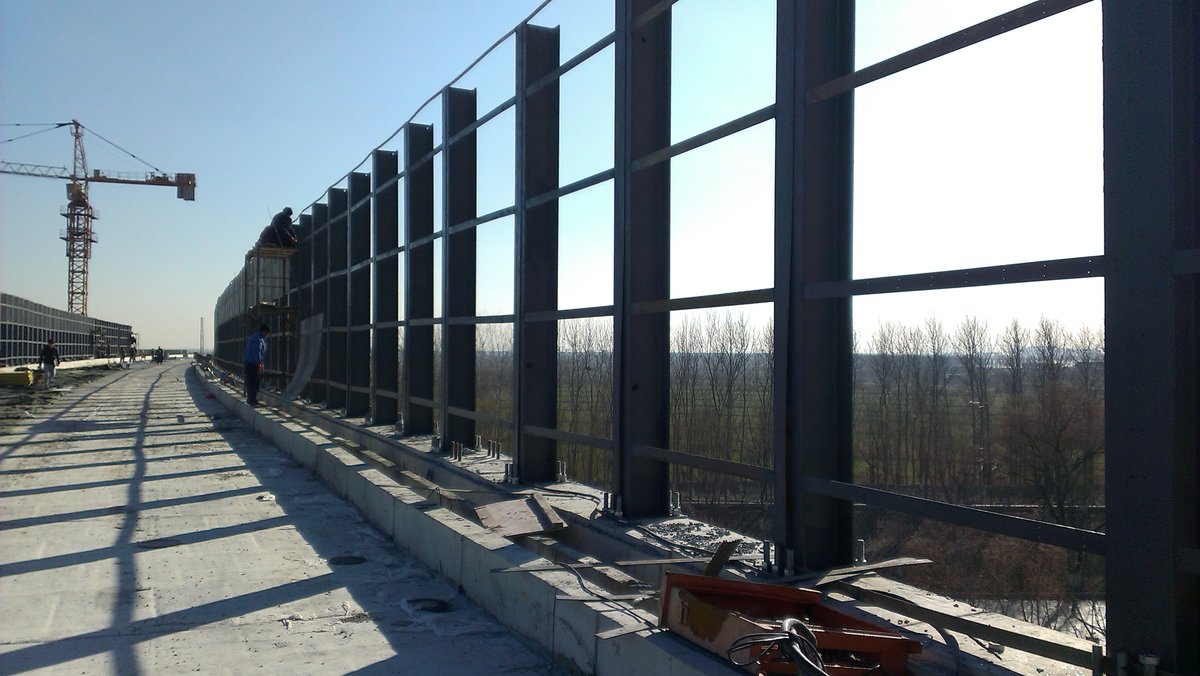
Solid PC sheet is specified wherever glass is too heavy or too fragile: sound barriers along roads and railways, machine guards, bus shelters, skylights, advertising light boxes, swimming-pool enclosures and security glazing. Its 200–250× impact resistance and roughly 50% weight saving over glass make it the default choice for these uses.
Why choose us
As a manufacturer, we produce solid polycarbonate sheets in-house to industry-standard specifications — ASTM D543 and ISO 175 chemical-resistance testing, UL94 fire classification and a co-extruded UV layer on every sheet — so you get factory-direct pricing and consistent quality across the full thickness and width range above. Contact our team for a quote and we will recommend the right thickness and coating for your project.
Frequently asked questions
What thickness of solid polycarbonate sheet do I need?
For most glazing and guarding, 4–6 mm is the workhorse. Sound barriers and security glazing usually start at 8 mm, and 15 mm and above is for forced-entry and ballistic protection. Confirm the final figure against span, wind or snow load and the impact risk of the installation.
Is solid polycarbonate better than glass?
For guarding, glazing and security it is. Solid PC is up to 200–250 times more impact resistant, roughly half the weight, and it will not shatter into sharp fragments. Glass wins only on surface hardness and scratch resistance.
How long does solid polycarbonate sheet last outdoors?
With a co-extruded UV layer, a solid PC sheet typically holds its clarity and mechanical properties for 10 years or more. Without UV protection it can yellow and embrittle within 3–5 years, so always specify a UV-coated grade for outdoor use.
Can solid polycarbonate sheet be cut and drilled?
Yes. It can be cut with fine-tooth saws, routed and drilled with standard woodworking or plastic tooling, and cold-bent to large radii or thermoformed. Use sharp tooling and low feed pressure to avoid chipping.
What is the difference between solid and multiwall polycarbonate?
Solid sheet is a single homogeneous layer with up to 89% light transmission and maximum impact strength. Multiwall sheet has air channels that add thermal insulation (a lower U-value) at the cost of some clarity. Choose solid for glazing, guarding and security; multiwall for insulated roofs and greenhouses.
Not sure which solid sheet thickness fits?
Send us four things and we’ll come back with the sheet spec, thickness options and fixing details for your project — plus a reference project for the same application:
- What the project is — roofing, canopy, partition, skylight, or signage
- Size — sheet dimensions or total area in m²
- Quantity — sheets or square metres
- Destination country or port
Related on this site
- Polycarbonate Acoustic Barriers — 20-30 dB(A) reduction, highway and rail spec
- Polycarbonate for Commercial Skylights — opal diffusion, U-value 2.0-3.0 W/m2K