Bottom line: solid polycarbonate sheet installs like glass but behaves like a plastic. It must be cut with fine-tooth blades, drilled with oversized holes for thermal expansion, cold-bent to a minimum radius of 100× its thickness, and fastened with washered screws that never sit closer than 12.7 mm (1/2 in) from the edge. Follow these four steps and the sheet will serve 10+ years without cracking, buckling or leaking. This 2026 guide gives the exact numbers used by professional installers.
Key Specifications at a Glance
Before cutting, confirm the sheet you have. Solid polycarbonate (solid PC) is a single-wall, flat glazing sheet — not the hollow multiwall type. Our factory supplies it in industry-standard sizes and thicknesses.
| Parameter | Standard range |
|---|---|
| Thickness | 1, 1.5, 2, 3, 4, 5, 6, 8, 10, 12, 15, 20, 25, 30 mm |
| Width | 1220 / 1560 / 1820 / 2100 mm (2500 mm custom) |
| Length | 6 m standard, custom 1–12 m (up to 30 m roll) |
| Weight | 1.2–7.2 kg/m² (thickness-dependent) |
| Light transmission | Up to 89% (clear) |
| Thermal expansion | 0.065 mm/m·°C |
| Fire rating | UL94 V-0~V-2, B1 |
Step 1 — Cutting Solid Polycarbonate Sheet
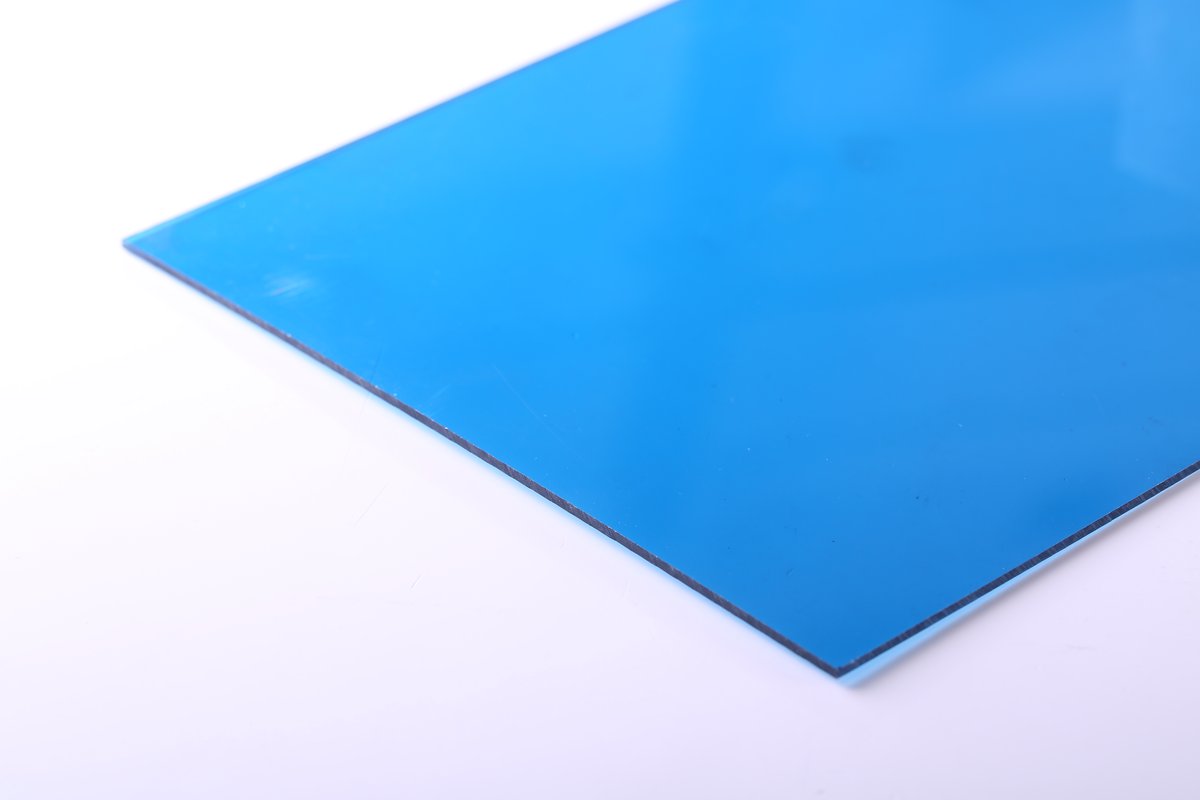
Use a circular saw with a fine-tooth carbide-tipped blade for straight cuts, or a jigsaw with a fine-tooth blade for curves and shapes. Keep the protective film on while cutting — it shields the surface from scratches and swarf. Mark the cut line with a dark marker, then blow debris out of the edges with compressed air before assembly.
Step 2 — Drilling and Thermal Expansion
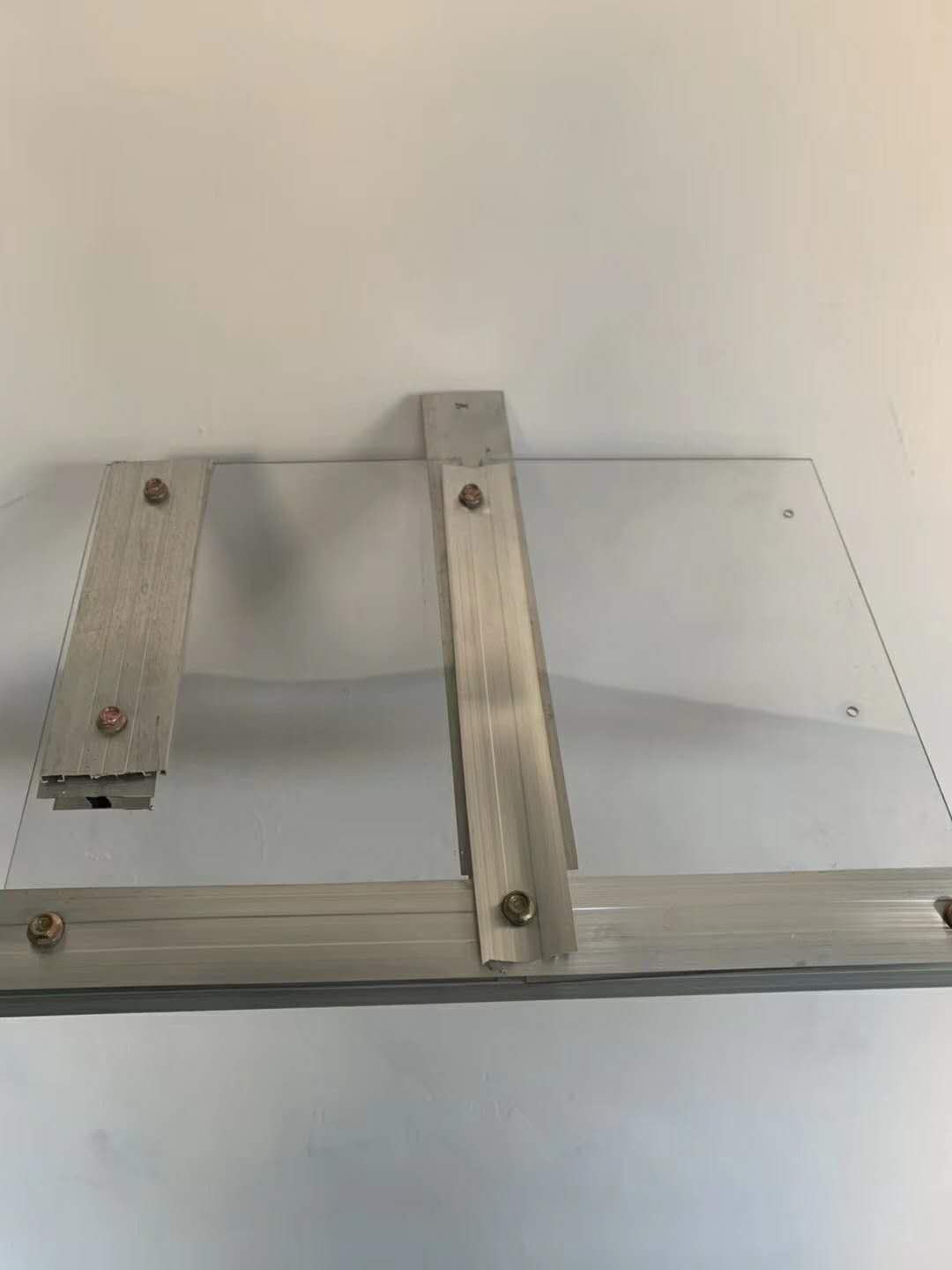
Polycarbonate expands and contracts with temperature at a linear rate of 0.065 mm per metre per °C. A 6-metre sheet through a 60°C temperature swing moves about 23 mm. If the screws grip the sheet tightly, it cannot move and will buckle or crack. Two rules prevent this:
- Drill every hole oversized — typically 2–3 mm larger than the screw shank — so the sheet can slide.
- Never drill closer than 12.7 mm (1/2 in) from any edge.
Allow an expansion gap of 3–5 mm per metre between the sheet edge and any frame, channel or abutting panel. In aluminium H-joiner systems, leave this gap inside each channel rather than fastening through the sheet itself.
Step 3 — Cold Bending Solid Polycarbonate Sheet
Solid sheet can be cold-curved into arches and barrel vaults without heating, as long as you respect the minimum forming radius. For plain solid polycarbonate the rule is:
Minimum cold forming radius = sheet thickness × 100
So a 6 mm sheet bends to a minimum radius of 600 mm, and a 10 mm sheet to 1000 mm. Hard-coated or flame-retardant grades need larger radii (up to 300× thickness). For tight 90° corners, switch to hot line bending at 155–165°C, or use a press brake.
Step 4 — Fastening and Sealing
Use stainless steel or galvanised screws with neoprene (EPDM) washers. Drive each screw perpendicular to the surface and stop as soon as the washer compresses — over-tightening dimples the sheet and creates leak points. For roof installations, keep the minimum slope at 5° (about 88 mm drop per metre) so water drains and the surface self-cleans. Rafter spacing ranges from 300–1000 mm, with 600–800 mm ideal for glass-like glazing.
Seal open ends with U-channels and aluminium tape, and use neutral-cure silicone for any remaining joints. Remove the protective film immediately after installation.
Common Installation Mistakes to Avoid
- Fastening through the sheet without oversized holes → buckling in summer.
- Insufficient slope → water pooling and leakage.
- Over-tightening screws → stress cracking around holes.
- Bending below 100× thickness → micro-cracks along the bend line.
- Leaving ends unsealed → dirt, insects and moisture inside the system.
Where Solid Polycarbonate Sheet Is Used
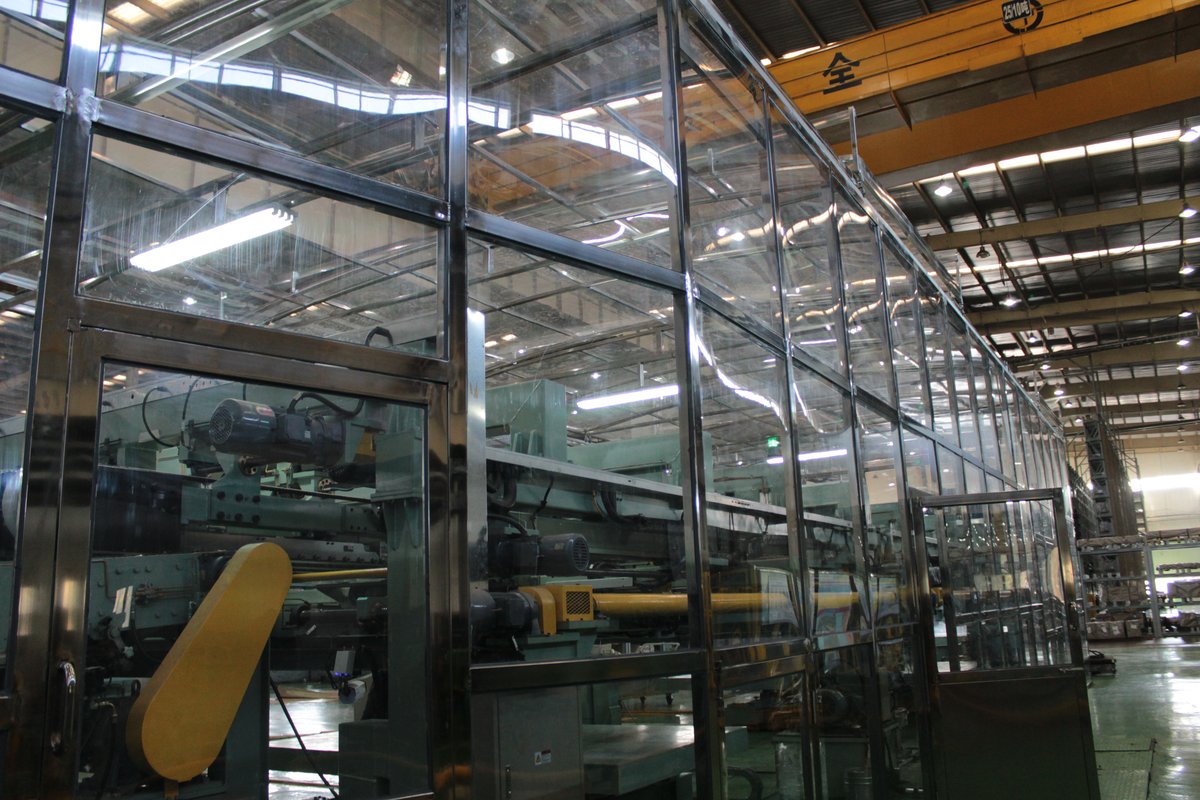
Solid PC sheet is 200–250 times more impact-resistant than glass, which makes it the default choice for machine guards, safety glazing, bus stop shelters, sound barriers, skylights and advertising light boxes. As a manufacturer we cut, drill and cold-bend to order, so the sheet arrives ready to install.
Frequently Asked Questions
What is the minimum cold-bend radius for solid polycarbonate sheet?
For plain solid polycarbonate, the minimum cold forming radius is 100 times the sheet thickness — a 6 mm sheet bends to a 600 mm radius, a 10 mm sheet to 1000 mm. Hard-coated and flame-retardant grades need larger radii.
How much expansion gap should I leave when installing solid polycarbonate sheet?
Leave 3–5 mm of clearance per metre of sheet, and drill every fastener hole 2–3 mm larger than the screw shank. Polycarbonate expands at 0.065 mm/m·°C, so a long sheet needs real room to move.
Can I cut solid polycarbonate sheet with a circular saw?
Yes. Use a circular saw with a fine-tooth carbide-tipped blade for straight cuts and a fine-tooth jigsaw blade for curves. Keep the protective film on while cutting, and blow the swarf out of the edges afterwards.
What fasteners should I use for solid polycarbonate sheet?
Use stainless steel or galvanised screws with neoprene (EPDM) washers, driven perpendicular and only snug — never over-tightened. For metal framing, self-drilling screws with EPDM washers are standard.
Does solid polycarbonate sheet have a UV-protected side?
Yes. Most solid sheet carries a co-extruded UV layer on one side, marked by printing or a sticker. That side must face outward toward the sun to prevent yellowing.
Solid polycarbonate sheet rewards careful installation: cut it cleanly, give it room to expand, respect the bend radius, and fasten it with washered screws — and it will outlast most glass glazing. Contact our team for a quote and we will supply cut-to-size, pre-drilled and cold-bent sheets matched to your drawings.