

Overview
All of these are covered in our range — our multiwall polycarbonate range, our thickness guide 4mm to 30mm, and the 2026 multiwall specifications — so you can move from application to specification on one page.
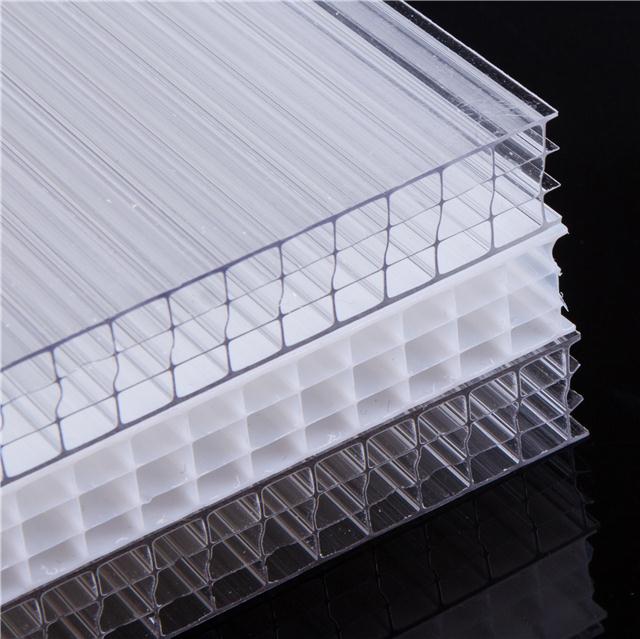
Multiwall polycarbonate sheets — also called hollow or twin-wall polycarbonate panels — are lightweight glazing panels built from two or more layers joined by vertical ribs. The hollow chambers trap air, and that trapped air is what gives these panels their insulation. Thickness is the single biggest driver of performance: it sets the panel’s U-value (thermal insulation), light transmission, stiffness, and weight. This guide maps every standard thickness from 4mm to 30mm so you can choose the right panel without overpaying.
Why Thickness Matters
Thickness determines four things on a multiwall sheet:
- Thermal insulation (U-value) — thicker panels with more walls insulate better. A 4mm twin-wall panel has a U-value around 3.9 W/m²·K; a 25mm multiwall panel drops to roughly 1.7 W/m²·K. Lower is better.
- Light transmission — clear thin panels pass about 81% of light. Adding walls and thickness brings transmission down to 55–62% on the heaviest panels.
- Load capacity — thicker panels span wider between purlins and carry more wind and snow load.
- Weight and cost — thinner panels are lighter and cheaper, but you trade away insulation and span.
Thickness & Performance Table
| Thickness | Typical structure | U-value (W/m²·K)* | Light transmission (clear)* | Typical use |
|---|---|---|---|---|
| 4 mm | Twin-wall | ~3.9 | ~81% | Cold frames, small glazing |
| 6 mm | Twin-wall | ~3.5 | ~81% | Greenhouses, carports |
| 8 mm | Twin-wall | ~3.3 | ~80% | Greenhouses, canopies |
| 10 mm | Twin-wall | ~3.0 | ~81% | Roofing, skylights |
| 10 mm | Triple-wall | ~2.5 | ~74% | Insulated roofing |
| 16 mm | Triple-wall | ~2.3 | ~74% | Heated greenhouses, cold climates |
| 16 mm | 5-wall X | ~2.0 | ~64% | High snow-load roofs |
| 25 mm | Multiwall | ~1.7 | ~62% | Large-span roofs, stadiums |
| 30 mm | Multiwall | ~1.5 | ~55% | Heavy-duty industrial glazing |
*Indicative values for clear sheets. Exact U-value depends on rib geometry and profile — ask us for certified data on the specific panel you need.
Which Thickness for Your Application?
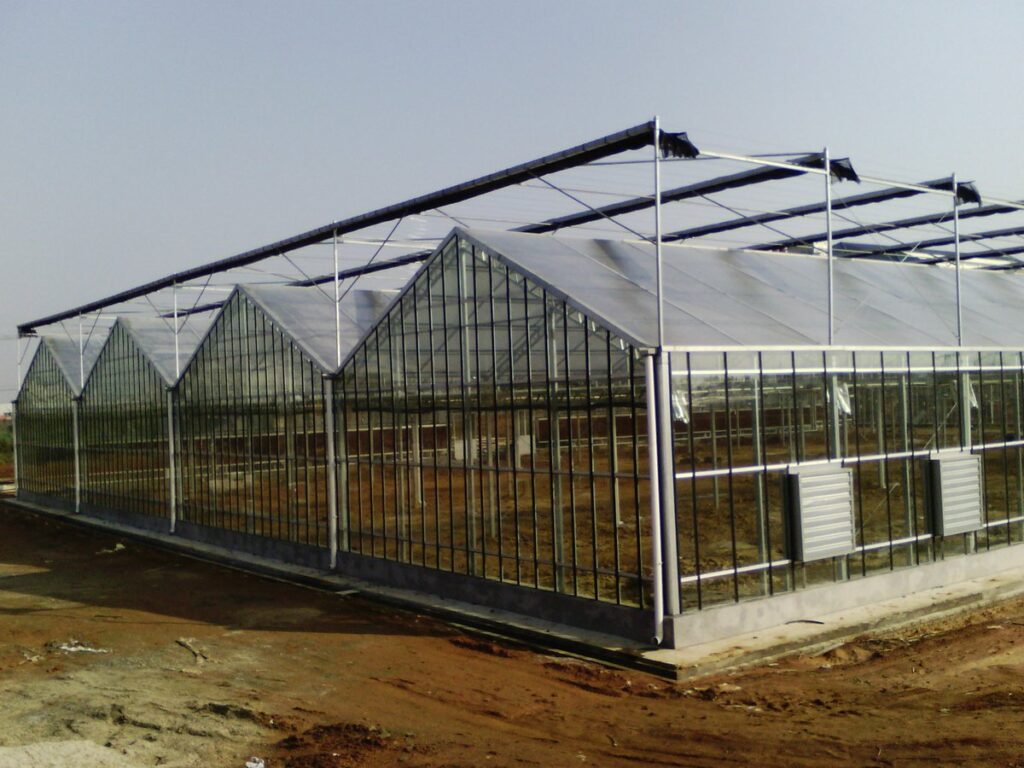
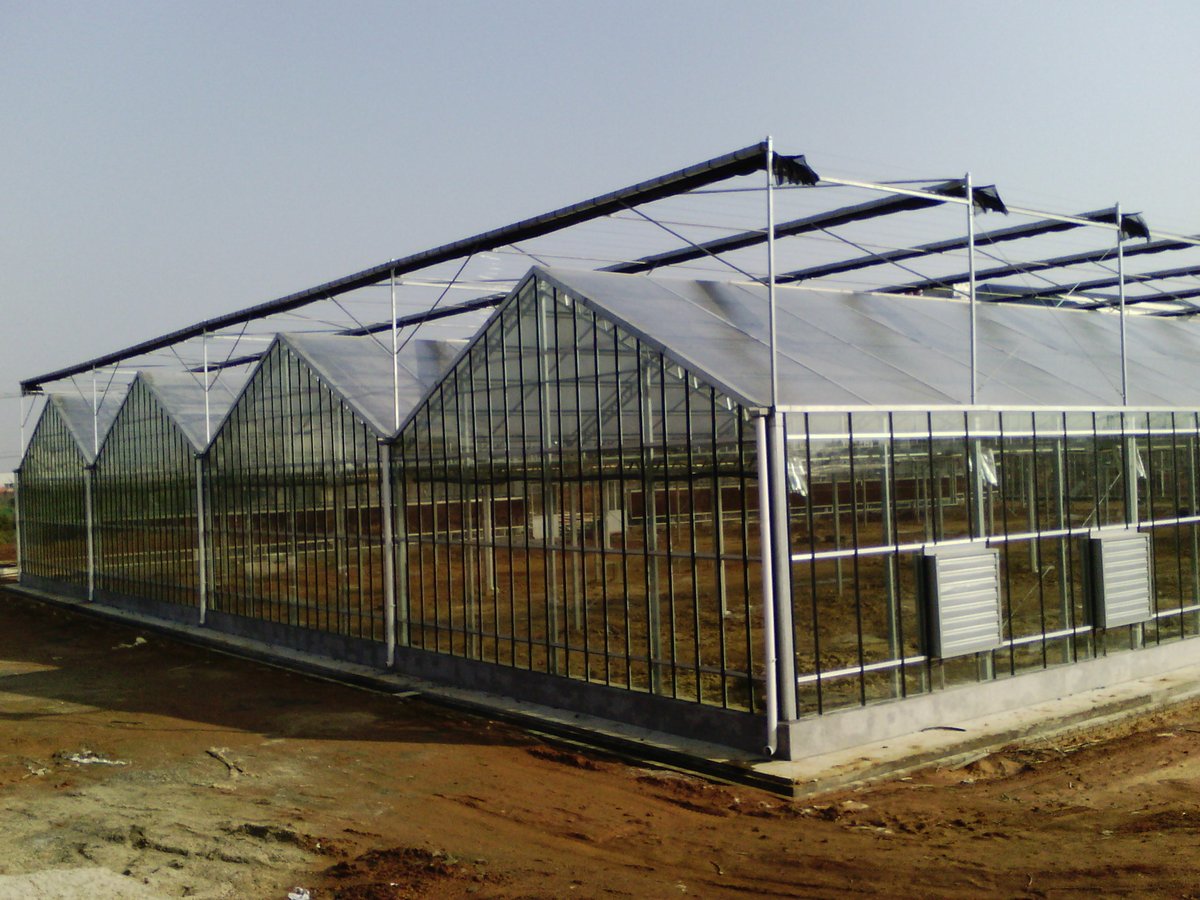
- Greenhouse: 6mm or 8mm twin-wall is the standard for most crops — enough insulation for three-season growing at around 80% light transmission. In cold climates, step up to 16mm triple-wall for year-round heated growing.
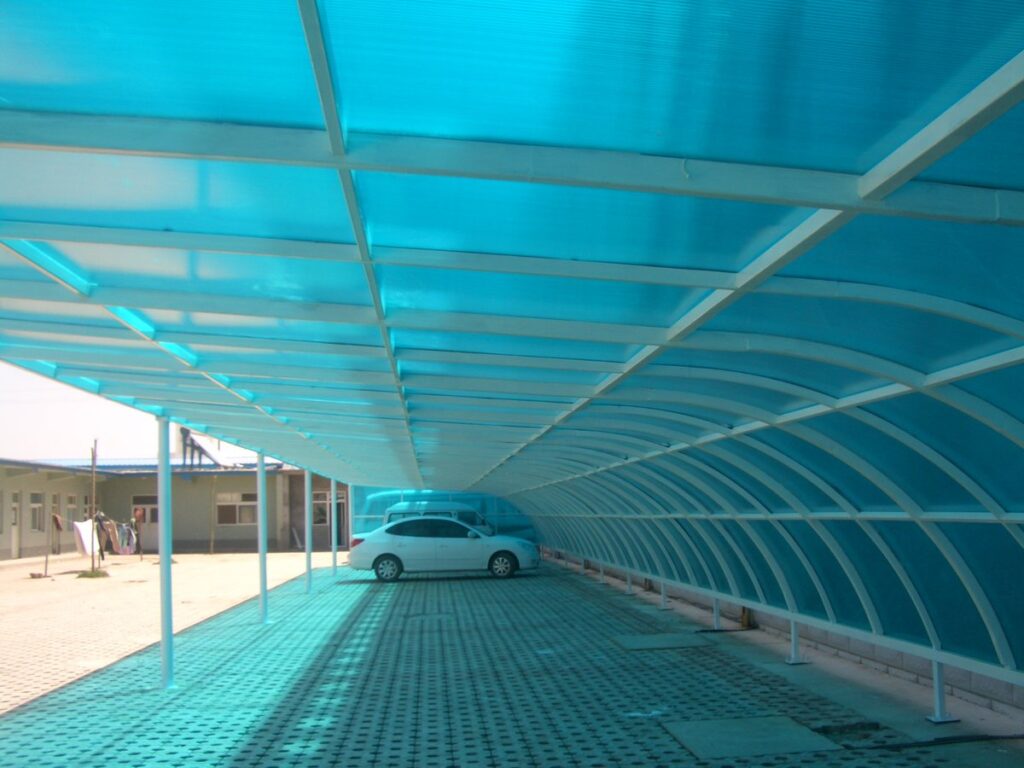
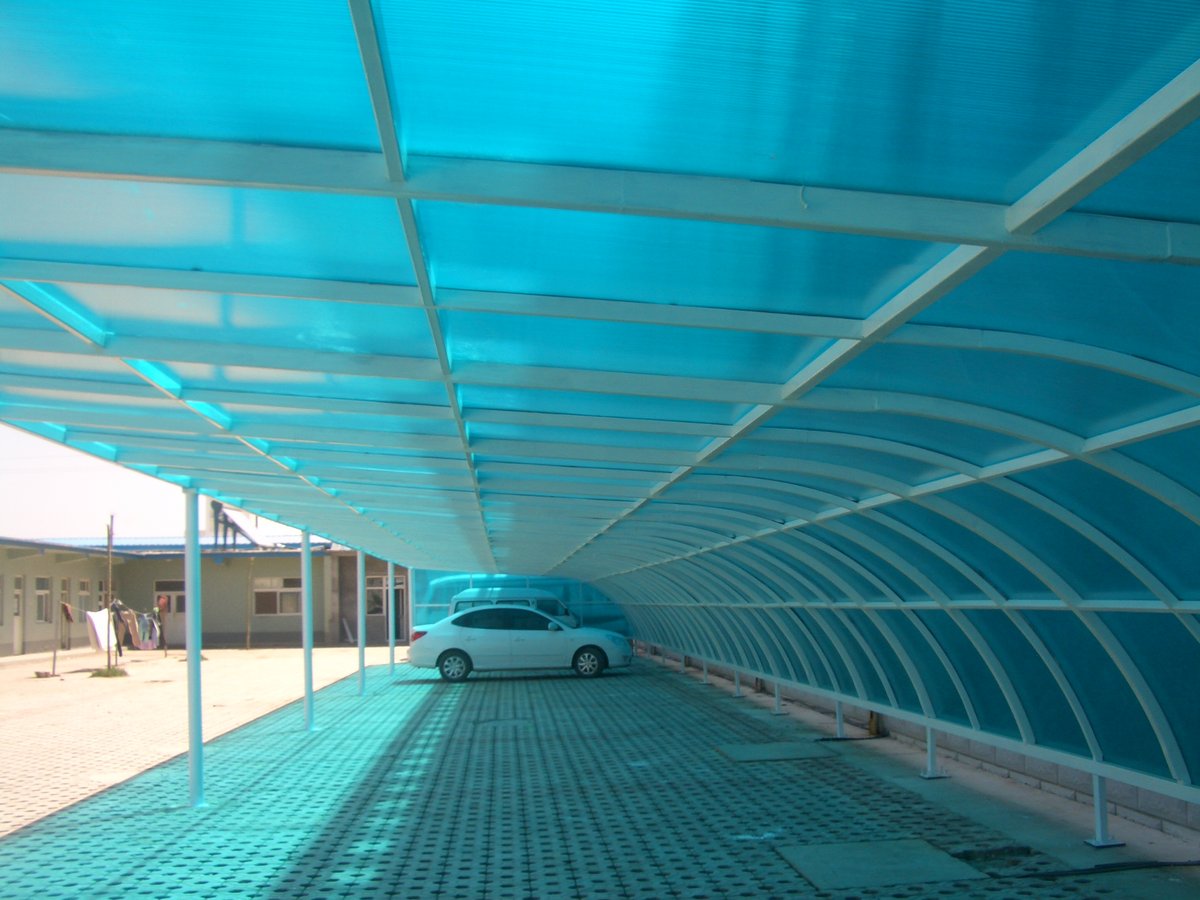
- Carport and canopy: 6mm to 10mm twin-wall balances cost, strength, and light. 10mm is the usual minimum for roofing spans.
- Skylight and daylighting: 10mm twin-wall or 16mm triple-wall keeps daylight high while adding insulation.
- Partition walls and interior glazing: 8mm to 10mm twin-wall is light, stiff, and easy to cut.
- Large-span roofs and stadiums: 16mm, 25mm, or 30mm multiwall or honeycomb panels handle long spans and heavy snow loads.
Key Specifications at a Glance
| Parameter | Range |
|---|---|
| Width | 2100mm standard; 1220/1560/1820mm on request |
| Length | 6m standard; custom up to 12m |
| UV protection | Co-extruded UV layer, one or both sides, 30–50μm |
| Colors | Clear, opal, lake blue, grass green, bronze, red, orange, custom RAL |
| Weight | 1.0–3.5 kg/m² |
| Fire rating | B1, UL94 V-0 to V-2 |
| Service temperature | −40°C to +120°C |
FAQ
What thickness of polycarbonate do I need for a greenhouse?
6mm or 8mm twin-wall covers most greenhouses. Use 16mm triple-wall if you heat through winter or live in a cold climate.
Does thicker polycarbonate let in less light?
Yes. Clear 6mm twin-wall transmits about 81% of light; 25mm multiwall drops to around 62%. Insulation and light transmission trade off, so match the panel to your priority.
What is the best thickness for a carport roof?
6mm to 10mm twin-wall. 10mm is the recommended minimum for roofing spans, and it bends into curved canopies more easily than heavier panels.
Can I cut multiwall polycarbonate sheets to size?
Yes. Sheets come in 6m standard lengths (up to 12m on request) and can be cut to your dimensions. Seal the open flutes with tape and a U-channel to keep out dust and moisture.
What width do multiwall polycarbonate sheets come in?
2100mm is the standard production width. 1220mm, 1560mm, and 1820mm widths are available on request.
Why Choose Jietai
We supply multiwall polycarbonate sheets across the full 4mm–30mm range, in standard 2100mm width with co-extruded UV protection. Whether you’re glazing a small greenhouse or a large-span commercial roof, we’ll help you match thickness, structure, and color to your budget and climate.
Contact our team for a quote, and we’ll confirm the certified U-value and the exact profile for your project.
Not sure which thickness fits your project?
Send us four things and we’ll come back with the panel spec, thickness and fixing details for your project — plus a reference project for the same application:
- What the project is — greenhouse, skylight, carport, partition, or canopy
- Panel size — sheet dimensions or total area in m²
- Quantity — sheets or square metres
- Destination country or port
Related on this site
- Polycarbonate for Greenhouses — 8 mm twin-wall, anti-drip, dual-sided UV
- Polycarbonate for Carports & Canopies — solid 6 mm for impact, multiwall for diffusion
- Polycarbonate for Commercial Skylights — opal diffusion, U-value 2.0-3.0 W/m2K