
Multiwall polycarbonate sheets are the most practical glazing material for commercial greenhouses because they deliver the high light transmission growers need together with the thermal insulation that single-layer glass and plastic film cannot match. A twin-wall or triple-wall polycarbonate roof holds growing temperatures steady, diffuses harsh sunlight so plants receive even light, and survives hail and impact that would shatter glass. As a manufacturer, Jietai produces multiwall polycarbonate sheets in greenhouse-suitable thicknesses from 4 mm to 30 mm, each with a co-extruded UV protection layer.
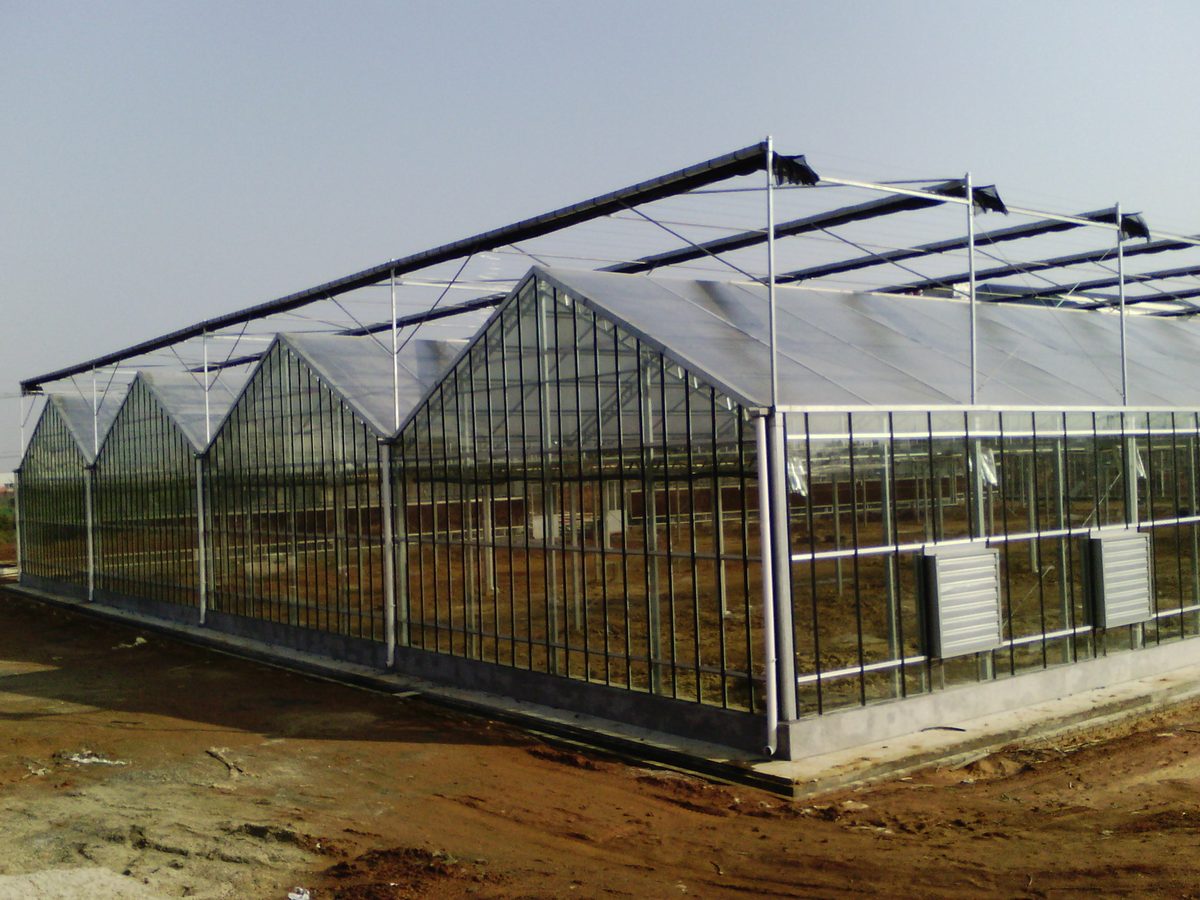
All of these are covered in our range — our multiwall polycarbonate range, the 2026 multiwall specifications, and our multiwall sheets for greenhouses — so you can move from application to specification on one page.
Why Growers Choose Multiwall Polycarbonate Over Glass and Film
Greenhouse glazing has to balance three things at once: how much light reaches the crop, how well the structure holds heat, and how long the covering lasts. Glass transmits the most light but is heavy, fragile and a poor insulator. Plastic film is cheap but tears, fades and usually needs replacing after one to three seasons. Multiwall polycarbonate sits between the two on light, and beats both on insulation, impact resistance and service life.
| Property | Single-pane glass | PE plastic film | Multiwall polycarbonate |
|---|---|---|---|
| Light transmission | ~90% | ~85% | 25–82% (clear around 80%) |
| U-value (insulation) | ~5.8 W/m²·K | ~6.0 W/m²·K | 1.5–3.9 W/m²·K |
| Weight | ~7.5 kg/m² (4 mm) | ~0.1 kg/m² | 1.0–3.5 kg/m² |
| Impact resistance | Fragile, shatters | Tears easily | ~200× glass |
| Typical lifespan | Long if unbroken | 1–3 seasons | 10+ years (UV-protected) |
| Light spread | Direct, harsh | Diffuse | Even diffusion (opal option) |
Technical Specifications
| Parameter | Range |
|---|---|
| Width | 2100 mm standard; 1220 / 1560 / 1820 mm custom |
| Thickness | 4, 6, 8, 10, 12, 14, 16, 20, 25, 30 mm |
| Structure | Twin-wall, triple-wall, 4-wall, 5-wall X, honeycomb |
| Length | 6 m standard; 1–12 m custom |
| Light transmission | 25–82% |
| U-value | 1.5–3.9 W/m²·K |
| Weight | 1.0–3.5 kg/m² |
| UV protection | Co-extruded layer, 30–50 μm |
| Fire rating | B1, UL94 V-0 to V-2 |
| Service temperature | −40 °C to +120 °C |
| Colors | Clear, opal white, lake blue, grass green, bronze, custom RAL |
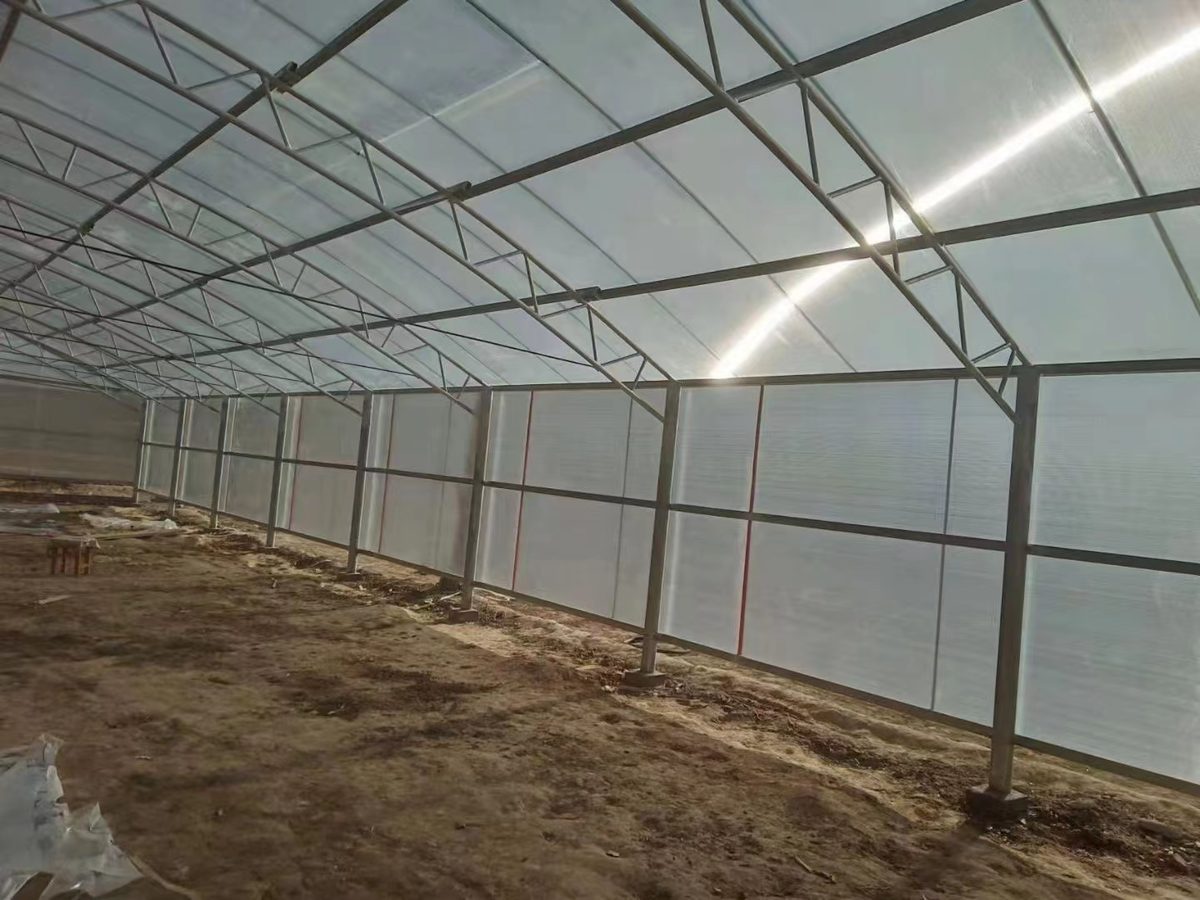
Choosing Thickness and Structure for Greenhouse Glazing
Thickness and wall count decide the trade-off between light and insulation. Thicker, multi-wall panels insulate better but transmit slightly less light, so the right choice depends on the local climate and what you are growing.
| Thickness | Structure | Best for |
|---|---|---|
| 6–8 mm | Twin-wall | Hobby greenhouses, side walls |
| 10 mm | Twin-wall | Commercial greenhouse roofs, mild climates |
| 16 mm | Triple-wall | Cold climates, high insulation demand |
| 25–30 mm | Multi-wall / honeycomb | Extreme cold, heavy snow load |
For even light distribution, choose an opal or light-diffusing grade that scatters direct sunlight and reduces leaf scorch on hot days.
Installation Essentials
- Fit the UV-protected side facing outward — the co-extruded layer is marked on the protective film.
- Allow about 3 mm of expansion per metre of run, using oversized holes and sliding fasteners.
- Slope the panels so condensation drains along the flutes to the gutter.
- Seal the top edges with breather tape and U-profiles to keep the channels free of dust and insects.
- Match purlin spacing to panel thickness and the expected snow and wind load.
Frequently Asked Questions
Is multiwall polycarbonate good for a greenhouse roof?
Yes. It is the standard choice for commercial greenhouses because it transmits 25–82% of daylight while insulating at 1.5–3.9 W/m²·K, which glass and single-layer film cannot match, and it resists hail and impact roughly 200 times better than glass.
What thickness polycarbonate should I use for a greenhouse?
Use 8–10 mm twin-wall for hobby greenhouses and side walls, 10 mm twin-wall for commercial roofs in mild climates, and 16 mm triple-wall or thicker where winters are cold or snow load is high.
Does multiwall polycarbonate block the UV light plants need?
Standard clear grades transmit the full photosynthetically useful spectrum. The co-extruded UV layer screens harmful UV on the weather side to protect the panel itself, while opal grades diffuse light for even coverage.
How long do polycarbonate greenhouse panels last?
UV-protected multiwall sheets typically serve 10 or more years outdoors before light transmission or strength drops meaningfully. Sheets without a UV layer can yellow and turn brittle within a few seasons.
Will polycarbonate greenhouse panels turn yellow?
Not if they carry a co-extruded UV protection layer on the weather side. That layer is what prevents the yellowing and embrittlement that affects unprotected sheets, so always specify a UV-protected grade.
Planning a greenhouse roof?
Send us four things and we’ll come back with the panel spec, thickness and fixing details for your project — plus a reference project for the same application:
- Greenhouse area and span
- Crop light requirement, or the climate it sits in
- Whether you need diffusion or clear panels
- Destination country or port
Related on this site
- Polycarbonate for Greenhouses — 8 mm twin-wall, anti-drip, dual-sided UV