
Two quotations for the same 10 mm polycarbonate sheet can differ by a factor of three, and neither supplier is necessarily lying. The difference sits in the things a quotation rarely states: whether the resin is virgin or regrind, how thick the UV layer actually is, whether the sheet is co-extruded on one face or two, what tolerance the thickness is held to, and what the delivered cost is once freight and packing are counted. This guide sets out the cost structure of polycarbonate sheet — what moves the number, where the savings hide, and how to compare two quotes honestly.
Six Cost Drivers Behind a Polycarbonate Sheet Price
Every polycarbonate sheet price resolves into six components. Knowing which one a supplier has been asked to cut explains most of the spread between bids.
- Resin and regrind ratio — virgin polycarbonate compound against compound with production regrind blended back in. Regrind is not automatically wrong; an unstated high ratio is, because impact strength and optical clarity fall with it.
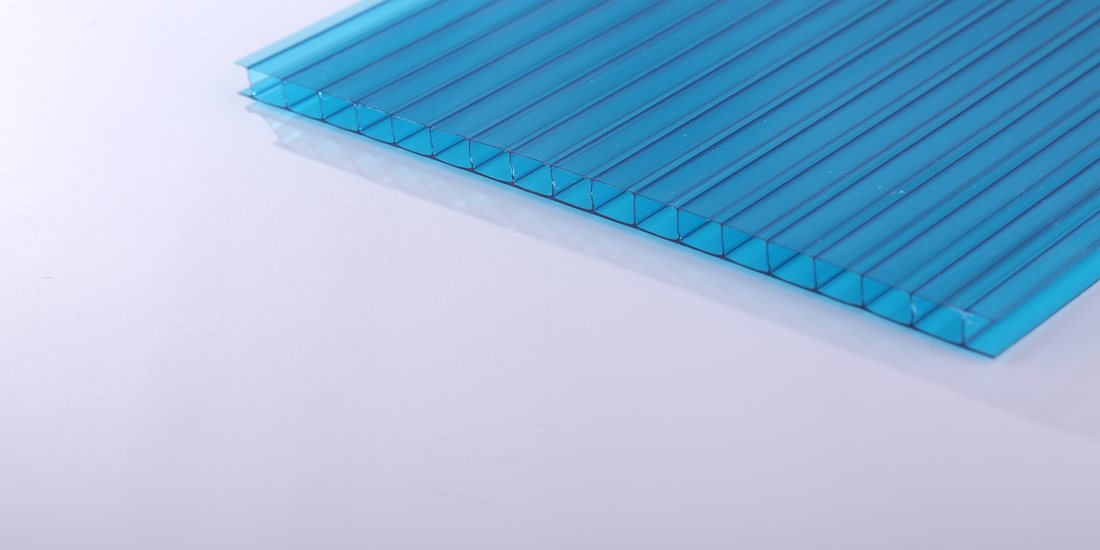
- Structure — solid sheet against multiwall, twin-wall or multi-layer hollow profiles. A hollow profile uses far less material per square metre but needs a more complex die and tighter cooling control.
- UV configuration — no UV layer, a co-extruded UV layer on one face, or on both. This is the single most consequential line for outdoor life and the easiest one to thin without the buyer seeing it.
- Thickness and tolerance — nominal gauge held to a tight band costs more than a loose one. A sheet sold as 10 mm that measures 9.2 mm is 8% less material.
- Order quantity and format — full container against part load, standard sheet size against cut-to-size, stock colour against custom colour with a minimum run.
- Packing and freight — pallet, edge protection, PE film, and how efficiently the sheet size loads into a 20 ft or 40 ft container. Freight on a bulky product is often a larger line than the material itself.
Resin: Why the Base Cost Moves Every Month
Polycarbonate compound is a petrochemical derivative and its price tracks feedstock and energy markets rather than the calendar. Two consequences follow for a buyer. First, a quotation has a validity period for a reason, and a quote held open for six months is either hedged or will be renegotiated. Second, a price that looks anomalously low usually reflects the compound rather than the supplier’s efficiency — most often a higher regrind content, or a filled compound that meets the same nominal description while behaving differently in service.
The honest question to ask is not “what is your best price” but “what resin grade, and what regrind ratio, is this quotation based on”. A supplier who can answer that can be compared with another who can.
UV Layer: The Line Nobody Checks and Everybody Pays For Later
Polycarbonate yellows and embrittles under UV unless a co-extruded UV layer protects it. The layer is typically 40–60 microns on a single face and is applied during extrusion, which means it can be present, thinned, or omitted — and the sheet looks identical on delivery in all three cases.
What changes is time. A properly protected sheet holds colour and impact strength for a decade or more outdoors; an unprotected or thinly protected one chalks and yellows within a few seasons and then cracks at the fixings. On a canopy where replacement means scaffolding, the UV layer is the lowest-cost part of the whole asset — which is why a quote that is materially lower should be asked to state the UV thickness and the warranty that goes with it, in writing, against the installed orientation.

Structure and Thickness: Where the Material Saving Is
A multiwall sheet gains its stiffness from geometry rather than mass, so it delivers the same span with a fraction of the polymer. That is why hollow grades cost less per square metre than solid sheet of similar thickness while insulating considerably better. The trade is in the profile: complex multi-layer dies cost more to tool and to run, and the sheet cannot be cold-bent or walked on.
On solid sheet, the material content is almost linear in thickness, which makes nominal gauge the second place a price can be quietly reduced. A tolerance of ±0.3 mm on a 10 mm sheet is normal; a sheet that is consistently under nominal within a loose tolerance is where the difference goes. Ask for the measured thickness, not the nominal, and for the tolerance band in the specification.
Order Format: Container Economics
Polycarbonate is bulky and light, so a container fills by volume long before it reaches its weight limit. That makes sheet size and format a direct cost driver: a size that nests well into the container footprint carries less freight per square metre than one that leaves air, and a full container carries less per square metre than a part load. Cut-to-size orders save the customer a cutting operation but leave offcut waste that somebody pays for — usually priced in.
Two practical rules come out of this. Order the sheet size that matches the container, not the one that matches the drawing, unless the cutting is genuinely difficult. And compare landed cost per square metre at the destination port, never the ex-works sheet price.
Where the Savings Hide: Five Things to Check in a Low Quote
- Thickness under nominal — measure a sheet at the corners and the centre; a consistent shortfall is material not supplied.
- UV layer absent or thin — ask for the co-extrusion specification and the outdoor warranty in writing.
- Regrind ratio unstated — affects impact strength first, appearance second, and shows up as cracking at fixings within a few years.
- Protective film downgraded — a thin film that bakes onto the sheet in the sun costs the customer a cleaning operation; the sheet is fine, the delivery is not.
- Freight moved into the price — a low ex-works figure with weak packing and part-load shipping is often more expensive landed than a higher, well-packed full container.

Comparing Two Quotes Honestly
| Cost driver | What it changes | What to ask for |
|---|---|---|
| Resin grade | Impact strength and clarity | Resin grade and regrind ratio |
| UV layer | Outdoor life and colour retention | Layer thickness on one or both faces |
| Measured thickness | Material content per m² | Measured gauge and tolerance band |
| Structure | Polymer used for a given span | Solid or multiwall, and the span |
| Order format | Freight per m² | Sheet size against container size |
| Packing | Damage and claims | Film type, pallet and edge protection |
| Documentation | Project acceptance | Batch reports and fire documentation |
Put the two quotations side by side on the same five lines and the difference usually explains itself: resin grade and regrind ratio, UV configuration and layer thickness, measured thickness against nominal with the tolerance band, sheet size and packing, and landed cost at the destination port including freight and any duty. A comparison made on the ex-works price per square metre of a nominally identical sheet is not a comparison.
The last line is application fit. A 4 mm solid sheet and a 10 mm multiwall sheet are not the same product, and the cheaper one is only cheaper if it does the job. Where the sheet has to span, take hail, or carry snow, the thinner or hollow option can cost more over the life of the installation than the one that was specified correctly.
Customisation and What It Adds
- Colour — stock clear, opal and bronze carry no premium; matched colours and custom tints need a minimum run.
- Surface — hard-coated, anti-glare, embossed and diffusing grades add processing steps and cost accordingly.
- Dimensions — cut-to-size from stock sheet adds a cutting operation but saves the customer the labour and the waste.
- Certification — third-party inspection, batch test reports and fire documentation are real work and are priced in when they are requested up front, not after loading.
Frequently Asked Questions
Why are two quotes for the same polycarbonate sheet so different?
Almost always because the two sheets are not the same specification. Resin grade and regrind ratio, UV layer thickness, measured gauge against nominal, sheet size and packing all differ, and none of them is visible on a one-line quotation. Compare those five lines before comparing price.
Is regrind polycarbonate a problem?
Not in itself — production regrind blended at a moderate ratio is normal practice. The problem is an unstated high ratio, which reduces impact strength and clarity, and shows up as cracking at fixings or hazy panels after a couple of seasons outdoors.
How much does the UV layer add to the cost?
Less than most buyers expect, and far less than replacing a yellowed canopy. It is a co-extruded layer applied during production, so the cost sits in the process rather than the material. Specify it explicitly with a layer thickness and an outdoor warranty.
Is multiwall cheaper than solid sheet?
Per square metre, usually yes, because the hollow structure uses less polymer for the same stiffness — and it insulates better. It cannot be cold-bent, walked on, or used where a solid face is required, so the two are specified for different jobs rather than compared on price alone.
Can you tell me the price for a specific size and quantity?
Yes — send the application, the sheet size and thickness, the quantity and the destination port, and a quotation comes back with the specification, the packing and the landed cost. Price without those four details cannot be compared with anything.
Getting a Quote That Can Be Compared
Three details decide whether a polycarbonate quotation is usable: the specification it is based on, the packing and container it assumes, and the destination it lands at. A price without those is a number, not an offer.
If you are sourcing polycarbonate sheet and want a cost breakdown rather than a single figure, send four details — the application, the sheet size and thickness, the quantity, and the destination port. We come back with the specification we would supply at that price, the UV configuration and tolerance in writing, the loading plan, and comparable project references. Where a cheaper grade would genuinely serve the application, we say so rather than quote the better sheet.
Two related references are worth reading before finalising a specification: the solid polycarbonate selection guide, which covers thickness, UV coating and impact grades, and the clear sheet comparison, which sets polycarbonate against acrylic and glass on impact, stiffness and thermal movement.
Want a polycarbonate cost breakdown for your project? Request a specification-based quote.
Tell us the application, sheet size, thickness, quantity and destination port. We reply with the specification, UV configuration, tolerance band, loading plan and landed cost — not just a price per square metre.