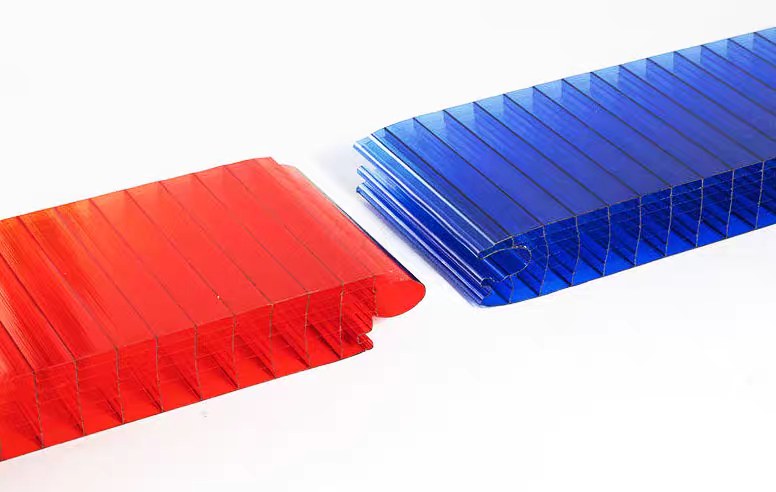
Interlocking polycarbonate panels — the tongue-and-groove, multi-chamber panels built for facades and vertical glazing — are specified by matching thickness and internal structure to three things: the application, the span, and how much insulation you need. As a rule of thumb, 10–12 mm suits light partitions and shopfronts, 16–20 mm covers standard curtain walls, 25–30 mm handles high-rise facades, and 40–50 mm is for energy-efficient or extreme-climate envelopes. This guide gives you the exact data to make that call quickly.
1. What Are Interlocking Polycarbonate Panels?
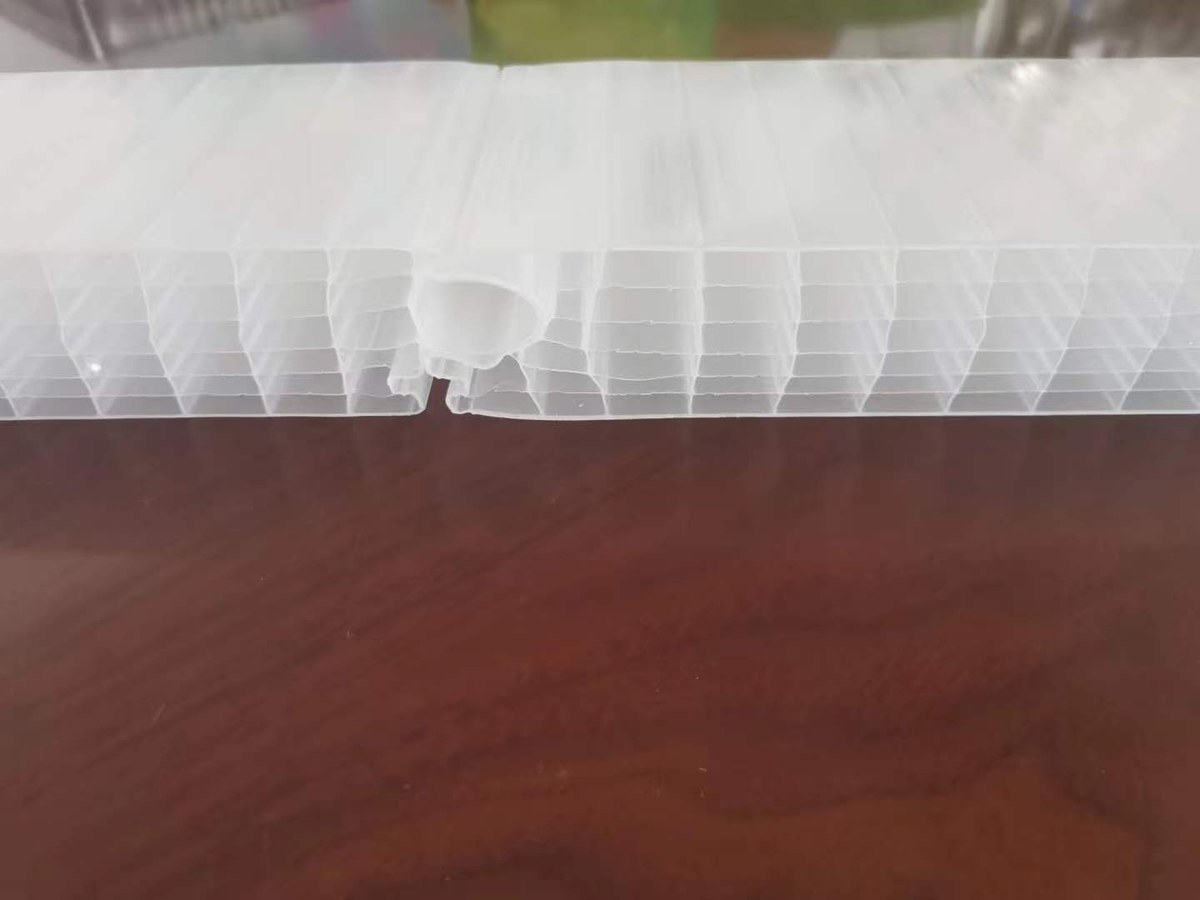
Interlocking PC panels are extruded polycarbonate panels with a male–female tongue-and-groove edge. Adjacent panels snap together directly, so the finished wall has no exposed metal connectors and no visible fixing lines. Internally they are multi-chamber — from a simple 3-layer, 2-chamber build up to 9-chamber and ultra-thick honeycomb structures — which is what gives them their balance of rigidity, insulation and light weight. Like all polycarbonate, they are roughly 200 times tougher than glass, and they are fire-rated B1 under GB 8624, UL94 V-0 to V-2 and Euroclass B-s1,d0. They are designed for vertical work: curtain walls, facades, partitions and backlit features. They are not a roofing product.
2. Start With the Application
The application decides everything else, because each build-up is optimised for a different job:
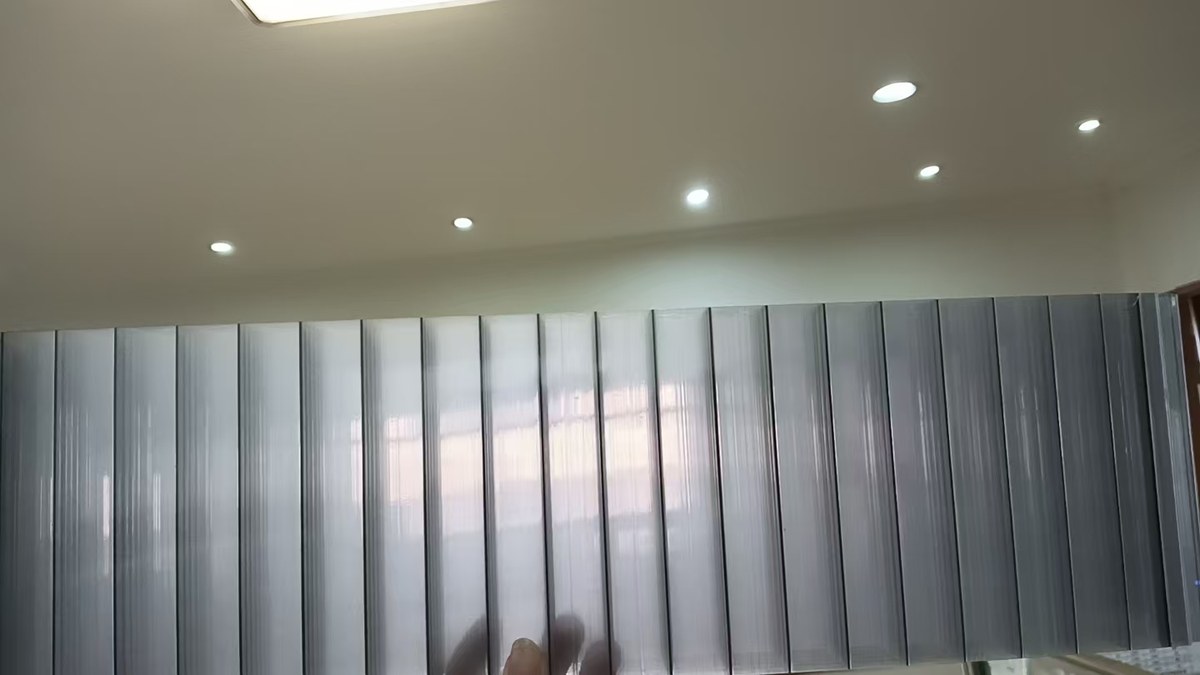
- Curtain walls & exterior facades — 16–30 mm, high insulation and rigidity.
- Shopfronts & signage — 12–16 mm, crisp look with good light diffusion.
- Interior partitions & office dividers — 10–16 mm, light and easy to handle.
- Illuminated lightboxes & feature walls — 10–16 mm in opal or clear for even backlighting.
- Balcony privacy screens & landscape walls — 16–25 mm, tinted or translucent.
Two jobs these panels do not do: large exposed roofs and curved or arched spans. For those, choose a U-Lock polycarbonate system or corrugated PC sheet instead.
3. Thickness and Structure: The Core Decision
Thickness is not just “thicker is stronger” — each step changes the internal structure, the insulation value and the light you get through. Use this table to match the panel to the job:
| Thickness | Structure | U-Value | Light Transmission | Typical Application |
|---|---|---|---|---|
| 10 mm | 3-layer, 2 chambers | ~3.5 | 65–82% | Light partitions |
| 12 mm | 3–4 layer, 2–3 chambers | ~3.0 | 60–80% | Shopfronts |
| 16 mm | 5-layer X, 4 chambers | ~2.5 | 55–78% | Facades, pool fencing |
| 20 mm | 5-layer X, 4 chambers | ~2.0 | 50–75% | Standard curtain wall |
| 25 mm | Honeycomb, 5–6 chambers | ~1.6 | 45–72% | Large-span facades |
| 30 mm | Honeycomb, 5–6 chambers | ~1.3 | 40–68% | High-rise curtain walls |
| 40 mm | 9-chamber | ~1.0 | 30–60% | Energy-efficient facades |
| 50 mm | Ultra-thick multi-chamber | ~0.71 | 20–55% | Extreme-climate insulation |
As a shortcut: if your facade is one or two storeys and you care mainly about looks and light, 16–20 mm is the sweet spot. If the building is tall, exposed to wind, or must hold a U-value for energy codes, move to 25–30 mm and up.
4. Standard Width and Length
The standard panel width is 500 mm, which keeps the visible joint lines tidy and makes handling easy on site. Standard length is 6 m, with custom lengths from 1 m up to 12 m — and up to 16.5 m for large continuous facades. Plan your cutting list before ordering: buying to standard lengths cuts waste and speeds up installation.
5. Color and Light Transmission
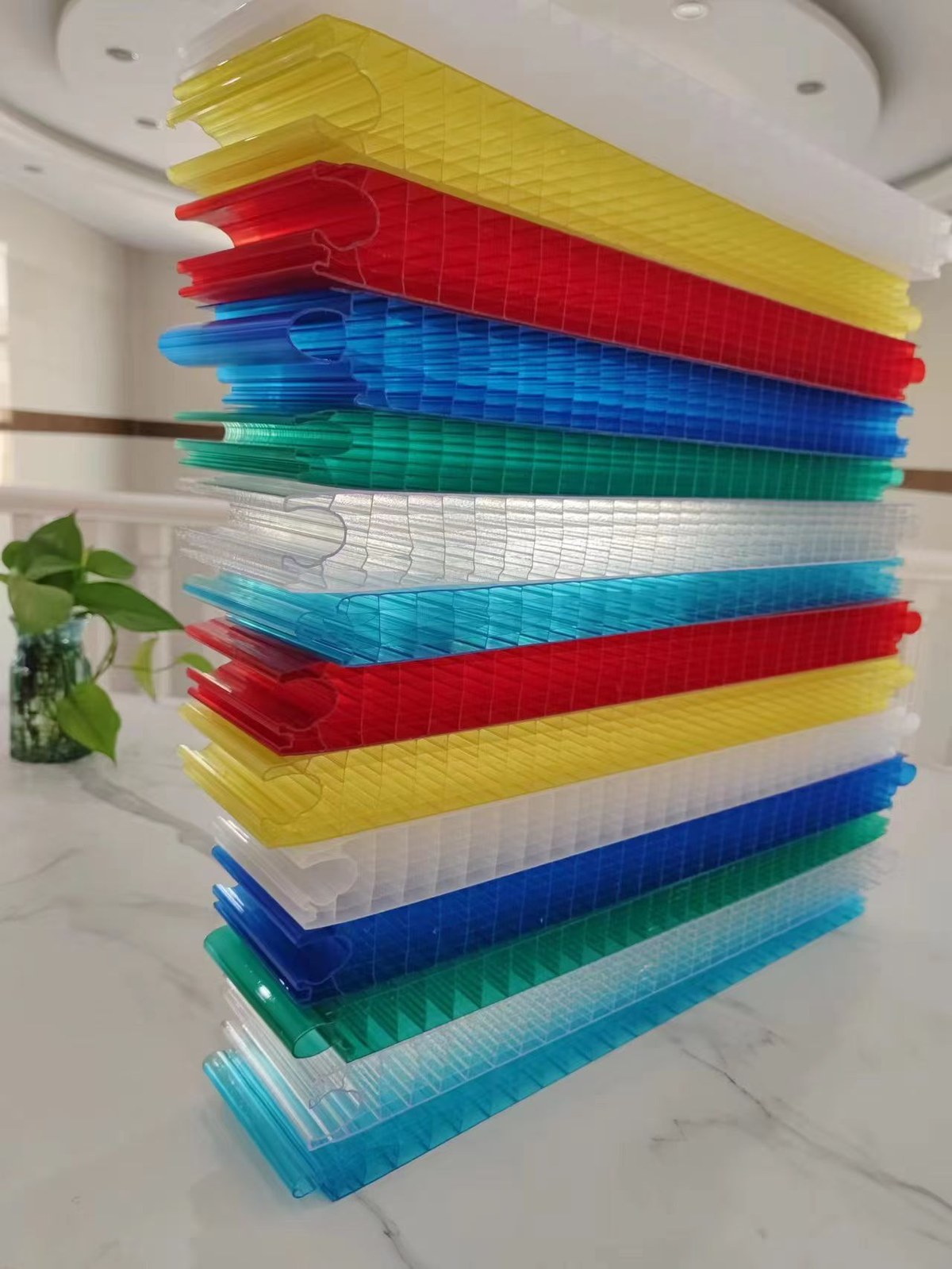
Clear panels transmit the most light (up to 82% in the thinnest grades) and suit facades where daylight is the goal. Opal diffuses light evenly and is the workhorse for backlit walls and lightboxes. Tinted grades — lake blue, grass green, bronze, red and orange — trade some light for solar control, privacy or a signature look, and custom RAL colours are available.
6. UV Protection
Every panel carries a co-extruded UV layer that stops the sheet from yellowing or turning brittle outdoors, which is what backs a 10–15 year warranty against discolouration. For single-face exposure one side is enough; for vertical glazing where both faces see the sun, specify double-side UV.
7. Installation Notes
Interlocking panels go up fast because there are no metal connectors: each panel clicks into the next. Install the male edge facing up or into the prevailing wind, and leave drainage holes at the bottom edge so any condensation can escape. Working temperature range is −40°C to +120°C.
Why Jietai
Jietai is a polycarbonate sheet manufacturer serving distributors, fabricators and project buyers worldwide. We extrude interlocking PC panels in the full 10–50 mm range, in standard and custom colours, with factory cutting to length. Because we make the panel ourselves, we can match thickness, structure and colour to your specification and hold the tolerance on every sheet.
Frequently Asked Questions
What thickness of interlocking polycarbonate panel do I need for a curtain wall facade?
Standard one- and two-storey curtain walls usually use 16–20 mm panels. For taller or wind-exposed facades, step up to 25–30 mm, which gives higher rigidity and a lower U-value.
Can interlocking polycarbonate panels be used for roofing?
No. Interlocking panels are designed for vertical facades and walls, not exposed roofs or curved spans. For roofing and large-span canopies, use a U-Lock polycarbonate system or corrugated PC sheet, which are built for water run-off and curved profiles.
How are interlocking polycarbonate panels installed?
Panels click together with a tongue-and-groove edge — no metal connectors are needed. Install the male edge facing up or into the prevailing wind and leave drainage holes at the bottom edge. This keeps the wall clean and speeds up installation on site.
What is the standard width of interlocking polycarbonate panels?
The standard width is 500 mm. Standard length is 6 m, with custom lengths from 1 m up to 12 m and up to 16.5 m for large continuous facades.
What colours are available for interlocking polycarbonate panels?
Clear, opal, lake blue, grass green, bronze, red and orange are standard, with custom RAL colours available on request. Clear transmits the most light; opal is best for even backlighting.