
Short answer: a quality polycarbonate sheet stays clear outdoors for 10 to 15 years because the weather side carries a co-extruded UV layer 30–50 µm thick that blocks roughly 98% of UV light. Without that layer, raw polycarbonate yellows and turns brittle in 2–3 years. The UV protection is fused into the sheet during extrusion — it is not a film or spray you add later — and it is the single biggest factor in how long your glazing lasts.
Both are covered in our range — light transmission guide and what UV coating does — so you can move from this guide to the product page or spec sheet in one click.
What is co-extruded UV protection?
During extrusion, a thin UV-absorbing skin is fused onto the weather side of the sheet while the polycarbonate is still molten, so the two layers become one solid piece. This co-extruded layer screens harmful UV below roughly 380 nm, which is what degrades the polymer chain and causes yellowing. Because it is part of the sheet itself, it cannot peel or rub off the way a paint-on coating can.
UV layer specifications
The UV barrier is specified by its co-extruded thickness, not by the overall sheet thickness. Industry-standard co-extrusion puts the figures below on the weather side of the panel.
| Property | Co-extruded UV layer |
| Thickness | 30–50 µm |
| Application | Fused during extrusion (not a sprayed coating) |
| Sides | Single-sided (weather side) or double-sided (both faces) |
| UV blockage | ≈98–99% below 380 nm |
| Service temperature | -40 to +120 °C |
| Fire rating | B1 (GB 8624), UL94 V-0~V-2 |
Lifespan and warranty by sheet type
How long a sheet lasts outdoors depends mostly on whether it has a co-extruded UV layer and how it is installed. The figures below are the industry ranges for UV-protected sheet installed with the UV side facing the sun.
| Sheet type | Typical outdoor lifespan | Typical warranty |
| Multiwall PC sheet | 10–15 years | 10 years |
| Solid PC sheet | 10–15 years | 10 years |
| Corrugated PC sheet | 5–10 years | 5 years |
| Interlocking PC panel | 10+ years | 10 years |
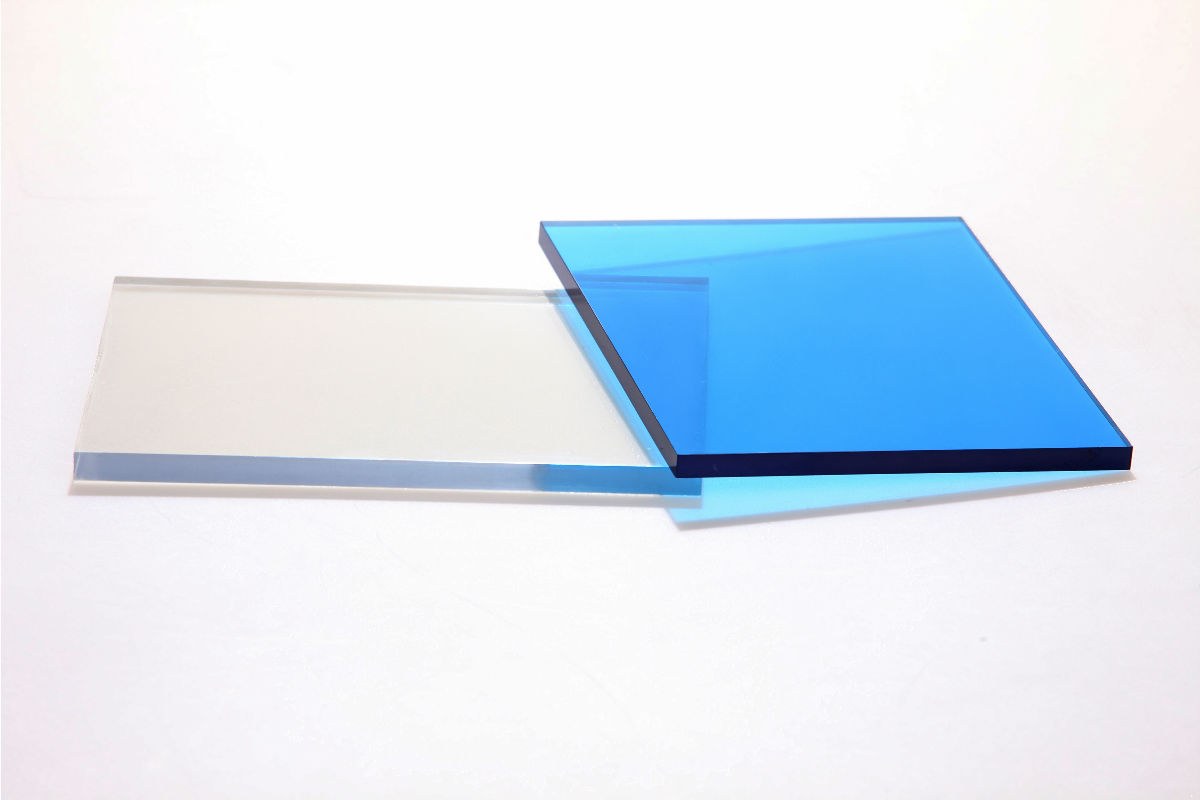
What makes polycarbonate turn yellow?
Polycarbonate does not yellow on its own — it yellows when UV reaches unprotected resin. The four usual causes are:
- No UV layer. Cheap sheet made from recycled resin without a co-extruded barrier degrades in a couple of years.
- Wrong side out. Installing the sheet with the protected side facing inward leaves the raw side exposed to the sun.
- Harsh cleaning. Abrasive pads and strong solvents wear away the UV skin over time.
- Low-grade resin. Resin without UV stabilizers degrades faster even under a thin barrier.
How to tell a sheet is UV-protected
- UV-side marking. The protected face carries a printed or embossed film that reads “UV side” and is removed after installation.
- Labelled face. Sheets are marked so the UV side faces the sun when fitted.
- Written warranty. UV-protected sheet is sold with a warranty against yellowing and impact, typically 5–10 years.
- Manufacturer extrusion line. As a manufacturer we co-extrude the UV layer in-house on our own extrusion lines and back every sheet with a written warranty.
FAQ
Does polycarbonate turn yellow over time?
Not when it has a co-extruded UV layer. UV-protected sheet stays clear for 10 to 15 years; unprotected sheet yellows and embrittles within 2 to 3 years.
How long does polycarbonate sheet last outdoors?
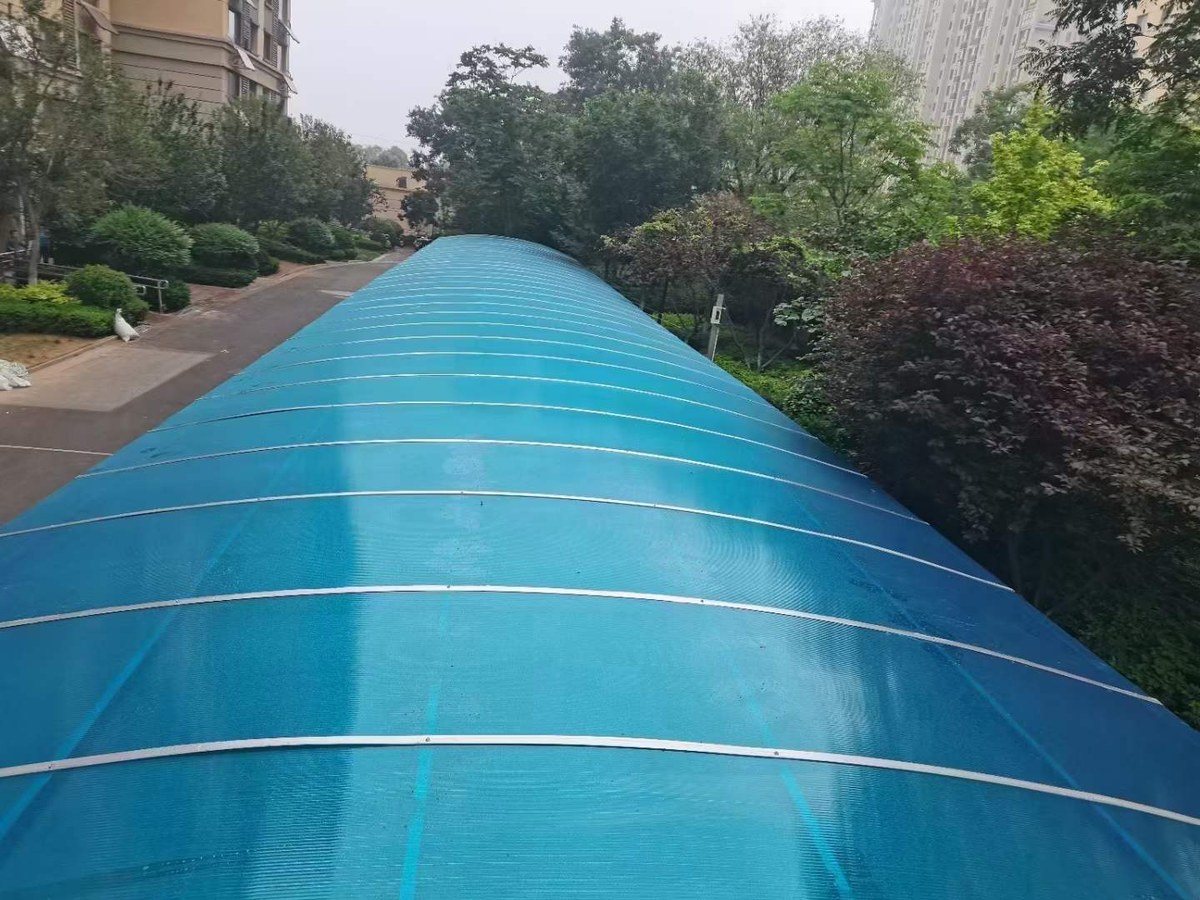
With a co-extruded UV layer installed UV-side out, multiwall and solid sheets typically last 10 to 15 years and corrugated 5 to 10 years. The warranty on UV-protected sheet is usually 5 to 10 years.
Which side of polycarbonate faces the sun?
The UV-protected side, marked with a printed film or label, faces outward toward the sun. Installing it the wrong way round exposes the unprotected side and shortens the sheet life.
Can I clean polycarbonate with any product?
Use mild soap and lukewarm water with a soft cloth. Avoid abrasive pads, scrapers and solvents, which scratch or dissolve the co-extruded UV layer.
Is a UV coating the same as a co-extruded UV layer?
No. A coating sits on the surface and can wear or scratch away; a co-extruded layer is fused into the sheet during extrusion, so it lasts for the life of the panel.
Need UV-protected polycarbonate sheet for a greenhouse, canopy or skylight? Contact our team with your application and thickness — we will recommend the right grade and send a quote.
Specifying UV protection?
Send us four things and we’ll come back with the right sheet type, thickness and fixing details — plus a reference project for the same application:
- What the project is — roofing, canopy, partition, skylight, or signage
- Size — sheet dimensions or total area in m²
- Quantity — sheets or square metres
- Destination country or port
Related on this site
- All Outdoor Materials — roofing, cladding, glazing, canopies