
Short answer: choose corrugated polycarbonate when you are replacing or matching a metal-profile roof and only need daylight plus weather protection; choose multiwall polycarbonate when you need thermal insulation, less heat loss, or a self-supporting panel for a greenhouse, insulated skylight or canopy. Both are UV-protected, impact-resistant polycarbonate — the real difference is the cross-section: one is a thin single-skin wave, the other a thick multi-chamber hollow panel.
Both options are covered in our manufacturing range — corrugated polycarbonate sheets and multiwall polycarbonate sheets — so whichever way this comparison points for you, we can supply it.
What is corrugated polycarbonate sheet?
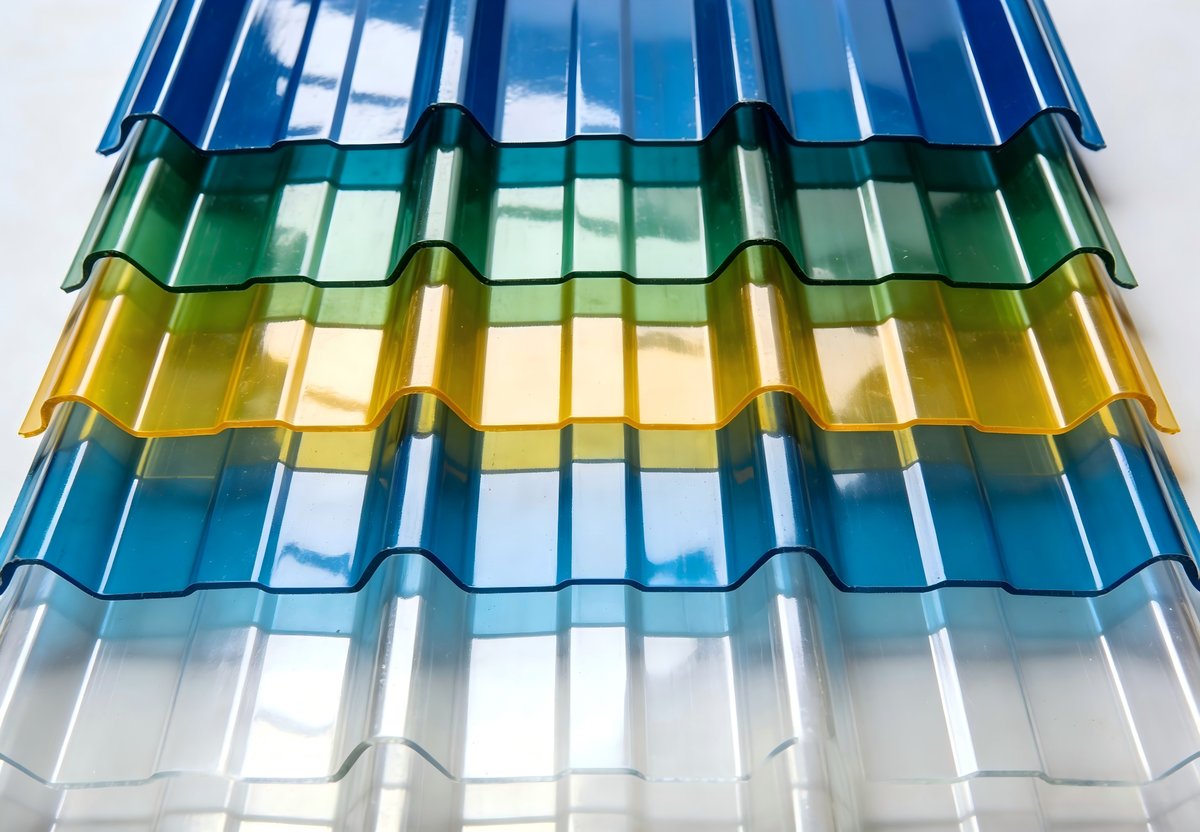
Corrugated PC sheet is a single-layer polycarbonate panel pressed into the same wave profile as color-steel (metal) roofing, so it drops straight into a metal roof as a daylight strip. It is thin — 0.8 mm to 3.0 mm — and is named by its effective cover width: 840, 900, 930, 950 or 1050. Clear sheet transmits 85–90% of visible light while blocking UV, and because it matches standard metal profiles it needs no special framing.
What is multiwall polycarbonate sheet?
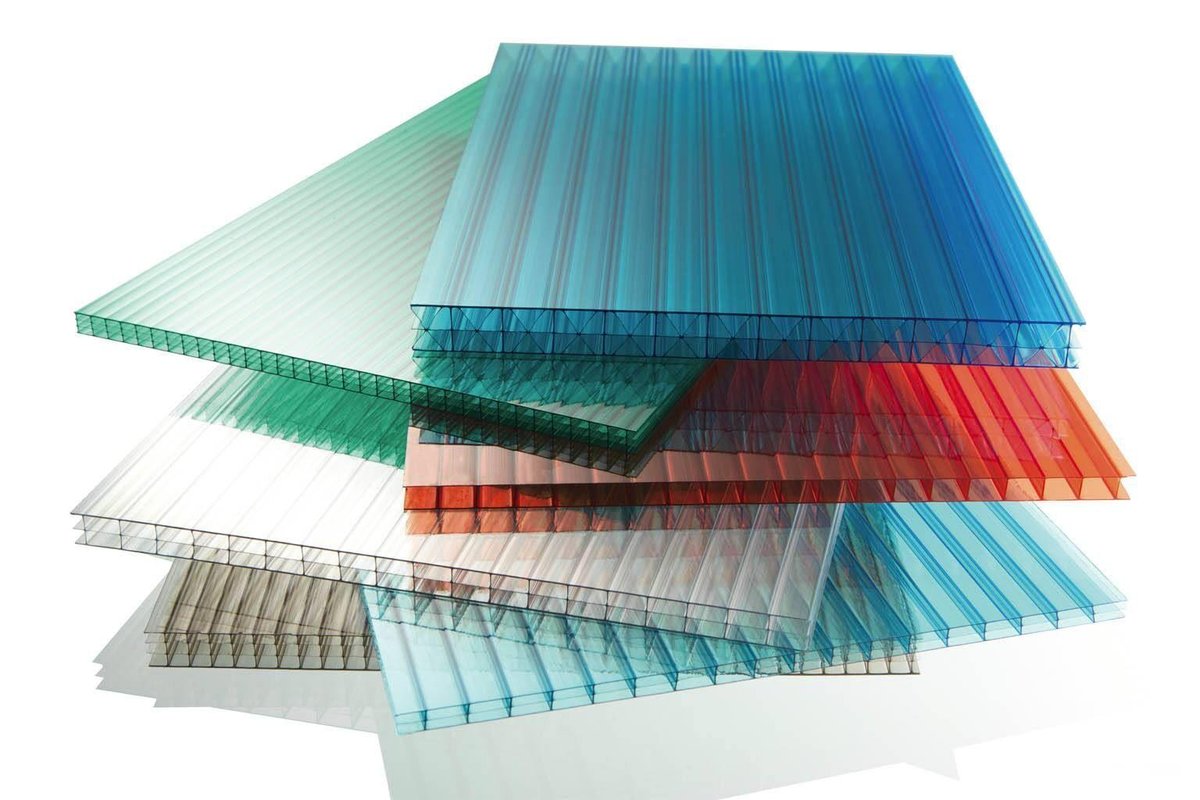
Multiwall (also called twinwall) PC sheet is a thick hollow panel made of two to five walls separated by ribs, giving it trapped-air chambers that insulate far better than a single skin. It comes in 4 mm to 30 mm thickness on a 2100 mm standard width, with structures from twin-wall up to X-braced multi-chamber designs. This is the sheet behind most greenhouses, insulated skylights and commercial canopies.
Corrugated vs multiwall: the numbers
As a manufacturer we produce both profiles to the industry-standard ranges below; the table is the fastest way to see where they part ways.
| Property | Corrugated PC sheet | Multiwall PC sheet |
| Structure | Single-layer wave profile | Twin / triple / X-wall hollow chambers |
| Thickness | 0.8–3.0 mm | 4–30 mm |
| Standard width | 840 / 900 / 930 / 950 / 1050 mm (effective) | 2100 mm (1220 / 1560 / 1820 custom) |
| Light transmission (clear) | 85–90% | 25–82% |
| Thermal insulation (U-value) | Single skin, roughly single-glazing (~5.5–6.8 W/m²·K) | 1.5–3.9 W/m²·K |
| Weight | ~1.0–3.5 kg/m² | 1.0–3.5 kg/m² |
| Fire rating | B1 (GB 8624) | B1, UL94 V-0~V-2, Euroclass B-s1,d0 |
| Service temperature | -40 to +120 °C | -40 to +120 °C |
| Typical cost | Lower | Higher |
| Best for | Metal-roof daylighting, carports, corridors, farm sheds | Greenhouses, insulated roofs, skylights, canopies |
When to choose corrugated polycarbonate
- Matching a metal roof. The wave profile lines up with color-steel sheets, so a daylight strip installs with the same purlins and fasteners.
- Budget daylighting. Thinner material means lower cost per square metre for unheated sheds, carports and corridors.
- Maximum light. Clear corrugated sheet delivers 85–90% transmission — brighter than most multiwall.
- Simple replacement. It swaps into old FRP or PVC skylight runs with minimal framing changes.
When to choose multiwall polycarbonate
- Insulation matters. Trapped-air chambers cut heat loss (U-value 1.5–3.9 W/m²·K), so heated greenhouses and living spaces stay warmer for less energy.
- Wider spans. The thick hollow structure is stiffer, so it bridges larger purlin spacing without sagging.
- Condensation control. The multi-wall build with an anti-drip option reduces falling droplets inside greenhouses.
- Longer design life. Heavier-gauge construction and co-extruded UV protection suit permanent architectural roofs.
Quick decision guide
| If you are building… | Pick |
| A daylight strip in a factory or farm metal roof | Corrugated PC sheet |
| A heated greenhouse or nursery | Multiwall PC sheet |
| A carport, walkway or corridor cover | Either — corrugated for cost, multiwall for comfort |
| An insulated skylight or canopy | Multiwall PC sheet |
| A budget shed or animal shelter | Corrugated PC sheet |
Frequently asked questions
Which is better, corrugated or multiwall polycarbonate?
Neither is better overall — it depends on the job. Corrugated wins on cost and metal-roof compatibility; multiwall wins on insulation and span. For a heated greenhouse or insulated skylight choose multiwall; for a daylight strip in a factory or farm roof choose corrugated.
Is corrugated polycarbonate as strong as multiwall?
Multiwall is stiffer across a span because of its thick hollow chambers, so it can bridge wider purlin spacing unsupported. Corrugated is strong for its thickness but is a thin single skin, so it normally sits on closer-spaced metal purlins.
Which transmits more light, corrugated or multiwall?
Corrugated clear sheet transmits 85–90%, higher than multiwall, which ranges from 25% to 82% depending on thickness and structure. If maximum light is the goal and insulation is not needed, corrugated is brighter.
Is corrugated polycarbonate cheaper than multiwall?
Generally yes. Corrugated is thinner and uses less material per square metre, so it costs less up front. Multiwall costs more but saves on heating and cooling energy over its service life.
Can corrugated and multiwall sheets be used together on one roof?
Yes. A common detail is multiwall over the main insulated area and corrugated strips over unheated or metal-profile sections. Both are polycarbonate and share the same UV-side and sealing requirements.
Need help choosing between corrugated and multiwall for your roof? Contact our team with your span, load and insulation requirements — we will recommend the right profile, thickness and accessories and send a quote.
Still deciding between corrugated and multiwall?
Send us four things and we’ll recommend which one fits your project — with thickness, structure and a reference project for the same application:
- What the roof covers — factory, barn, carport, or walkway
- Roof span and slope (or total area in m²)
- Whether you need maximum light or maximum insulation
- Destination country or port
Related on this site
- Polycarbonate for Greenhouses — 8 mm twin-wall, anti-drip, dual-sided UV
- Polycarbonate for Carports & Canopies — solid 6 mm for impact, multiwall for diffusion
- Polycarbonate for Commercial Skylights — opal diffusion, U-value 2.0-3.0 W/m2K