Introduction
Polycarbonate sheets are prized for their exceptional impact resistance, light transmission, and long service life — often exceeding 15 years with proper care. However, in Southeast Asia’s hot, humid, and dusty climate, incorrect cleaning habits can cause permanent scratches, yellowing, hazing, and structural damage within just a few years. Many polycarbonate installations fail prematurely not because of material defects, but because of improper maintenance techniques.
This comprehensive guide provides practical, region-specific best practices for cleaning and maintaining polycarbonate sheets. Whether you are caring for a greenhouse roof, carport canopy, skylight, or industrial glazing, these methods will preserve clarity, strength, and appearance for decades. We cover daily cleaning routines, products to avoid, stain removal techniques, scratch repair, seasonal inspection checklists, and protective film management.
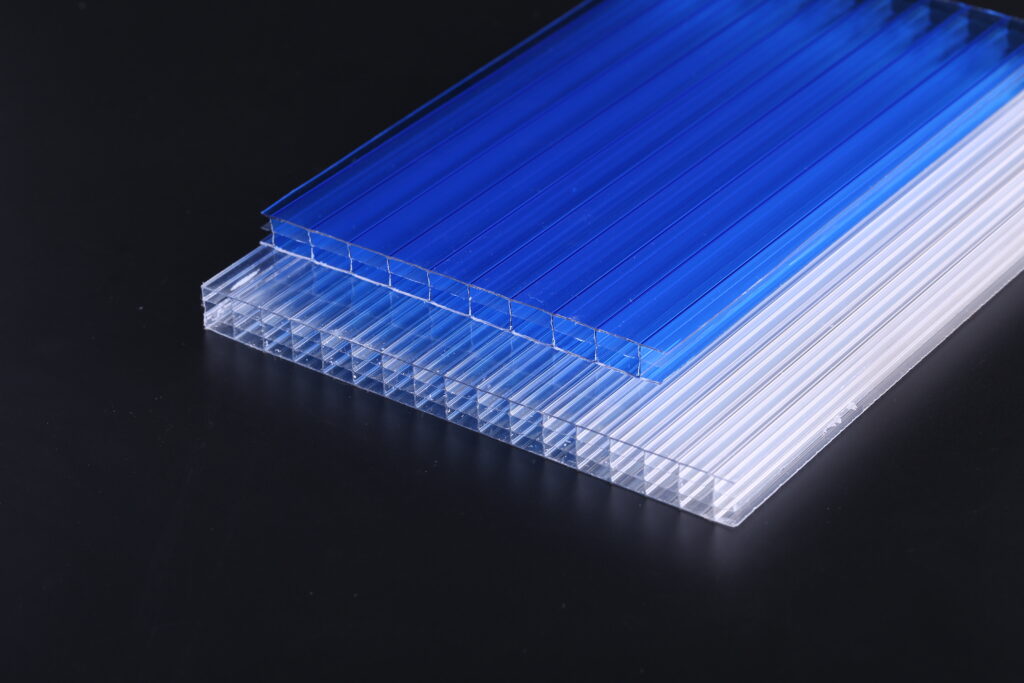
Daily Cleaning Routine
Regular gentle cleaning is the most effective way to maintain polycarbonate sheet clarity and prevent dirt buildup that can trap moisture and promote microbe growth. Follow these simple steps for routine maintenance:
Step 1 — Rinse with Water: Begin by rinsing the entire sheet surface with clean water or lukewarm water mixed with a small amount of mild neutral dish soap (pH 6–8). This removes loose dust, pollen, and bird droppings before any wiping contact. Use a garden hose with a gentle spray nozzle — avoid high-pressure washers.
Step 2 — Wipe Gently: Using a soft cotton cloth, microfiber cloth, or a soft-bristle brush, gently wipe the surface in one direction (top to bottom, or left to right). Never use circular motions, which create microscratches that accumulate over time and make the sheet look hazy.
Step 3 — Rinse Thoroughly: After wiping, rinse thoroughly with clean water to remove any soap residue. Soap left to dry on the surface can leave streaks and attract more dust.
Step 4 — Air Dry Naturally: Allow the sheet to air dry naturally. Avoid wiping the surface dry — this creates static electricity that attracts airborne dust particles. In humid climates, tilt the sheet slightly so water runs off rather than pooling.
Frequency: For most installations, a gentle rinse every 2–4 weeks is sufficient. In areas with heavy pollution, construction dust, or coastal salt spray, increase frequency to weekly. Never allow bird droppings or tree sap to dry and bake onto the surface in direct sunlight — this causes chemical etching.
Products and Tools You Must Avoid
Polycarbonate is chemically sensitive. Many common cleaning products contain ingredients that react with polycarbonate, causing crazing (a network of fine surface cracks), yellowing, or even dissolution. The following substances and tools can cause irreversible damage:
🛑 High-Pressure Water Washers: Even at low pressure, these can force water into the sheet edges, compromising the edge seal and allowing moisture to enter multiwall channels. This leads to internal condensation, algae growth, and delamination.
🛑 Hard Brushes and Abrasive Pads: Scouring pads, steel wool, wire brushes, razor blades, and stiff bristle brushes will permanently scratch the surface. Once scratched, polycarbonate cannot be fully restored to its original optical clarity.
🛑 Ammonia-Based Cleaners: Common glass cleaners like Windex contain ammonia, which chemically attacks polycarbonate. Use only cleaners specifically labeled as “polycarbonate safe” or “plastic safe.”
🛑 Acidic or Alkaline Cleaners: Vinegar (acetic acid), bleach (sodium hypochlorite), oven cleaners, and drain cleaners are all aggressive to polycarbonate. Even diluted solutions can cause surface etching if left in contact for more than a few seconds.
🛑 Organic Solvents: Gasoline, acetone, benzene, toluene, paint thinners, and nail polish remover dissolve or craze polycarbonate on contact. Never use these near polycarbonate sheets.
Safe Alternatives: Use warm water with a few drops of mild dish soap (pH neutral), or a dedicated plastic cleaner. Isopropyl alcohol (70% or less concentration) can be used sparingly for degreasing, but must be rinsed off immediately.
How to Remove Stubborn Stains Safely
For dried-on stains such as bird droppings, tree sap, mud splatter, hard water spots, or grease, aggressive scrubbing will scratch the surface. Instead, use the following stain-specific methods:
Bird Droppings and Tree Sap: Soak the affected area with distilled or deionized water for 5–10 minutes. Place a wet cotton cloth or paper towel against the stain to keep it moist. The deposit will soften and can then be gently wiped away with a soft cloth. For stubborn sap, apply a small amount of isopropyl alcohol (70%) to a soft cloth, dab the spot, wait 30 seconds, then wipe and immediately rinse with water.
Hard Water Spots (Limescale): Mix a very dilute solution of distilled water with a few drops of lemon juice (not concentrated). Apply with a soft cloth, gently wipe, and rinse immediately. Do not let the solution dry on the sheet. For persistent spots, use a polycarbonate-specific descaling product.
Oil and Grease: Wipe with a soft cloth dampened with isopropyl alcohol (70% or less), then rinse immediately with water and mild soap. Do not let the alcohol evaporate on the surface.
Paint Splatters: Remove fresh paint by wiping gently with a soft cloth dampened with the appropriate solvent listed as safe for polycarbonate. For dried paint, use a plastic razor blade (never metal) at a shallow angle, working from the edge inward.
⚠️ Safety Rule: Always spot-test any cleaning agent on a small, inconspicuous area (ideally at the edge of the sheet or a cut-off scrap) before applying it to the visible surface. Wait 5–10 minutes and check for any hazing, discoloration, or surface change.
Repairing Minor Scratches and Surface Damage
While polycarbonate is highly impact-resistant, its surface is softer than glass and prone to microscratches from improper cleaning. Light surface scratches can often be polished out:
Method 1 — Plastic Polish: Apply a specialized plastic polish (such as Novus #2 or Meguiar’s PlastX) to a clean, soft microfiber cloth. Rub in a circular motion with moderate pressure for 30–60 seconds, then buff with a clean section of the cloth. Repeat if necessary. Available from automotive supply stores.
Method 2 — Fine Wet/Dry Sanding: For deeper scratches that the polish cannot remove, use 2000+ grit wet/dry sandpaper. Wet the surface and the sandpaper with water (add a drop of dish soap as lubricant). Sand the scratch gently in one direction using light pressure. Rinse, dry, then apply plastic polish to restore gloss. Progress to 3000 grit and then 5000 grit for a mirror finish.
⚠️ Important: Deep scratches penetrating more than 10% of the sheet thickness cannot be fully polished out. For structural applications or high-optical-clarity installations (such as display windows or machine guards), replace the sheet rather than attempting repair. Prevention through careful cleaning is always the most cost-effective approach.
Semi-Annual Maintenance Checklist
Set a calendar reminder every 6 months to perform a thorough inspection and maintenance check of your polycarbonate installation. Following this checklist will catch small issues before they become expensive repairs:
☐ Check Mounting Hardware: Inspect all screws, clamps, profiles, and brackets for tightness. Re-torque any loose fasteners. In tropical climates, thermal expansion and contraction cycles can gradually loosen hardware.
☐ Inspect Edge Sealant: Examine sealing tapes, gaskets, and silicone seals along the sheet edges. Look for gaps, cracks, peeling, or signs of water ingress (condensation inside multiwall channels). Replace any compromised sealant immediately.
☐ Look for Yellowing or Hazing: Check the sheet surface for discoloration, especially on sheets without UV coating. Yellowing indicates UV degradation and may require replacement of non-UV-coated sheets. Hazing or cloudiness suggests chemical attack or microscratch accumulation.
☐ Clean Gutters and Drainage: Remove leaves, dirt, and debris from gutters, channels, and drainage holes near the panels. Blocked drainage can cause water backup that damages edge seals and promotes algae growth.
☐ Verify Expansion Gaps: Ensure the expansion gaps at sheet ends have not filled with dirt, debris, or insect nests. Blocked expansion gaps prevent the polycarbonate from expanding and contracting with temperature changes, potentially causing buckling or cracking.
☐ Check for Algae or Mold: In humid climates, inspect multiwall channel openings for algae growth inside the channels. If present, flush channels with a dilute hydrogen peroxide solution (3% concentration) using a low-pressure garden sprayer, then rinse thoroughly.
Protective Film Removal Timing
New polycarbonate sheets are delivered with a protective polyethylene film applied to both sides. This film protects the surface during transport, handling, and installation. However, it is designed for short-term use only:
Remove Within 30 Days: The protective film must be removed within 30 days of installation. Prolonged exposure to UV radiation from sunlight causes the adhesive to bond chemically with the polycarbonate surface, making removal extremely difficult.
Consequences of Delayed Removal: If left longer than 30 days, the film becomes brittle and may tear in small pieces during removal. The remaining adhesive residue attracts dust and dirt, creating a permanently cloudy appearance that cannot be fully cleaned. In severe cases, the film may fuse with the polycarbonate, requiring mechanical abrasion or solvent application — both of which damage the sheet surface.
Removal Tips: Remove the film on a warm day when the adhesive is softer. Start peeling from a corner at a 45° angle, pulling steadily. If the film resists, warm it gently with a hair dryer (low heat) to soften the adhesive. Never use a razor blade or scraper to lift the film edge — this will gouge the polycarbonate.
Conclusion — Why Choose Jietai Polycarbonate
Proper cleaning and maintenance can extend the service life of polycarbonate sheets well beyond 15 years — even in the challenging tropical climate of Southeast Asia. The key principles are simple: use only soft cloths and neutral soap, avoid harsh chemicals and abrasive tools, clean stains promptly using safe methods, and perform semi-annual inspections to catch minor issues early.
At Jietai, we manufacture high-quality polycarbonate sheets with co-extruded UV protection on both sides, ensuring superior resistance to yellowing and degradation. Our sheets are available in a wide range of thicknesses (4mm to 20mm for multiwall, 1.5mm to 15mm for solid), colors, and custom sizes with factory-direct pricing. All sheets come with protective film and detailed installation guidelines.