Bottom line: polycarbonate sheet transmits between roughly 20% and 89% of visible light, depending on its type, thickness, structure and colour. Clear solid sheet transmits the most (up to 89%), while thick honeycomb and nine-cavity interlocking panels transmit the least (down to about 20%). The number that matters is the one your project needs, not the highest one: greenhouses want 75-82%, skylights usually target 50-70% to control glare, and privacy screens need diffused light rather than transparent light. This 2026 guide lists the complete transmission data by type and thickness so you can match the sheet to the application.
Light Transmission by Product Type
Transmission is measured as the percentage of visible light that passes through the sheet. The five common types in our range break down as follows.
| Product type | Structure | Light transmission | Typical use |
|---|---|---|---|
| Solid clear sheet | Solid | up to 89% | Glazing, displays, machine guards |
| Multiwall sheet | Twin / triple / X / honeycomb | 25-82% | Greenhouses, skylights, canopies |
| Interlocking panel | 3-wall to 9-cavity | 20-82% | Facades, partitions, signage |
| Light-diffusion sheet | Micro-structured solid | 60-88% | LED diffusers, light boxes |
| Frosted sheet | Single / double frosted | 60-85% | Privacy partitions, bathrooms |
Coloured and tinted sheets (bronze, blue, green, grey) sit below the clear value of the same type — the deeper the tint, the lower the transmission. Opal and white sheets do not pass less light so much as scatter it, which we cover below.
How Thickness and Structure Change Transmission
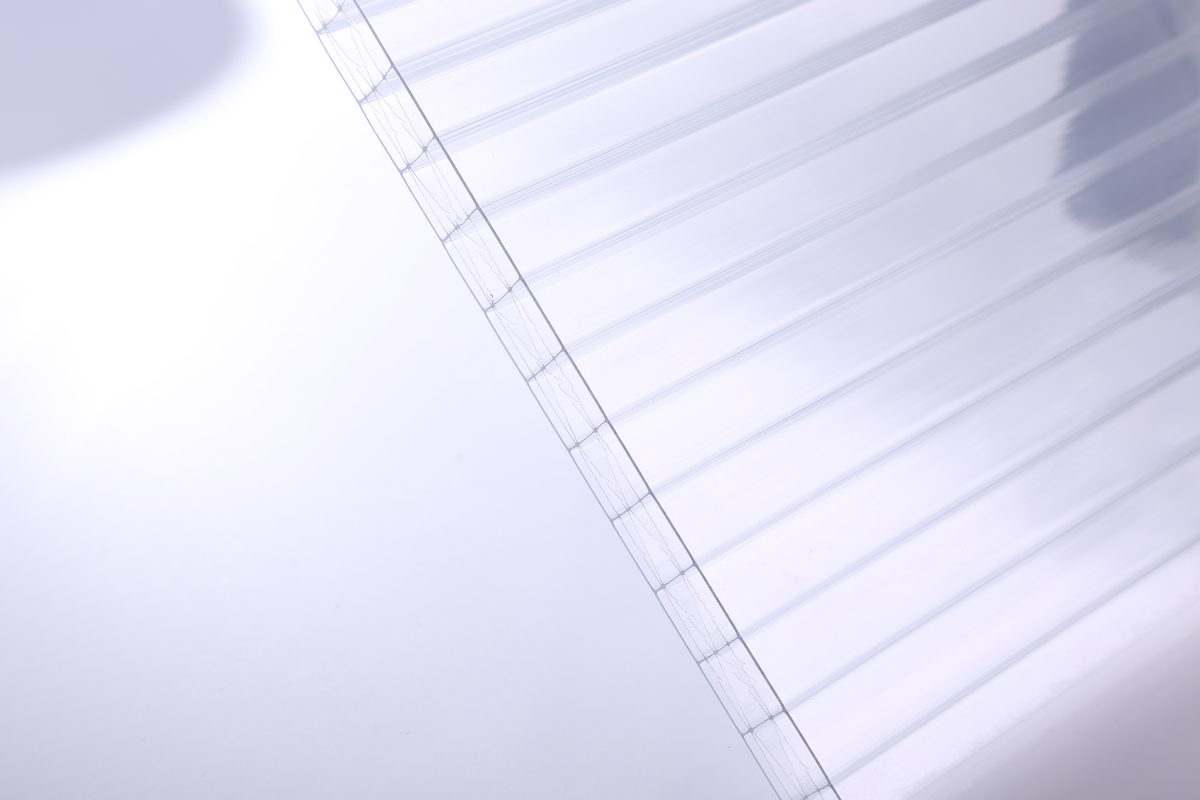
In hollow (multiwall and interlocking) sheets, transmission drops as the sheet gets thicker and gains more walls and cavities. Every extra wall reflects a little more light back out. The interlocking panel range shows the relationship clearly.
| Interlocking thickness | Structure | Light transmission |
|---|---|---|
| 10 mm | 3-wall, 2 cavities | 65-82% |
| 12 mm | 3-4 wall | 60-80% |
| 16 mm | 5-wall X | 55-78% |
| 20 mm | 5-wall X | 50-75% |
| 25 mm | Honeycomb / mi-zi | 45-72% |
| 30 mm | Honeycomb / mi-zi | 40-68% |
| 40 mm | 9-cavity | 30-60% |
| 50 mm | 9-cavity+ | 20-55% |
Multiwall sheets follow the same curve: a 4-6 mm twin-wall transmits around 78-82%, while a thick X-structure or honeycomb panel drops toward 25-40%. If light is the priority, choose the thinnest structure that still meets your span and insulation needs.
Transparent vs Diffused: Two Ways to Let Light Through
Transparent and diffused are not the same thing. A transparent sheet passes light straight through, so you can see objects behind it. A diffused sheet (opal, frosted, or micro-structured light-diffusion sheet) scatters the light, so it comes out soft and even with no hot spots and no glare — while still passing 60-88% of the light. Diffused sheet is the right choice for backlit signage, light boxes, office partitions and anywhere you want even illumination without shadows.
Choosing Light Transmission by Application
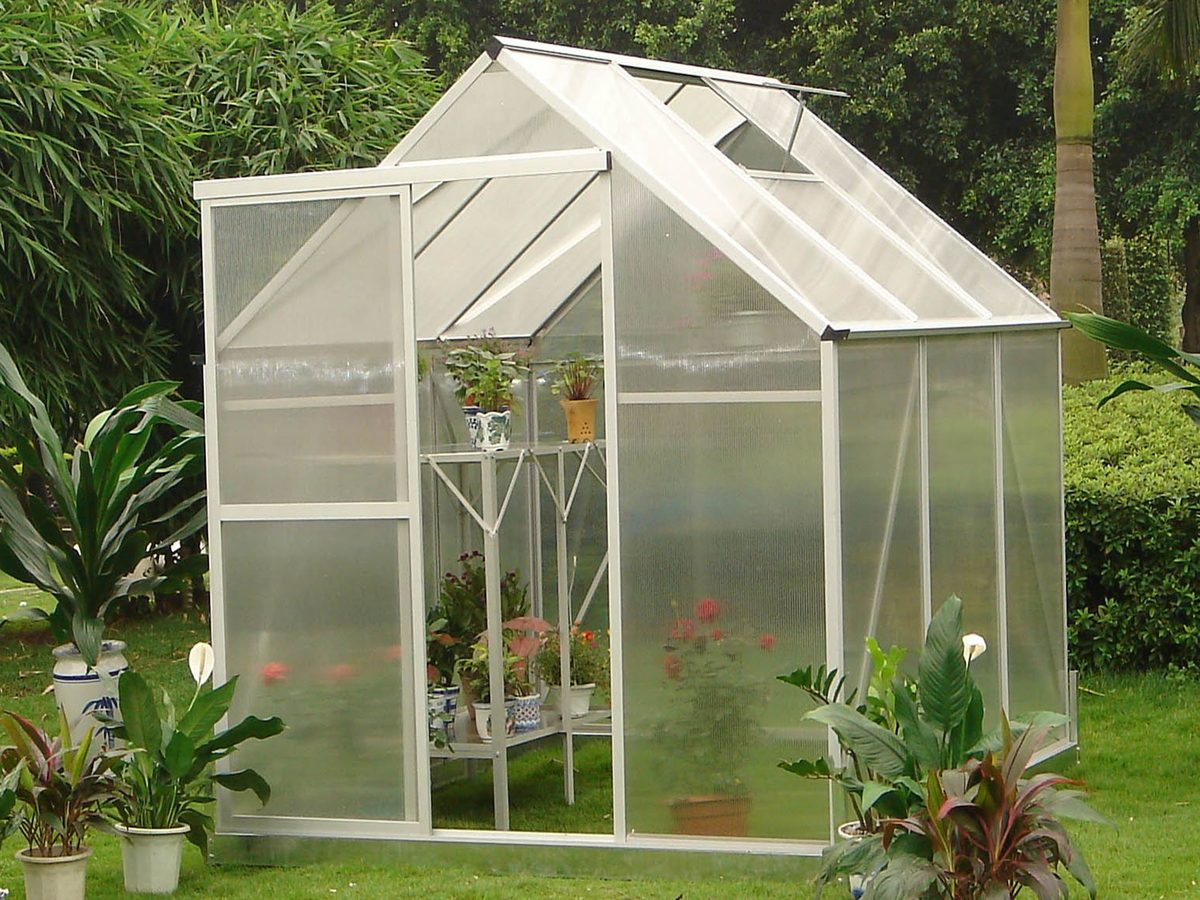
- Greenhouse / nursery — clear multiwall, 75-82%. Plants need nearly the full spectrum; a twin-wall or thin triple-wall keeps heat in without sacrificing much light.
- Skylight / atrium — 50-70%. Enough daylight to cut artificial lighting, but low enough to avoid glare and overheating.
- Canopy / carport — 40-70%. Balance daylight with shade; opal or tinted multiwall is popular here.
- Facade / partition — 20-60%, often diffused or coloured for privacy and design.
- LED diffuser / light box — 60-88% diffused sheet for uniform backlighting.
Frequently Asked Questions
What is the maximum light transmission of polycarbonate sheet?
Clear solid polycarbonate transmits up to about 89% of visible light, the highest in the range. Clear multiwall sheet tops out around 82% because its hollow walls and ribs reflect some light back out of the sheet.
Does thicker polycarbonate transmit less light?
Yes. Each added wall or cavity in a hollow sheet reflects a little more light, so a 10 mm interlocking panel transmits 65-82% while a 50 mm nine-cavity panel drops to 20-55%. Thicker clear solid sheet also transmits slightly less because there is more material for the light to travel through.
What is the difference between transparent and opal (diffused) polycarbonate?
Transparent sheet passes light straight through, so objects behind it are visible. Opal or frosted sheet scatters the light into a soft, even glow with no glare or hot spots, while still transmitting 60-88%. Diffused sheet suits light boxes, backlit signage and privacy partitions.
What light transmission does a greenhouse need?
Most greenhouses work best with 75-82% transmission, which a clear 4-8 mm twin-wall multiwall sheet provides. In a hot climate you can step down to a tinted or diffusion sheet to cut heat build-up, and in a cold climate move to a thicker triple-wall while keeping transmission above about 70%.
Does the UV coating affect light transmission?
Only marginally. The co-extruded UV layer (30-50 microns) protects the sheet from yellowing and blocks almost all UV radiation, but it has little effect on visible light, so it does not noticeably darken the sheet.
Light transmission is one of the fastest ways to shortlist the right polycarbonate sheet, but it works alongside thickness, U-value, fire rating and span. As a manufacturer we supply the full range — solid, multiwall, interlocking, diffusion and frosted — in industry-standard widths and thicknesses, with cut-to-size and custom colours available. Contact our team for a quote and we will recommend the exact type, thickness and structure for your application.