The structure of a multiwall polycarbonate sheet decides three things: how much light it lets through, how well it insulates, and how much load it can carry. The short answer for 2026 is this: twin-wall (2-wall) is the light, low-cost choice for greenhouses and DIY covers; triple-wall (3-wall) adds insulation for carports and canopies; four-wall and X-structure sheets carry heavy snow and wide spans; and honeycomb (mi-zi) sheets deliver the best strength and thermal performance for large-span skylights. Read on for the exact numbers so you can choose the right structure without overpaying.
What Is a Multiwall Polycarbonate Sheet?
Multiwall (also called cellular) polycarbonate is built from two or more flat layers joined by internal ribs, creating hollow air channels that run the length of the sheet. The trapped air provides thermal insulation, while the walls and ribs give the panel its rigidity. Jietai is a manufacturer producing multiwall polycarbonate sheets in the standard 2100 mm width, with thicknesses from 4 mm to 30 mm, co-extruded UV protection on one or both sides, and a standard length of 6 m (custom 1-12 m).
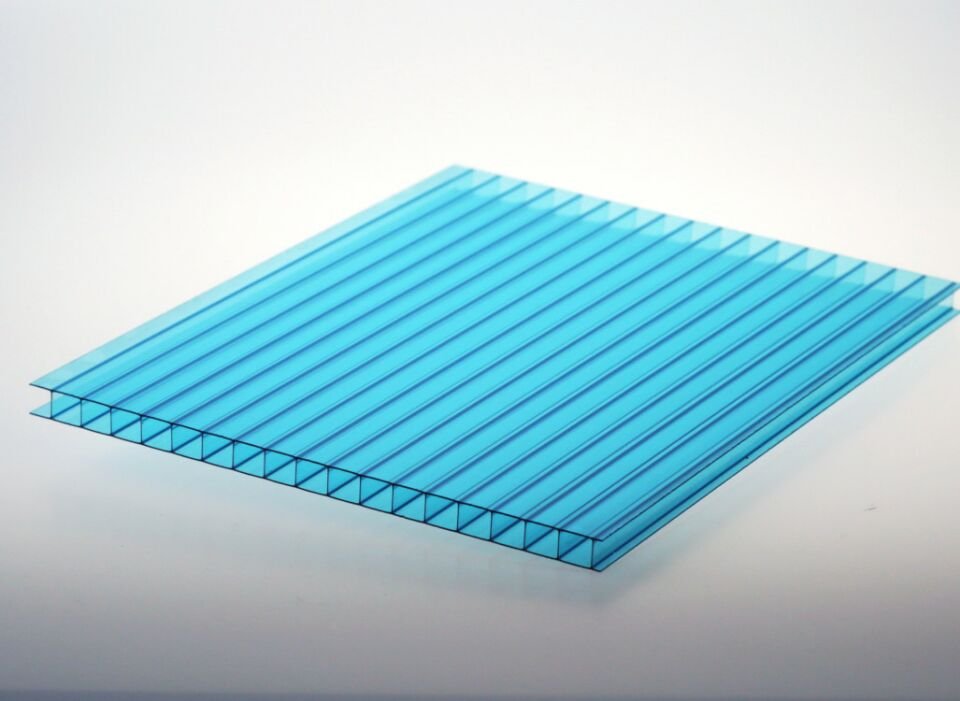
1. Twin-Wall (2-Wall) Polycarbonate
Twin-wall is the most common and affordable structure: two outer walls separated by a single row of vertical ribs, forming one row of rectangular channels.
- Thickness: 4, 6, 8, 10 mm
- Light transmission: 78-82% (clear)
- U-value: 3.0-3.9 W/m2K
- Weight: 0.8-1.7 kg/m2
- Best for: greenhouses, cold frames, DIY canopy covers, internal partitions
Bottom line: the cheapest and lightest option. Go for 8-10 mm if you want extra rigidity without moving to triple-wall.
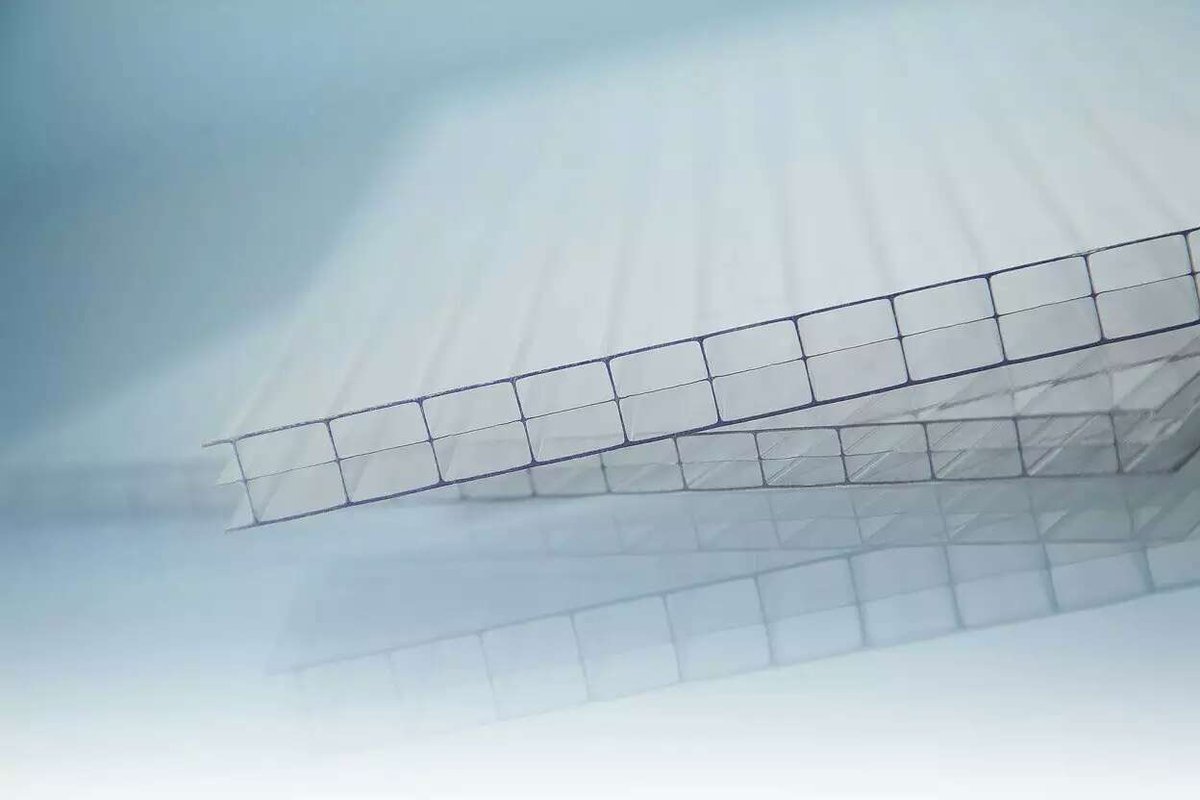
2. Triple-Wall (3-Wall) Polycarbonate
Triple-wall adds a middle layer, giving two stacked air chambers and noticeably better insulation than twin-wall.
- Thickness: 8, 10, 16 mm
- Light transmission: 72-80% (clear)
- U-value: 2.2-3.0 W/m2K
- Weight: 1.5-2.0 kg/m2
- Best for: pergolas, lean-tos, carports, verandas, insulated greenhouses
Bottom line: the best all-round balance of insulation, strength and price for most overhead glazing.
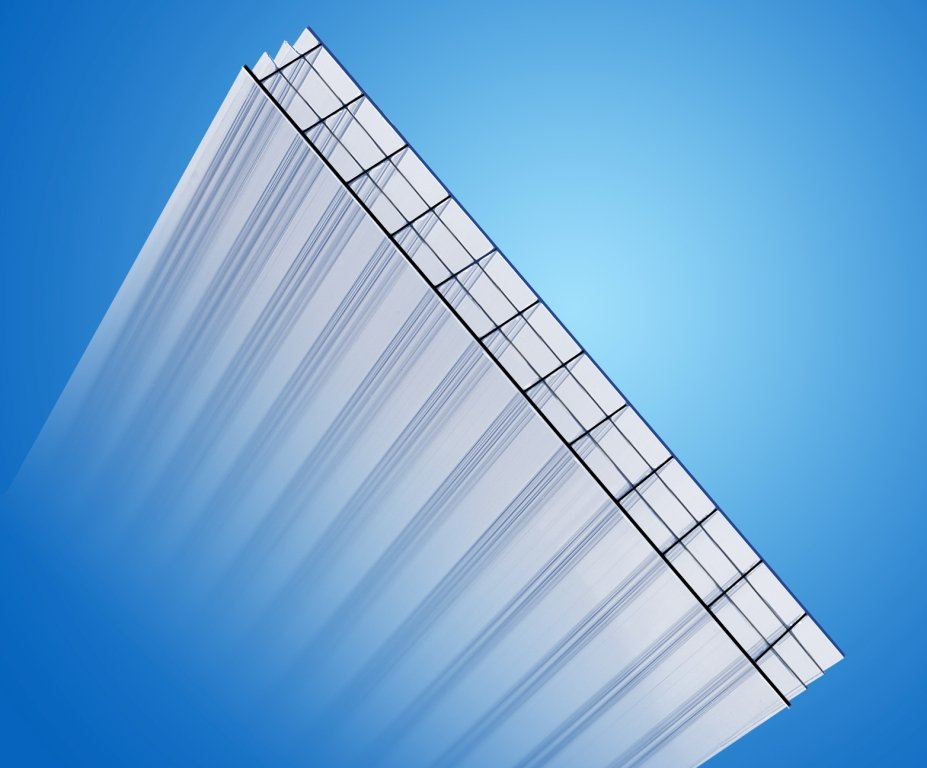
3. Four-Wall & X-Structure Polycarbonate
Four-wall sheets stack more chambers for higher insulation and rigidity. The 5-wall X-structure goes further by adding diagonal ribs that brace the panel, so it resists compression and can span further with less deflection.
- Thickness: 16, 20, 25, 30 mm
- Light transmission: 59-72% (clear)
- U-value: 1.7-2.3 W/m2K
- Weight: 2.5-3.4 kg/m2
- Best for: heavy snow loads, wide-span skylights, commercial canopies, high-insulation building envelopes
Bottom line: when the span is long or the climate is harsh, step up to four-wall or X-structure rather than simply thickening a twin-wall sheet.
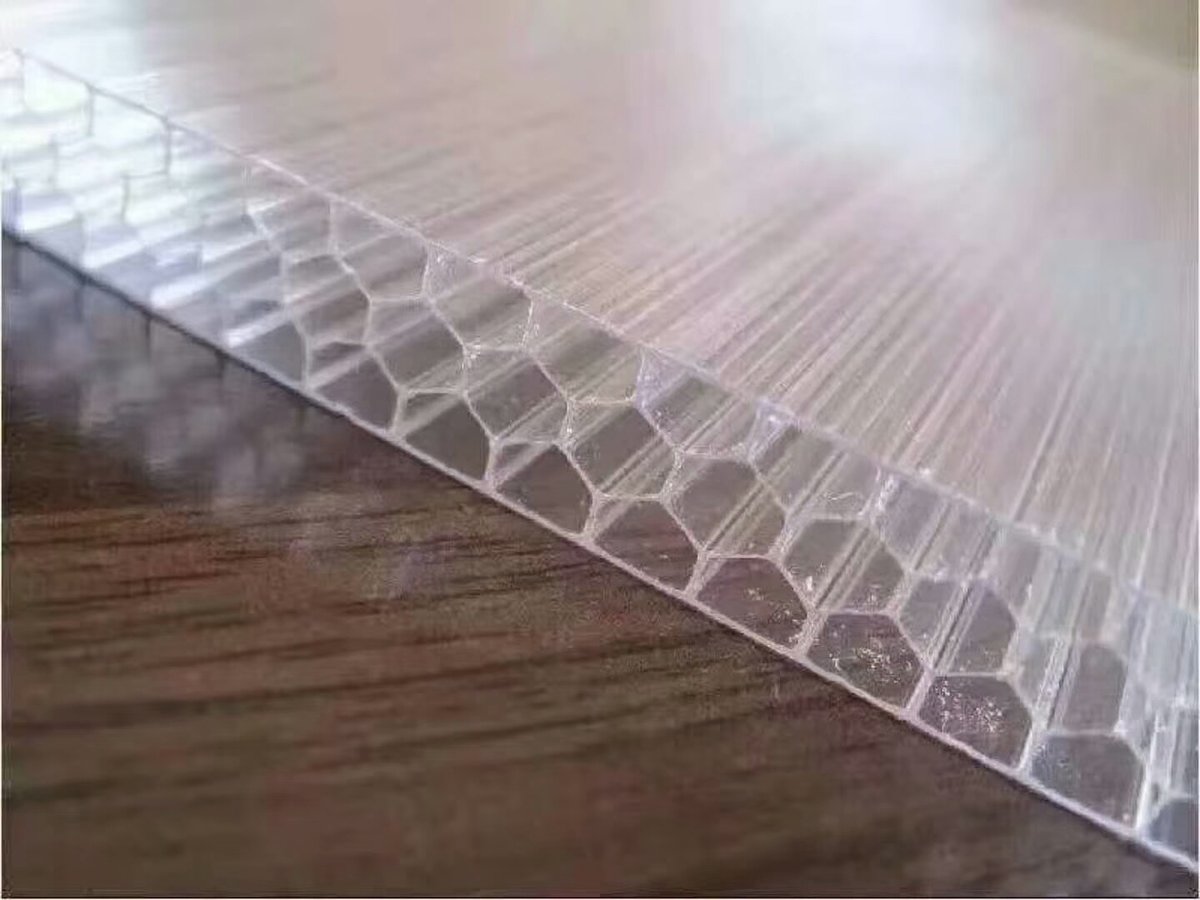
4. Honeycomb / Mi-Zi Polycarbonate
Honeycomb sheets use a dense hexagonal (or mi-zi, “rice-character”) lattice of vertical and diagonal ribs. The many small cells give the highest strength-to-weight ratio and the best thermal insulation in the multiwall family.
- Thickness: 8-25 mm and above
- Light transmission: 53-60% (clear)
- U-value: 1.5-2.9 W/m2K
- Weight: 1.8-3.5 kg/m2
- Best for: large-span skylights, atriums, premium architectural daylighting
Bottom line: the strongest and best-insulating multiwall option, ideal where maximum span and thermal performance matter more than raw light transmission.
Structure Comparison Table (2026)
| Structure | Thickness | Light (clear) | U-value | Weight | Best use |
|---|---|---|---|---|---|
| Twin-wall (2-wall) | 4-10 mm | 78-82% | 3.0-3.9 W/m2K | 0.8-1.7 kg/m2 | Greenhouses, DIY, partitions |
| Triple-wall (3-wall) | 8-16 mm | 72-80% | 2.2-3.0 W/m2K | 1.5-2.0 kg/m2 | Carports, canopies, pergolas |
| Four-wall / X-structure | 16-30 mm | 59-72% | 1.7-2.3 W/m2K | 2.5-3.4 kg/m2 | Heavy snow, wide spans |
| Honeycomb / mi-zi | 8-25 mm+ | 53-60% | 1.5-2.9 W/m2K | 1.8-3.5 kg/m2 | Large-span skylights, atriums |
How to Choose the Right Structure
Match the structure to the job, not the other way around:
- Greenhouses and cold frames – 4-8 mm twin-wall: maximum light, minimum cost.
- Carports, canopies and pergolas – 8-16 mm triple-wall: good insulation at a sensible price.
- Snow-prone or wide-span roofs – 16-25 mm four-wall or X-structure.
- Premium skylights and atriums – honeycomb / mi-zi for maximum span and thermal performance.
Whatever structure you pick, install it with the UV-protected side facing the sun, leave thermal-expansion gaps at the edges, and seal open flutes with anti-dust tape. Our factory supplies every structure in 2100 mm width with cut-to-size options; contact our team for a quote and we will recommend the exact thickness and structure for your span and climate.
Frequently Asked Questions
Which multiwall polycarbonate structure is best for a greenhouse?
A 4-8 mm twin-wall sheet is the best value for most greenhouses. It transmits 78-82% of light, keeps the cost low, and is easy to cut and fit. In a cold climate, step up to an 8-10 mm triple-wall sheet for better heat retention.
What is the difference between twin-wall and triple-wall polycarbonate?
Twin-wall has two outer layers and one row of ribs (one row of air channels). Triple-wall has three layers and two rows of ribs (two stacked air chambers), which improves insulation and rigidity at a small cost in light transmission and price.
Do more walls always mean better insulation?
Generally yes, with diminishing returns. U-value drops from about 3.9 W/m2K on a 4 mm twin-wall to about 1.5-1.7 W/m2K on a 25 mm honeycomb or X-structure sheet. More walls also add weight and cost, so choose by span and climate.
Can multiwall polycarbonate sheets be cut to size and cold-bent?
Yes. Sheets come in 2100 mm width and 6 m standard length, cut easily with a fine-tooth saw, and can be cold-bent along the rib direction for arched canopies within the minimum bending radius.
How long do multiwall polycarbonate sheets last outdoors?
With a co-extruded UV layer (30-50 microns) on the weather side, a well-installed sheet typically lasts 10-20 years outdoors without significant yellowing. Service temperature is -40 C to +120 C.