Multiwall polycarbonate fails in the first season for three reasons: the UV-protected side is installed facing down, the fasteners are driven too tight for thermal movement, or the open flutes are left unsealed. This 2026 installation guide covers the five steps that prevent all three, so a multiwall roof or glazing panel stays watertight, clear and flat for 10+ years.
Step 1: Identify the UV-protected side
Every multiwall polycarbonate sheet is co-extruded with a UV protection layer 30–50 μm thick on one face (or both, on double-sided grades). The protected side is marked “UV” or “SUN” on the protective film, and this side must always face the sun — outward on a roof, upward on a skylight. If the sheet is installed the other way round, the exposed face yellows, turns brittle and can crack within a few seasons.
Keep the protective film on while you cut and fix the sheet, then peel it off as soon as installation is finished. Film left on too long bakes onto the surface and becomes difficult to remove.
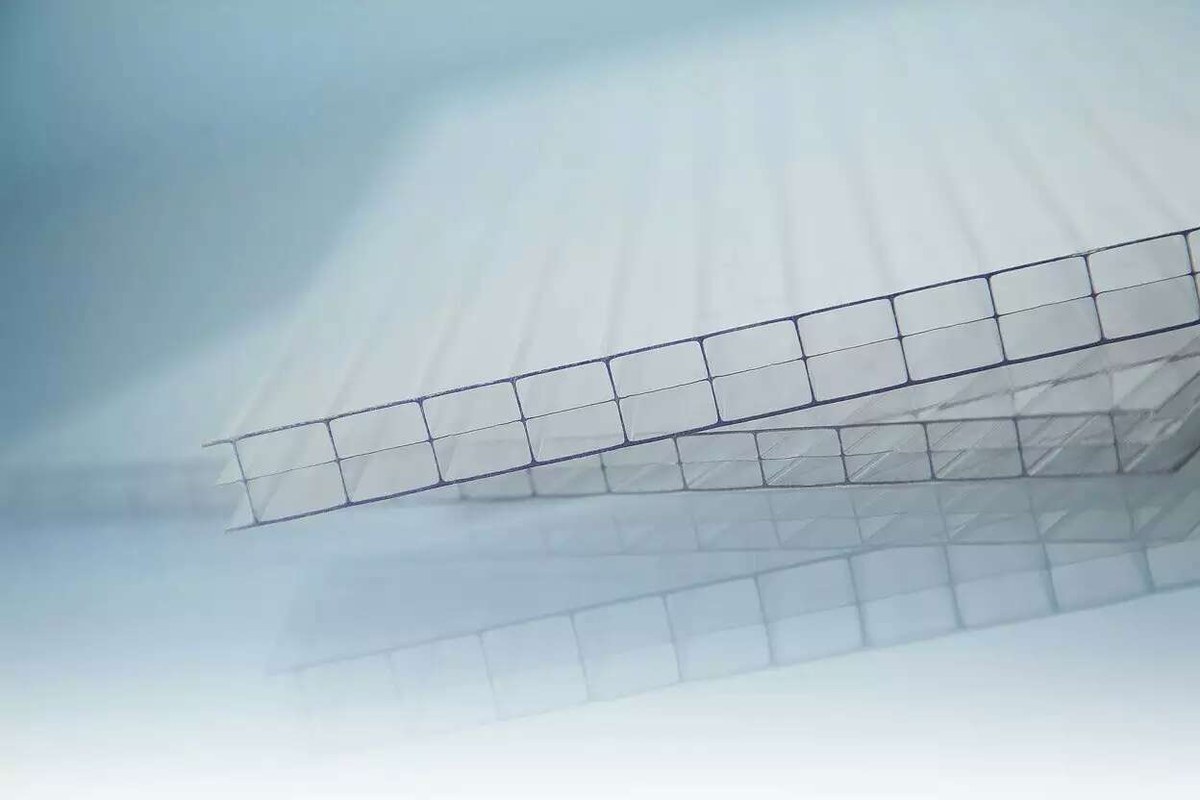
Step 2: Set purlin spacing to the sheet thickness
Multiwall sheets span between purlins, so the spacing has to match both the sheet thickness and the expected snow and wind load. The table below is a general guide for moderate loads; always check your local codes for high-wind or heavy-snow regions.
| Sheet thickness | Recommended purlin spacing | Minimum roof slope |
|---|---|---|
| 4–6 mm twin-wall | 500–600 mm | 10° |
| 8–10 mm twin-wall | 700–800 mm | 5–10° |
| 16 mm triple-wall / X-structure | 1000 mm | 5° |
| 20–30 mm honeycomb / X-braced | 1000–1200 mm | 5° |
Ribs must run in the direction of the slope so condensation drains down the flutes, and the sheet should overhang the last purlin by 50–100 mm.
Step 3: Fasten with thermal-expansion allowance
Polycarbonate expands roughly 0.065 mm per metre per °C. A 6 m sheet swinging 50 °C between winter and summer grows about 20 mm, so a rigidly clamped sheet will buckle and its fasteners will tear out.
Pre-drill screw holes 2–3 mm larger than the screw diameter, use self-tapping screws fitted with EPDM washers, and tighten just enough to hold the washer against the sheet — never compress the sheet. Fix the top edge first and work downward so the sheet can slide at the lower edge.
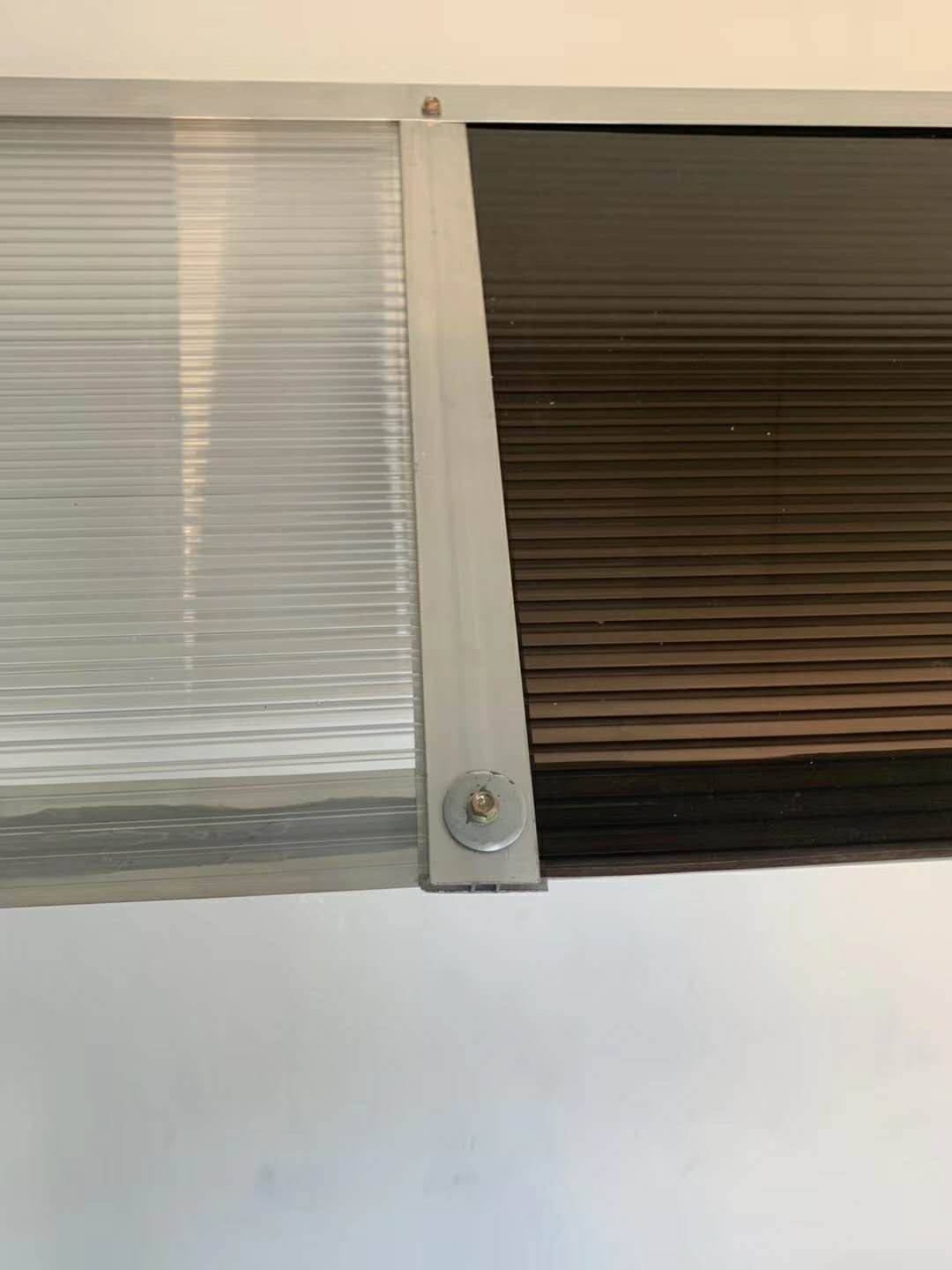
Step 4: Seal the open flutes
The hollow flutes at the top and bottom edges collect dust, insects and condensation if left open. Seal the upper edge with solid aluminium tape to keep water and dirt out, and the lower edge with a breathable filter tape that lets moisture drain while blocking dust. Then press U-channel or aluminium end caps over both edges and leave small drip holes so condensate can escape.
Step 5: Cut clean and clean carefully
Cut with a fine-tooth circular saw or a fine-tooth hand saw, and blow or vacuum the swarf out of the flutes before sealing. Score the protective film along the cut line and peel it back first so it does not melt onto the edge. After installation, wash the sheet with mild soapy water and a soft cloth — abrasive pads and solvent cleaners will scratch or haze the surface.
Get the installation right the first time
Four details decide the lifespan of a multiwall polycarbonate installation: UV side up, correct purlin spacing, loose thermal-expansion fastening, and sealed flutes. As a manufacturer, we cut sheets to your exact module and supply the matching aluminium profiles, EPDM washers and sealing tapes as a complete system. Contact our team for a quote, and we will confirm the right thickness and spacing for your project.
Frequently Asked Questions
Which side of multiwall polycarbonate faces the sun?
The UV-protected side, marked “UV” or “SUN” on the protective film, must face the sun. On a roof this means upward, and on a vertical glazing it means outward. Installing the sheet the other way round causes premature yellowing and cracking.
How much does polycarbonate expand with temperature?
Polycarbonate expands about 0.065 mm per metre per degree Celsius. A 6 m sheet under a 50 °C temperature swing grows roughly 20 mm, which is why screw holes must be oversized and edges left room to slide.
What purlin spacing do I need for multiwall sheets?
Spacing follows thickness. Use 500–600 mm for 4–6 mm sheets, 700–800 mm for 8–10 mm, and 1000–1200 mm for 16–30 mm honeycomb or X-braced sheets. These figures assume moderate wind and snow loads.
Should I drill oversized holes in polycarbonate?
Yes. Pre-drill holes 2–3 mm larger than the screw diameter so the sheet can move as it expands and contracts. Use screws with EPDM washers and do not over-tighten.
How do I seal the open edges of multiwall sheets?
Seal the upper edge with solid aluminium tape and the lower edge with breathable filter tape, then fit U-channel or aluminium end caps over both and leave small drip holes so condensation drains.