Color is the most consequential choice after thickness when specifying polycarbonate sheet in 2026. It changes three things at once — how much light gets in, how much heat comes with it, and how comfortable the space underneath feels. Most orders come down to three finishes: clear (78–86% light transmission), opal or diffused white (55–68%), and bronze or smoke grey (35–48%). Match the tint to the application and you get the right balance of daylight, heat and privacy.
How Color Affects Light, Heat and Glare
Unlike glass, where tint is largely cosmetic, polycarbonate color is a performance specification. Every finish is measured for visible light transmission (LT) under standard test conditions, and that number drives how bright, how hot and how glare-prone the covered space becomes.
| Color | Typical light transmission | Relative solar heat gain | Best for |
|---|---|---|---|
| Clear | 78–86% (up to 89% solid) | Highest | Greenhouses, maximum daylight |
| Opal / diffused white | 55–68% | Moderate | Skylights, offices, glare control |
| Bronze / smoke grey | 35–48% | Lowest | Carports, hot-climate facades |
| Lake blue | 50–70% | Moderate | Pools, commercial branding |
| Green | 30–40% | Lower | Architectural accents, canopies |
| Red / orange | 20–55% | Varies | Signage, decorative facades |
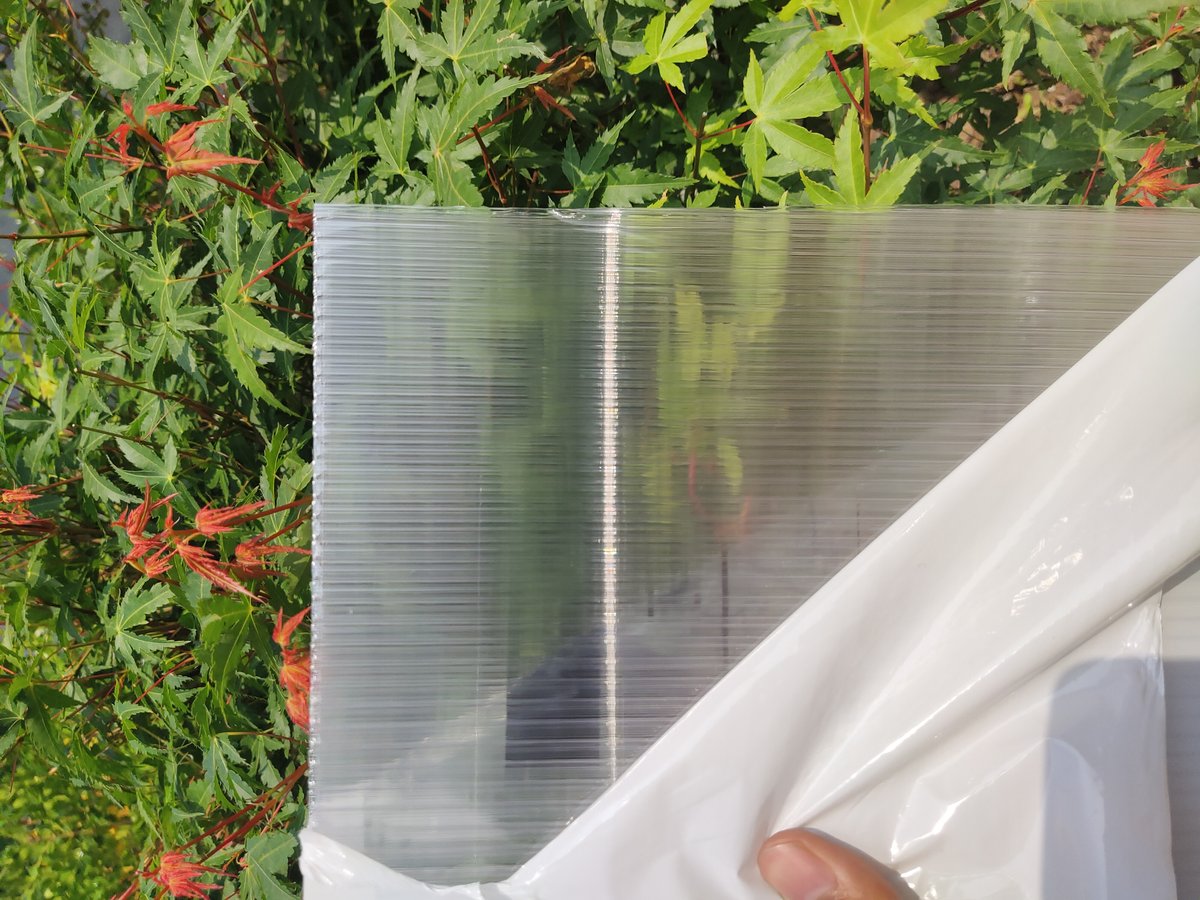
Clear Polycarbonate: Maximum Daylight
Clear sheet transmits the most light — 78–86% for multiwall and up to 89% for solid sheet — and delivers sharp, direct daylight. Choose clear when you need every lumen: greenhouses, warehouses and spaces that already receive limited natural light. The trade-off is that clear sheet also produces the highest glare and solar heat gain, so pair it with ventilation or shading in hot climates.
Opal / Diffused White: Soft, Even Light
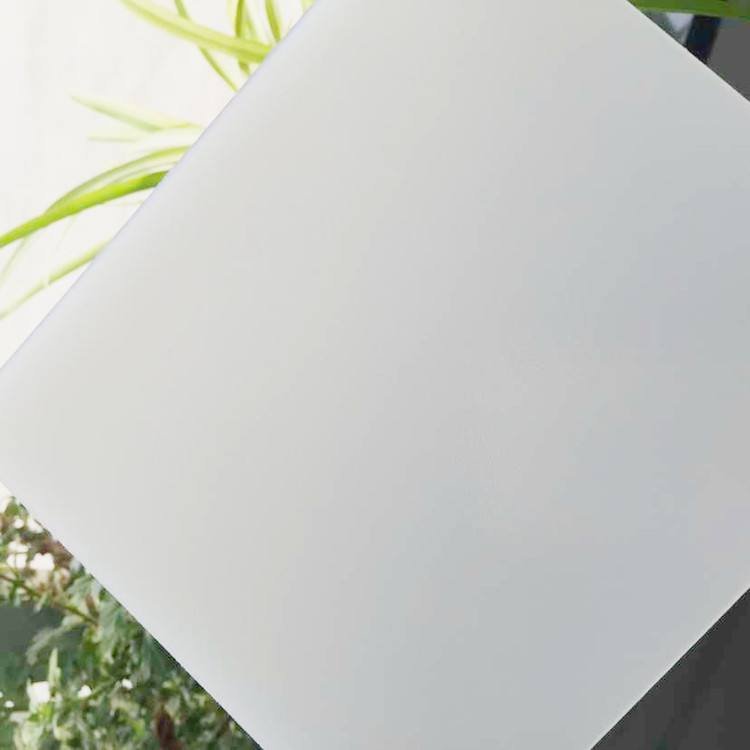
Opal polycarbonate scatters light evenly, cutting glare and eliminating hot spots while still admitting plenty of daylight (55–68% LT). It is the safest default for occupied spaces — offices, schools, hospitals and home pergolas — because it produces soft, comfortable illumination instead of the harsh brightness of clear sheet.
Bronze / Smoke Grey: Heat and Privacy Control
Bronze and smoke tints block the most heat: the solar heat gain coefficient drops from around 0.75 for clear sheet to about 0.57 for bronze, while light transmission falls to 35–48%. Use bronze for carports, parking shades, west- or south-facing facades and any roof where staying cool matters more than raw brightness. Darker tints also add privacy from above.
Colored Sheets: Blue, Green, Red and Custom
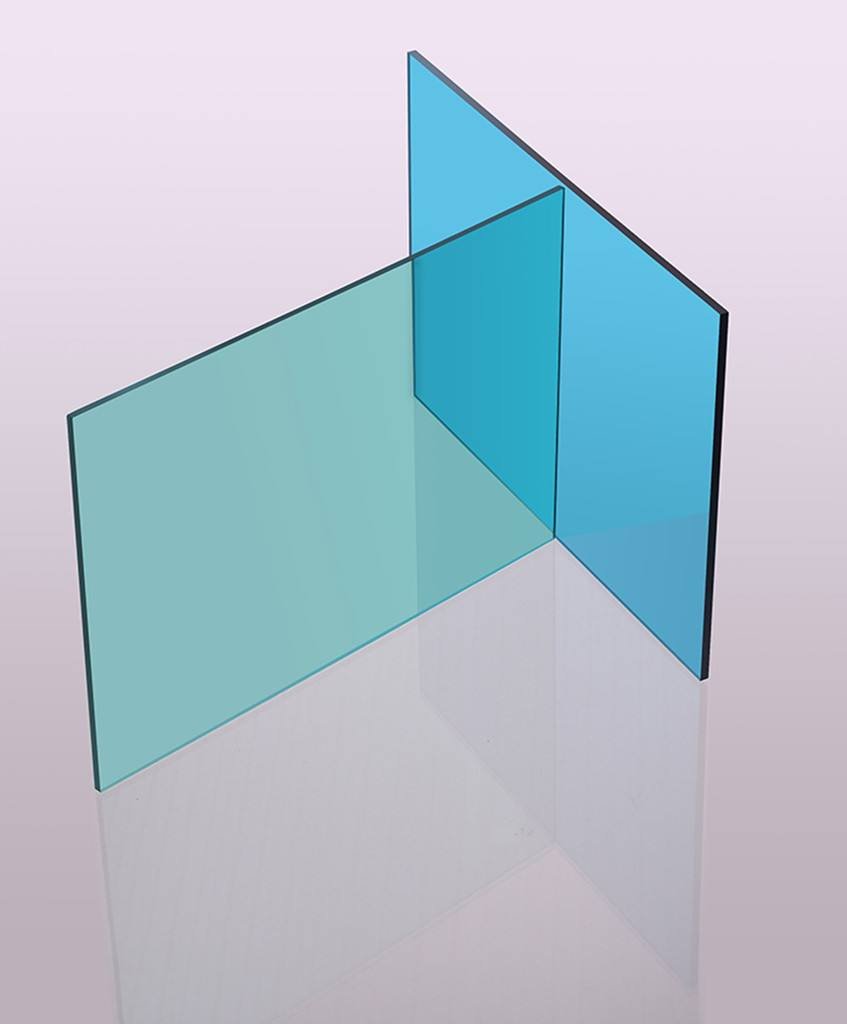
Beyond the three core finishes, polycarbonate comes in lake blue, grass green, red, orange and milk white, with custom RAL colors on request. These are primarily decorative or brand-driven choices — blue for pools and commercial branding, green for architectural accents. Light transmission varies widely (roughly 20–70% depending on color and thickness), so always confirm the exact figure for your specification.
Color Does Not Change UV Durability
A common mistake is assuming tinted sheets last longer outdoors. Long-term weathering performance is governed by the co-extruded UV protection layer (30–50 µm), not the panel color. Yellowing is simply less visible on bronze or opal panels than on clear ones — so always check the UV layer specification separately from your color choice.
Color Selection by Application
| Application | Recommended color |
|---|---|
| Greenhouse / poly house | Clear or opal (diffused for even plant light) |
| Warehouse / industrial shed | Clear or lightly diffused |
| Office / school / hospital skylight | Opal |
| Home pergola / patio | Opal (clear only with shading) |
| Carport / parking shade | Bronze or opal |
| West-facing facade | Bronze or smoke grey |
| Pool enclosure / branding | Blue or custom |
Frequently Asked Questions
What is the difference between clear and opal polycarbonate?
Clear sheet has the highest light transmission (78–86%) but passes direct, undiffused light that can cause glare and hot spots. Opal sheet scatters light evenly (55–68% LT), reducing glare and producing softer, more comfortable illumination — the better default for offices, schools and home covers.
Does bronze polycarbonate reduce heat significantly?
Yes. Bronze and smoke tints cut solar heat gain compared to clear sheet of the same thickness (solar heat gain coefficient about 0.57 versus 0.75 for clear), while lowering light transmission to 35–48%. They are a common choice for carports and west-facing facades in hot climates.
Which polycarbonate color is best for a greenhouse?
Clear is the standard for maximum plant light. Opal (diffused) is increasingly popular for commercial greenhouses because it spreads light evenly across the crop canopy, reducing shading and hot spots — a trade-off between brightness and uniformity.
Does polycarbonate color affect how quickly it yellows?
No. UV durability is determined by the co-extruded UV protection layer, not the panel color. Yellowing is simply less visible on tinted panels than on clear ones, so always check the UV layer specification separately.
What colored polycarbonate options are available?
Beyond clear, opal and bronze, standard options include lake blue, grass green, red, orange and milk white, with custom RAL colors available on request. Decorative colors are common for pools, signage and architectural facades.
Still unsure which color fits your project? Tell us your application, orientation and climate, and our team will recommend the right tint and thickness and return a quote within one business day.