Bottom line: solid polycarbonate skylight domes are the most practical way to bring soft, diffused daylight into hospitals, power plants and large public buildings. They weigh a fraction of glass, absorb impact instead of shattering, and carry a co-extruded UV layer that keeps them clear for years. Mounted on an aluminium or concrete curb with an EPDM gasket, the same pyramid or dome system delivers glare-free daylight with none of the condensation, breakage or maintenance burden of glass.
What a solid polycarbonate skylight dome is
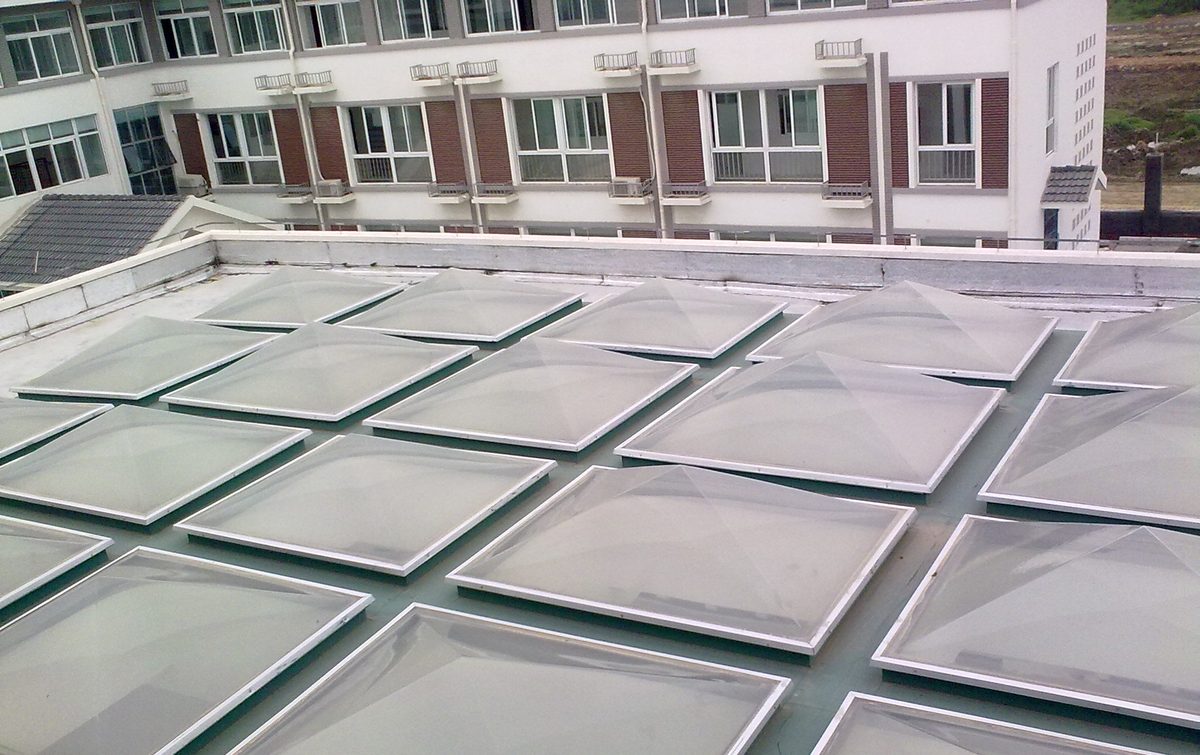
A skylight dome is a solid polycarbonate sheet thermoformed into a pyramid, round dome or flat panel and set into a raised curb. The sheet is shaped over a mould, then sealed into an aluminium or concrete upstand with an EPDM gasket and drainage flashing. The result is a self-contained daylight unit that sits flush on a flat roof and feeds even light into the space below.
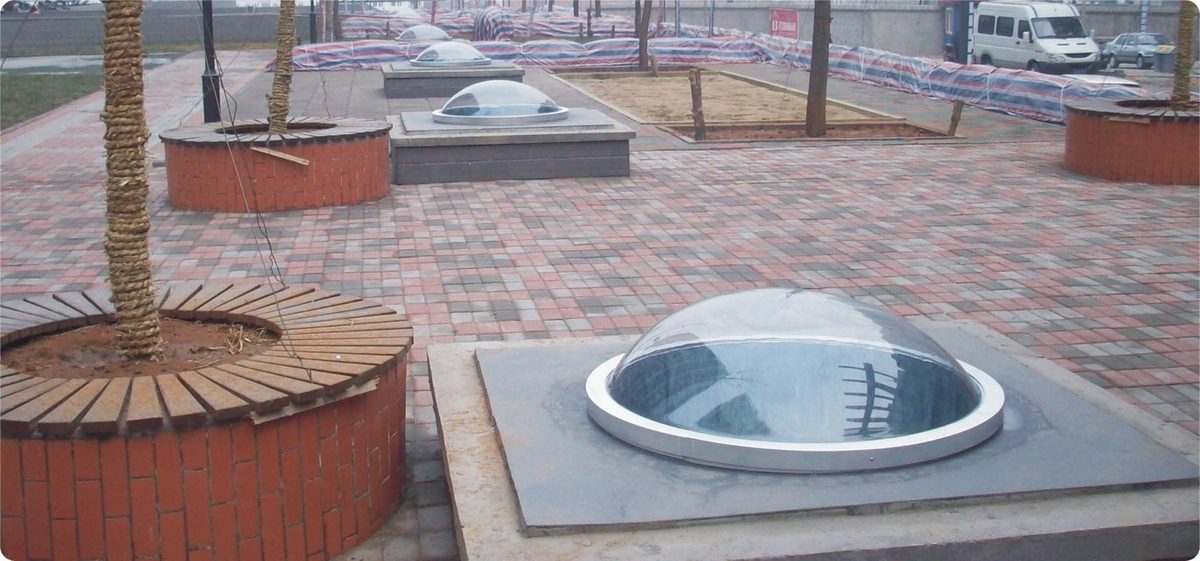
Domes come in three common shapes: a four-sided pyramid for square openings, a round dome for circular curbs, and a flat or shallow-arch panel for wide spans. Square-based pyramids are the workhorse of industrial roofs because they shed rain and snow from four slopes while lighting a large bay.
Why hospitals and public buildings choose polycarbonate domes
Hospitals and public buildings put skylights above people, so safety and light quality decide the material. Solid polycarbonate wins on both.
- Impact safety. Polycarbonate is roughly 200 times the impact strength of glass and does not shatter into sharp shards. A dome over an atrium or walkway stays intact even if struck by hail, debris or falling objects.
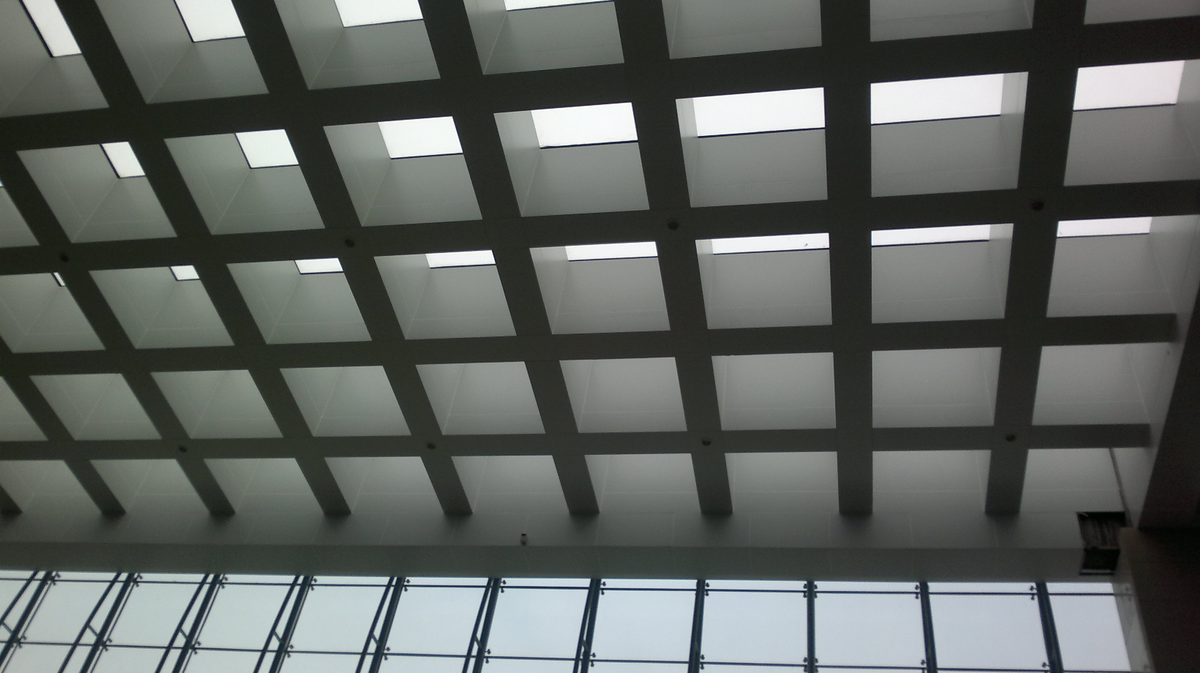
- Glare-free light. The sheet diffuses daylight, so a hospital atrium is evenly lit without harsh spots on corridors, counters or reading areas.
- Low weight. Polycarbonate is about half the weight of glass, which lightens the supporting steel or concrete frame and cuts cost on large roofs.
- UV protection. A co-extruded UV layer on the weather face stops yellowing and keeps light transmission high over a long service life.
- Easy to keep clean. The smooth, non-porous surface is simple to wipe down, which matters in healthcare environments where hygiene is a requirement.
Specifications at a glance
| Parameter | Range |
| Sheet thickness (dome) | 2 mm – 10 mm (up to 30 mm available) |
| Standard sheet widths | 1220 / 1560 / 1820 / 2100 mm |
| Light transmission (clear) | up to 89% |
| Impact strength | 200–250 × glass |
| UV protection | co-extruded layer, single or double side |
| Service temperature | −40°C to +120°C |
| Fire rating | UL94 V-0 to V-2, B1 |
| Dome shapes | pyramid, round, flat / shallow arch |
Domes are supplied cut to the curb size with the matching aluminium profiles, EPDM gasket and fasteners, so the unit arrives ready to install.
Where they are used
The same system scales from a single hospital atrium to a power-plant roof with thousands of openings. Typical installations include hospital entrance halls and atriums, power-plant and factory roofs, public plazas and underground parking, and school or community halls.
Our solution
As a manufacturer, Jietai thermoforms solid polycarbonate sheet into pyramid, round and flat skylight domes, with a co-extruded UV layer on the weather face. Each dome is supplied cut to size with the matching aluminium curb profiles, EPDM sealing gasket and fasteners, and can be ordered clear, opal or tinted to control heat and glare.
Why source from a manufacturer
Jietai is a manufacturer serving architects, contractors and skylight fabricators directly. We control the sheet extrusion and the thermoforming, so thickness, colour and UV layer are specified at source rather than picked from stock. Order cut-to-size domes and the full sealing system in one shipment, ready to install. Contact our team for a quote on your next skylight or daylighting project.
Frequently asked questions
What thickness of solid polycarbonate is best for a skylight dome?
2 mm to 6 mm is usual for a dome, with 8-10 mm for larger spans, heavy snow loads or walk-on protection. Thinner sheet forms a crisper dome and costs less; thicker sheet adds rigidity and impact resistance.
Do polycarbonate skylight domes yellow over time?
No. The co-extruded UV layer on the weather face blocks the wavelengths that cause yellowing. With the UV side correctly oriented during installation, the dome keeps its clarity for years.
Are polycarbonate domes safe in a hospital or public building?
Yes. Polycarbonate is about 200 times the impact strength of glass and does not break into sharp shards, and it can be supplied in UL94 V-0 flame-retardant grades where building codes require it.
Can polycarbonate skylight domes be made in colours or opal finishes?
Yes. Clear, opal and tinted options are available. Opal and tinted domes diffuse light and reduce solar heat gain, which is useful over atriums and circulation areas.
How are the domes sealed against rain?
Each dome sits on a raised curb with an EPDM gasket and drainage flashing. The curb lifts the glazing above the roof surface, and the gasket seals the joint so water drains off the roof rather than pooling against the glazing.