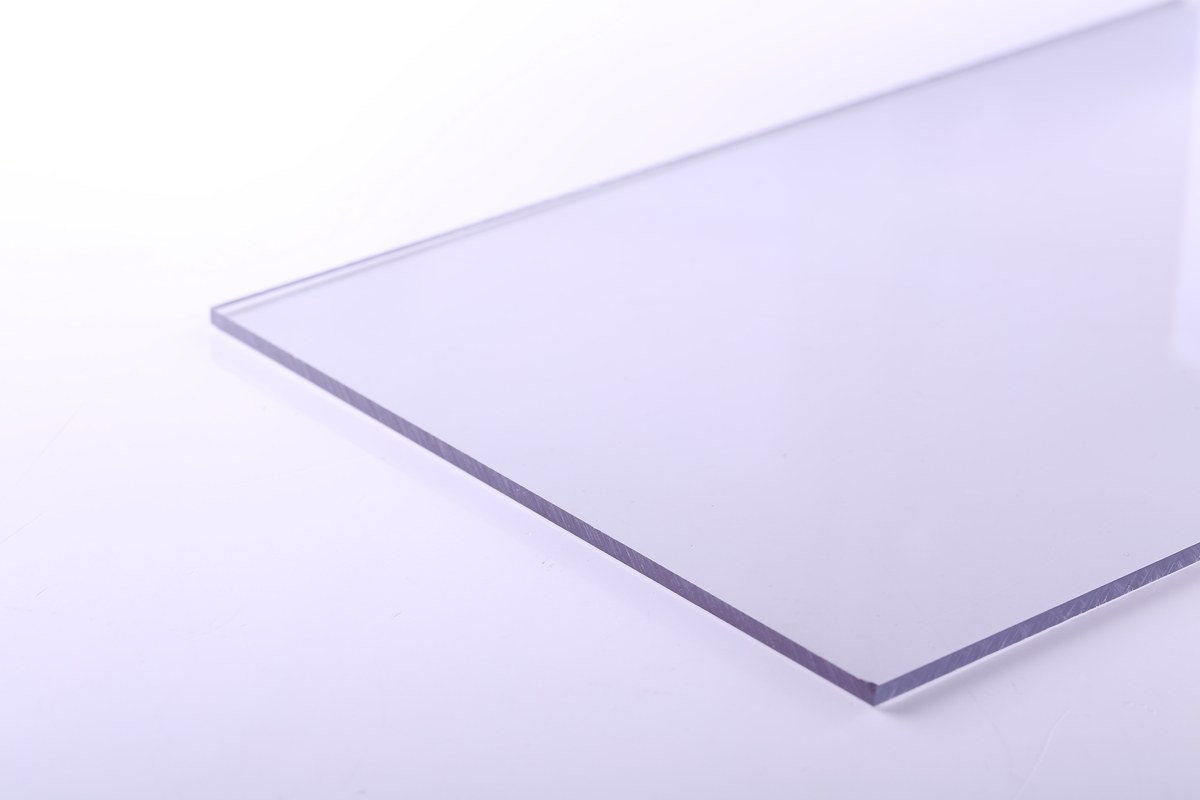
Bottom line: high-gloss polycarbonate sheet is a thin, solid polycarbonate panel finished to a near-mirror, glass-like sheen that stays far lighter and tougher than real glass. It is extruded 1–5 mm thick in standard 1220 mm and 1560 mm widths, measures 90–100 GU of gloss with 88–90% light transmission on clear grades, and is the standard choice for premium display cases, appliance panels, signage and decorative cladding where glass would be too heavy, too fragile or too costly to work with.
What high-gloss polycarbonate sheet is
High-gloss polycarbonate sheet (also called glossy PC sheet or polished solid PC sheet) is an extruded solid polycarbonate panel whose surface is polished to a highly reflective, mirror-like finish. The gloss comes from the panel surface itself rather than a metal coating, so the sheet stays fully transparent and lets light through while producing the crisp reflection of glass. It carries polycarbonate’s impact resistance — roughly 200 times that of glass — at about half the weight, which means it can be cut, drilled and handled without the breakage risk of a real mirror or tempered glass.
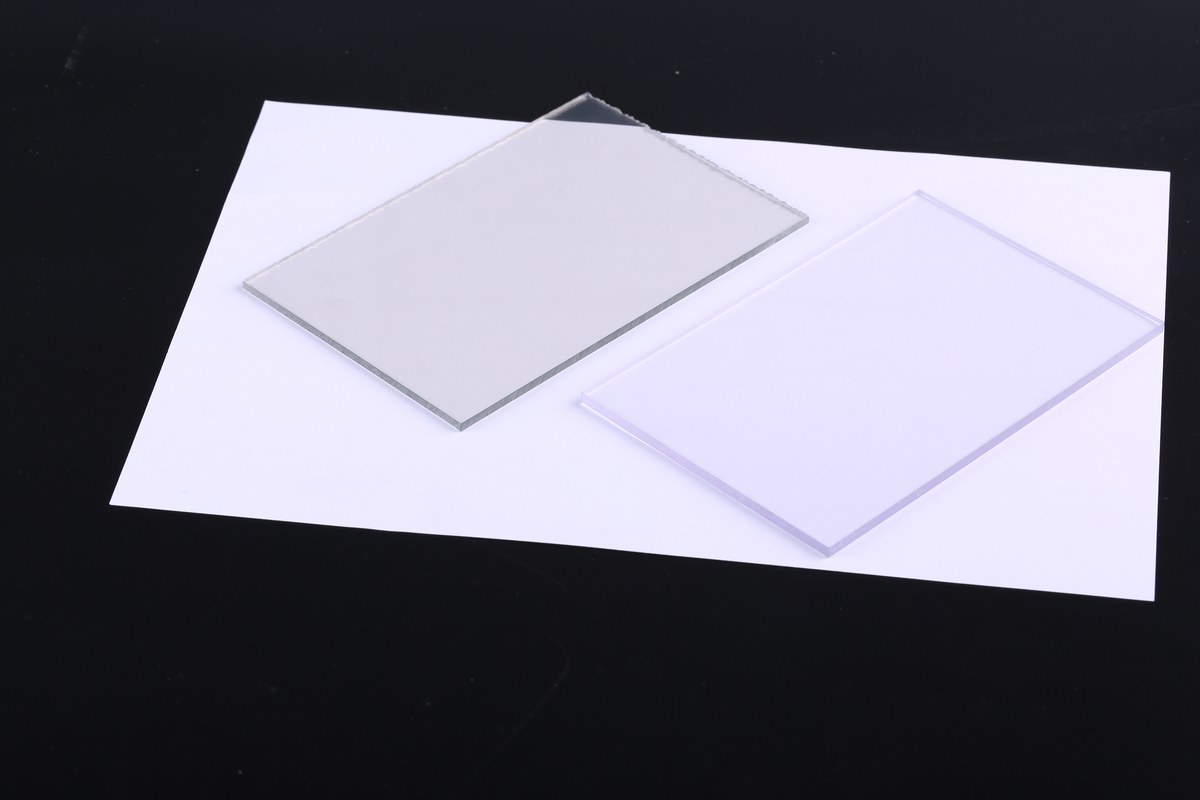
Complete specification range
As a manufacturer we extrude high-gloss polycarbonate sheet to the industry-standard ranges below. Custom colours and cut-to-size panels are available on request.
| Parameter | Available range |
| Thickness | 1 / 1.5 / 2 / 3 / 5 mm |
| Standard width | 1220 mm, 1560 mm |
| Standard length | 6 m, cut to order |
| Colour | Clear, bright white, silver grey, custom |
| Gloss level (60°) | 90–100 GU |
| Light transmission | Clear 88–90% |
| Surface hardness | HB–2H (optional hard coating) |
| Density | 1.2 g/cm³ |
| Fire rating | UL94 V-2, B1 (GB 8624) |
| Service temperature | −40 °C to +120 °C |
| Impact strength | ≈ 200× that of glass |
Gloss level and surface finish
Gloss is measured at a 60° angle on a scale of 0–100 gloss units (GU). A reading of 90–100 GU places high-gloss sheet in the mirror-finish class, well above standard solid sheet and far above matte or frosted grades. Because the sheen is part of the polished surface, it does not yellow or haze like a metalized film; an optional hard coating (HB–2H pencil hardness) can be added for panels that will see frequent handling, cleaning or light abrasion.
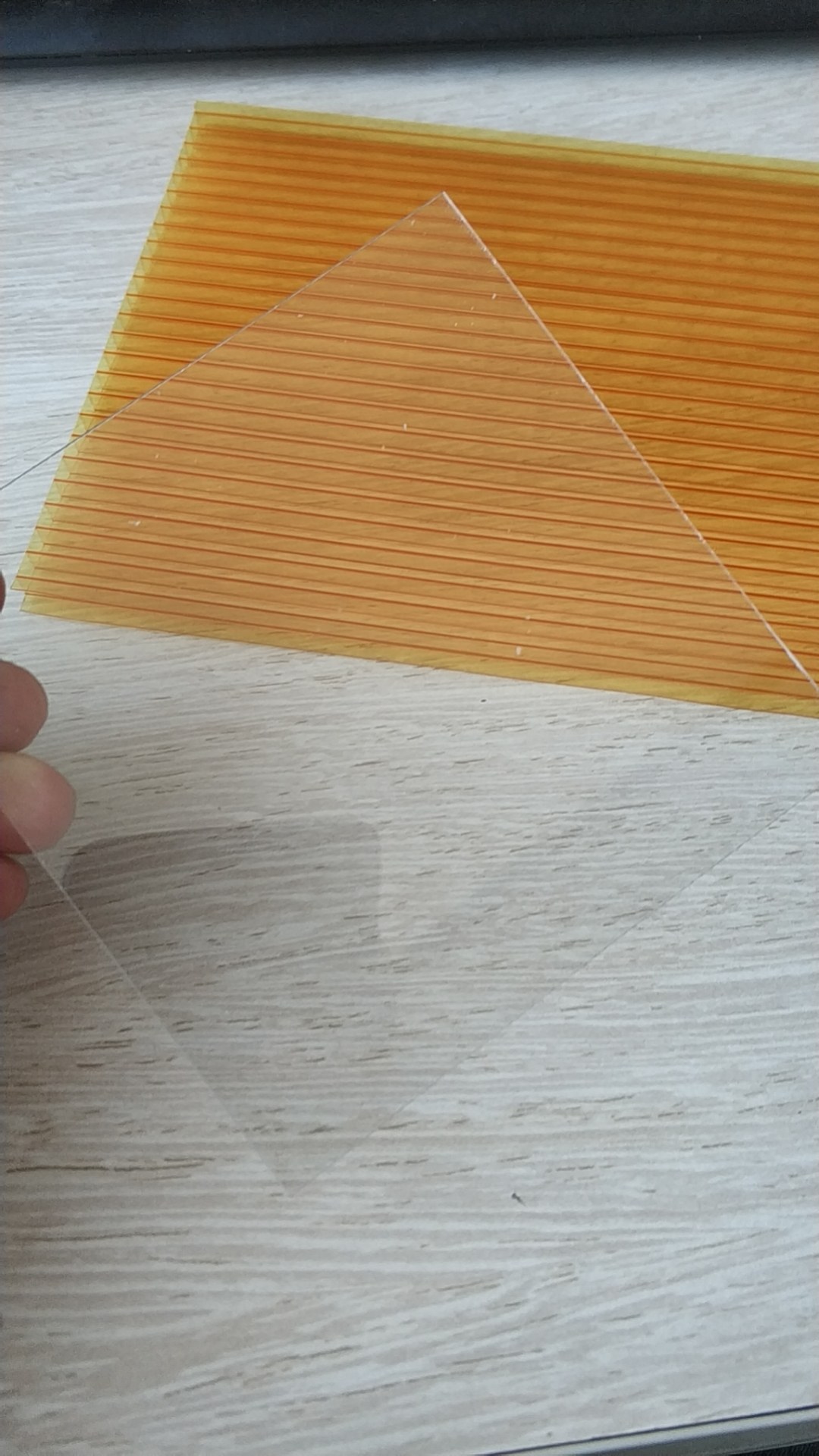
Weight by thickness
High-gloss sheet is solid polycarbonate, so weight scales directly with thickness at 1.2 kg/m² per millimetre.
| Thickness | Weight |
| 1.0 mm | ≈ 1.2 kg/m² |
| 1.5 mm | ≈ 1.8 kg/m² |
| 2.0 mm | ≈ 2.4 kg/m² |
| 3.0 mm | ≈ 3.6 kg/m² |
| 5.0 mm | ≈ 6.0 kg/m² |
Applications
High-gloss polycarbonate sheet is specified wherever a premium, glass-like surface must also be safe and light. The most common uses are display cases and retail shelving where the reflective face makes products stand out, appliance and control panels that need a scratch-resistant glossy finish, signage and award plaques, lighting diffuser and fixture panels, and decorative cladding for commercial interiors. It is also used for premium packaging and gift boxes where a mirror-bright finish is part of the product.
Need a specific thickness, colour or gloss level for your project? Contact our team for a quote, samples and current lead times.
Frequently Asked Questions
What is the difference between high-gloss polycarbonate sheet and acrylic mirror sheet?
High-gloss polycarbonate sheet is transparent and gets its sheen from a polished surface, while acrylic mirror sheet is usually metalized to be fully reflective and opaque. Polycarbonate is roughly 200 times more impact-resistant and about half the weight of glass, so high-gloss PC is chosen where the panel must stay transparent and survive handling, while a metalized mirror is chosen where a true opaque reflection is needed.
Is high-gloss polycarbonate sheet transparent?
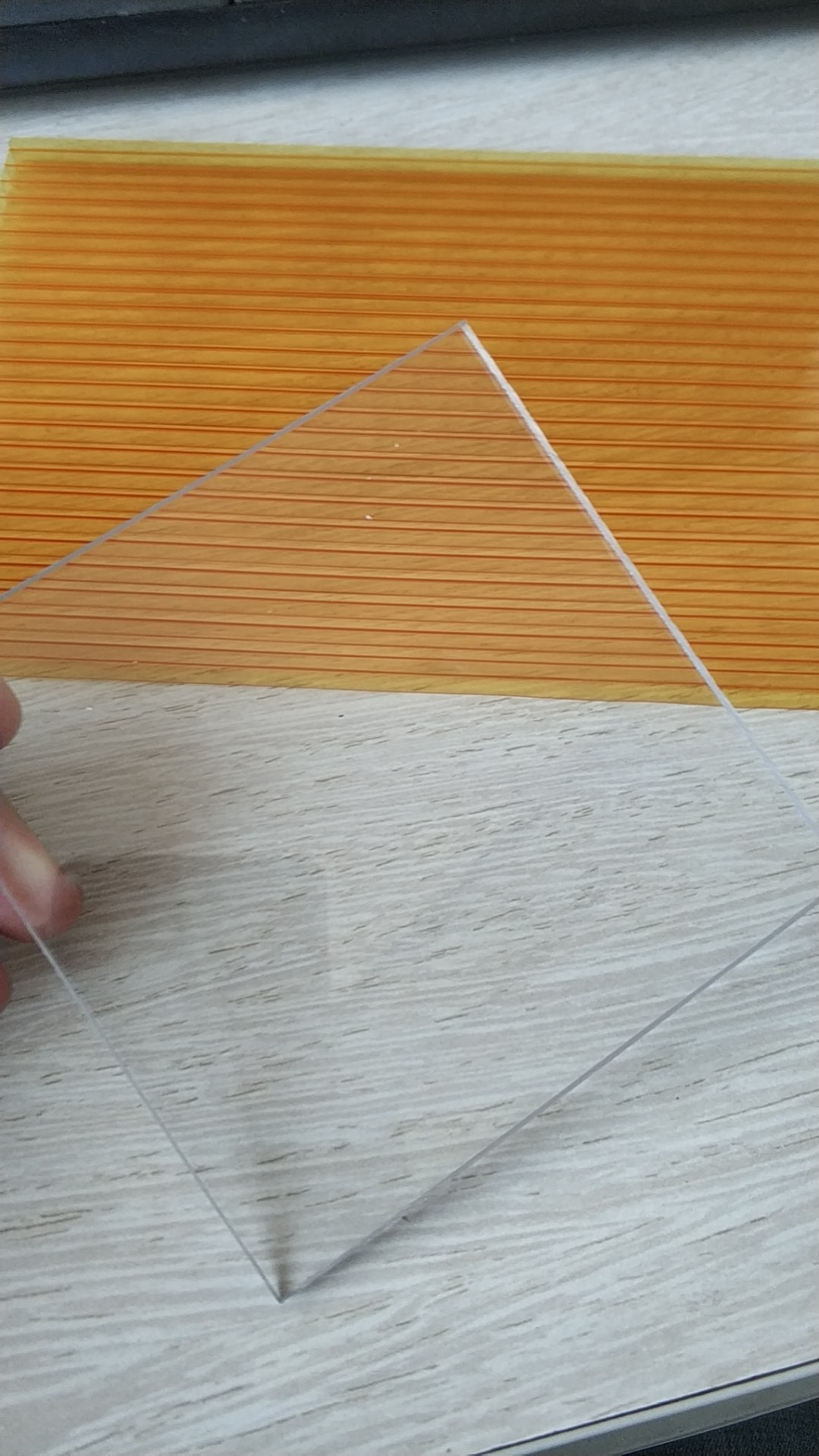
Yes. Clear grades transmit 88–90% of light, so the sheet stays see-through while reflecting like glass. Bright white and silver grey grades are translucent and diffuse light while keeping the glossy finish. If you need a fully opaque reflective surface, a metalized mirror sheet is the right product instead.
What thickness should I choose for a display case or appliance panel?
1–2 mm is the standard for lightweight display faces, lens and cover panels; 3 mm is common for appliance control panels and signage that need more stiffness; 5 mm is used where the panel is large, self-supporting or must take a hard coating and frequent cleaning. Confirm the thickness against the panel size and how it will be mounted.
Does high-gloss polycarbonate sheet scratch easily?
The glossy surface can show fine scratches under close inspection, like any polished plastic. An optional HB–2H hard coating markedly improves scratch and cleaning resistance for touch-facing panels. For best results, clean with a soft cloth, mild soap and water, and avoid abrasive pads or strong solvents.
Can high-gloss polycarbonate sheet be cut, drilled and bent?
Yes. It cuts cleanly with a fine-tooth saw or CNC router, drills without cracking when you support the back and use a sharp bit, and thin grades up to about 3 mm can be cold-bent to a radius. Pre-drill holes slightly oversized and leave expansion allowance for panels that will see temperature swings.