For facade designers and contractors specifying translucent cladding in 2026, interlocking polycarbonate (PC) panels are the most practical snap-together system for vertical surfaces: they combine glass-like light transmission with polycarbonate’s impact strength, install without any metal joining profiles, and can be backlit to turn a wall into an even, glowing surface. This showcase covers the three vertical applications our factory supplies most often — commercial facade cladding, backlit signage and feature walls, and interior partitions.
1. Commercial facade cladding
Interlocking PC panels transform a plain building envelope into a light-diffusing facade. Panels slide together through a tongue-and-groove joint and are fixed directly to the substructure, so a curtain wall goes up faster than framed glass or metal cladding. Translucent panels wash daylight through the facade during the day, and at night they can be backlit to make the whole elevation glow — a signature effect for retail, sports and cultural buildings.
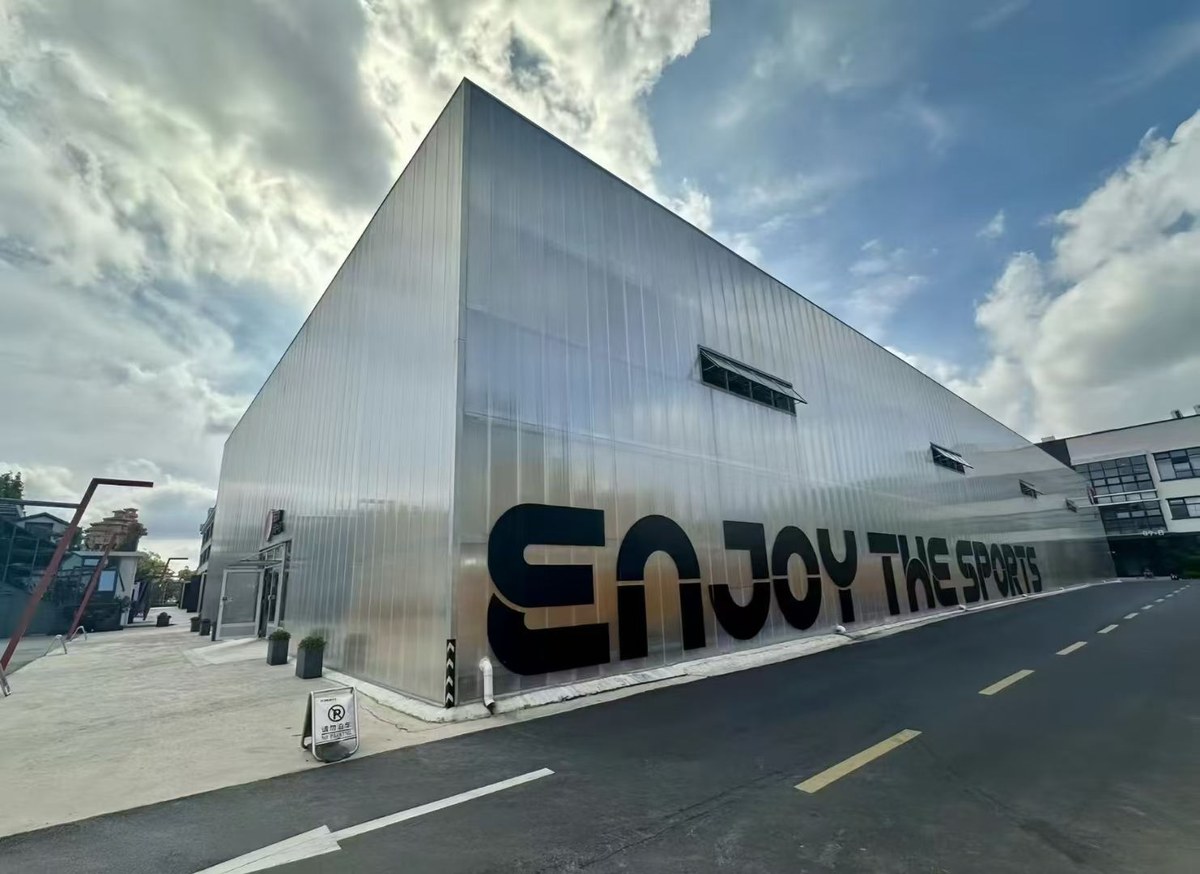
2. Backlit signage and feature walls
Because interlocking panels are translucent rather than fully transparent, they diffuse LED light evenly and hide the lamp points behind them. That makes them ideal for backlit shop signs, light boxes and illuminated feature walls, where a smooth, uniform glow matters more than raw clarity. Opal and diffusion finishes eliminate hot spots, while clear panels produce a brighter, more directional effect.
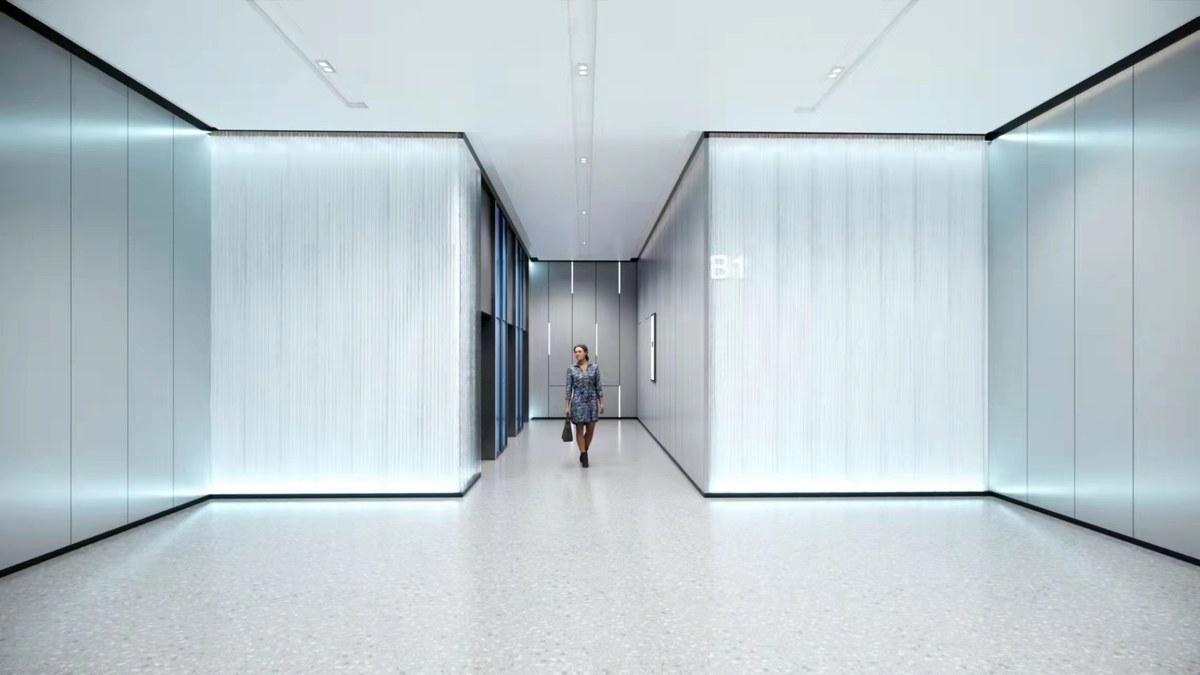
3. Interior partitions and landscape walls
Inside a building, interlocking panels divide spaces while letting light pass through — ideal for offices, atriums and showrooms where you want separation without darkness. The flat, seam-lined surface reads as a clean architectural wall, and the tongue-and-groove joint keeps panels aligned with no visible fixings or silicone.
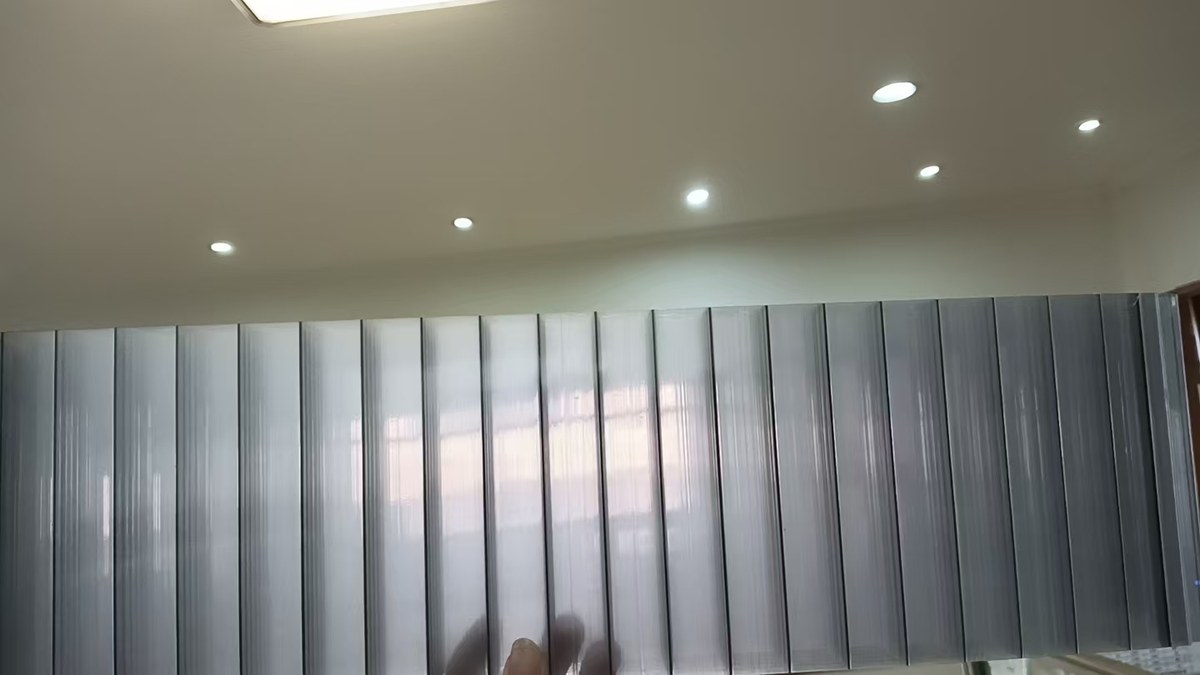
Interlocking polycarbonate panel specifications
As a manufacturer, Jietai extrudes the full interlocking range below. These values are industry-standard for tongue-and-groove polycarbonate panel systems; custom sizes and colours are available on request.
| Parameter | Standard Range |
|---|---|
| Module Width | 500 mm (standard) |
| Thickness | 10, 12, 16, 20, 25, 30, 40, 50 mm |
| Standard Length | 6 m (custom 1-12 m; up to 16.5 m) |
| Structure | 3-wall, 5-wall X-reinforced, honeycomb / cross-cell multi-cavity, 9-cavity |
| Joint | Tongue-and-groove interlock (no metal profiles) |
| U-value | 0.71-3.5 W/m2K (by thickness) |
| Light Transmission | 20-82% (by thickness and colour) |
| Weight | 2.0-8.0 kg/m2 (by thickness) |
| UV Protection | Co-extruded UV layer, 30-50 um, both sides |
| Fire Rating | B1 (GB 8624), UL94 V-2, Euroclass B-s1,d0 |
| Service Temperature | -40 C to +120 C |
| Colours | Clear, opal, bronze, lake blue, grass green, grey, pink diffusion, glass-grey diffusion, custom RAL |
Why choose Jietai as your interlocking panel manufacturer
Jietai is a polycarbonate sheet manufacturer, not a middleman. We extrude interlocking PC panels in-house across the full 10–50 mm thickness range, co-extrude the UV protection layer at the die, and cut panels to custom length before export. That gives you factory-direct pricing, consistent colour and thickness, and a single point of contact for specification and facade engineering support.
Frequently asked questions
Are interlocking polycarbonate panels suitable for a fully backlit facade?
Yes. Interlocking panels are translucent rather than transparent, so they diffuse LED light evenly across the surface and hide the lamps behind them. For a uniform glow choose opal or diffusion finishes; for a brighter effect use clear panels with closer-spaced light sources. Send us your lighting layout and we will recommend the right finish and thickness.
What thickness should I choose for a commercial facade?
For standard curtain walls and atriums, 20 mm five-wall X-reinforced panels are the most common choice, and 25–30 mm honeycomb panels handle wide-span and high-rise facades. Thinner 10–16 mm panels suit shop fronts and light partitions, while 40–50 mm nine-cavity builds are used for premium and cold-climate insulated facades.
How do interlocking panels handle thermal expansion?
The tongue-and-groove joint lets each panel expand and contract within its fixing channel, so the facade stays flat across the -40 C to +120 C service range without buckling. Substructure spacing and end clearances follow standard polycarbonate installation practice.
Can interlocking panels be curved or bent for a facade?
No. Interlocking panels are flat by design and are not cold-curved into arches. For curved or arched applications, a U-lock polycarbonate roofing system is the correct choice. On a flat vertical facade, interlocking panels are the fastest and cleanest option.
How long does an interlocking polycarbonate facade last?
With the co-extruded UV protection layer on both faces (30–50 um), interlocking panels resist yellowing and hail impact for many years outdoors. Multiwall polycarbonate cladding typically carries a 10-year light-transmission warranty, and fire-rated B1 (GB 8624) / Euroclass B-s1,d0 grades are available.
Contact our team for a quote and we will recommend the right thickness, colour and finish for your facade, and return pricing within one business day.