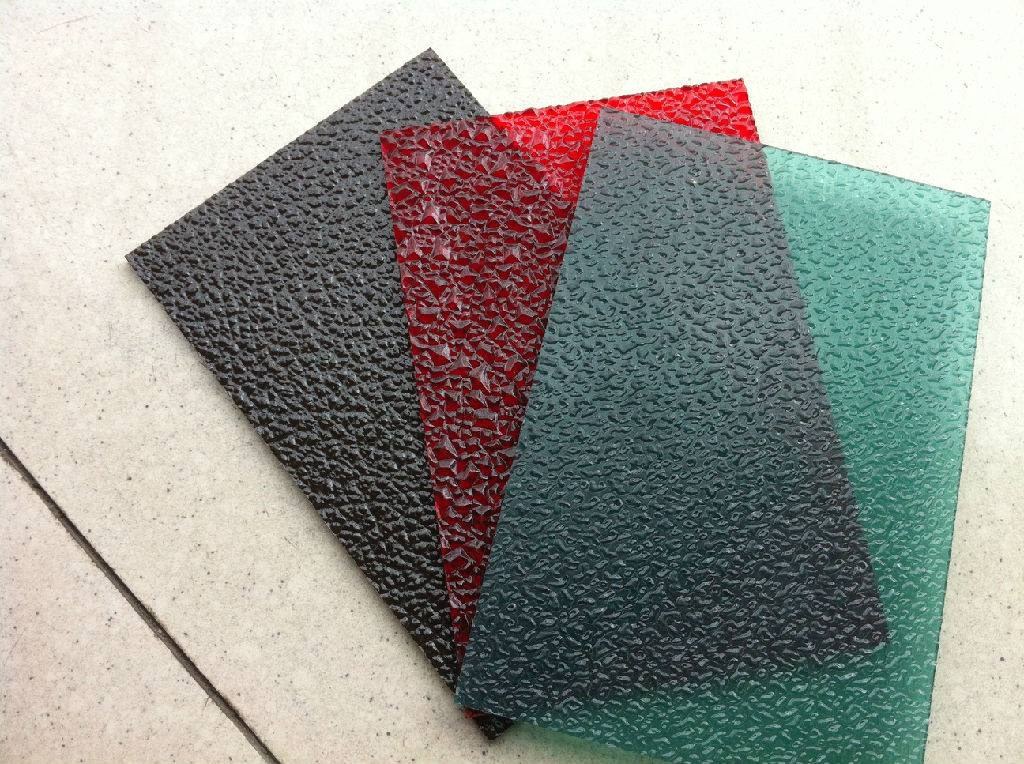
Bottom line: a textured polycarbonate sheet is solid polycarbonate with a diamond or pebble pattern pressed into the surface, and choosing one comes down to two decisions — the pattern and the thickness. Pick a diamond pattern when you want grip underfoot and a sparkling decorative finish; pick a pebble (litchi-grain) pattern when you want a softer, leather-like look that hides fingerprints. For thickness, 1–2 mm suits cabinet doors and lamination, 3–5 mm is the workhorse range for partitions and interior decoration, and 6 mm and up handles self-supporting screens and anti-slip flooring. Nail those two choices and the width, colour and UV options fall into place.
What a textured polycarbonate sheet is
A textured polycarbonate sheet is a solid PC panel whose surface carries a diamond or pebble pattern formed in the melt as the sheet leaves the extrusion die. Because the pattern is part of the sheet itself rather than a film printed or laminated on, it cannot peel, rub off or wear away. Where clear polycarbonate passes up to 89% of light straight through, a textured sheet scatters that light, so the view behind softens into a semi-private blur. It keeps solid polycarbonate’s core toughness — roughly 200–250 times the impact strength of glass at about half the weight — which is why it outlasts acrylic and PMMA texture panels in high-traffic positions.
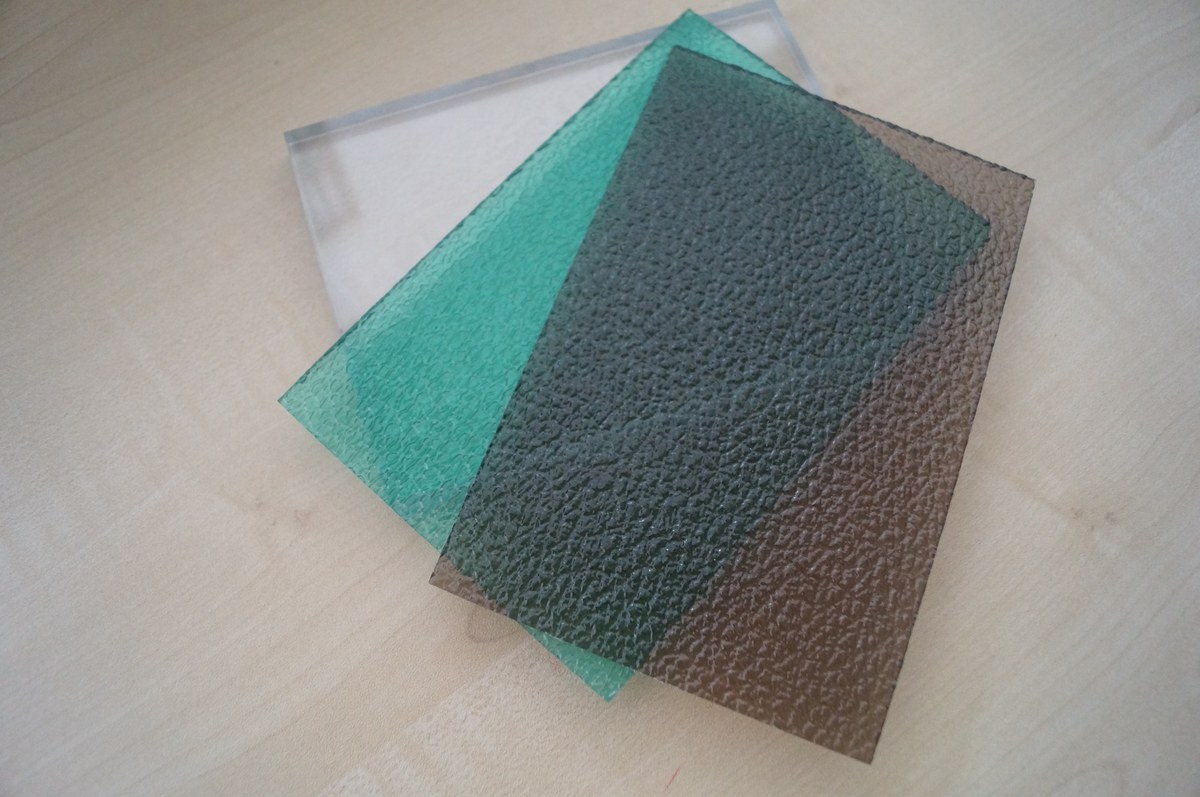
Diamond vs pebble pattern: the core decision
The pattern is the one choice that changes both how the panel looks and how it performs, so it is worth getting right.
Diamond pattern. A diamond (or ice-grain) texture is a fine arrangement of pyramid-shaped points that catch the light in tiny flashes. It reads as crisp and modern, and the raised points add real grip — which is why diamond-grain sheet is the standard for anti-slip walkways, stair treads and flooring overlays, as well as decorative feature walls and signage that need a bit of sparkle.
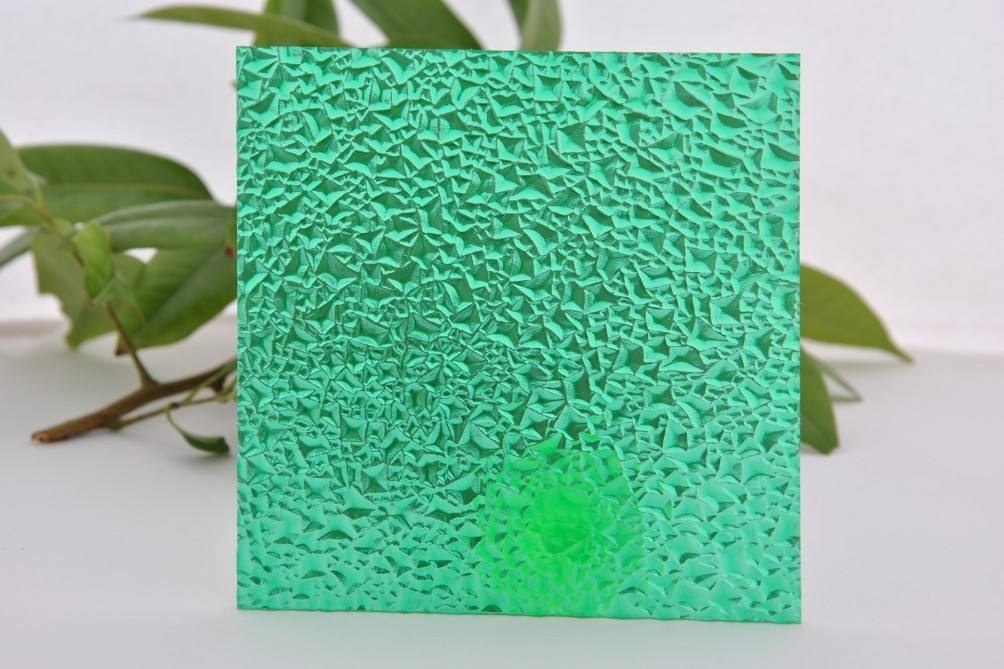
Pebble (litchi-grain) pattern. A pebble or litchi-grain texture is a softer, rounded grain that looks and feels closer to leather. It diffuses light more gently and is far better at hiding fingerprints and small scratches, which makes it the preferred finish for cabinet doors, furniture panels and premium interior surfaces that get touched often.
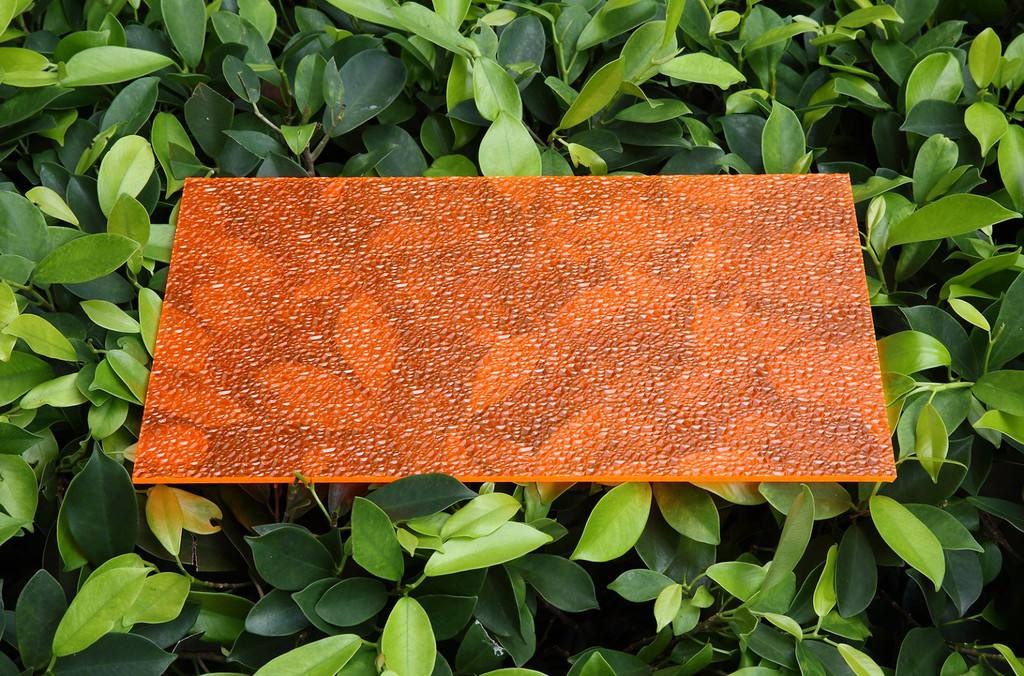
Complete specification range
As a manufacturer we produce textured polycarbonate sheet to the industry-standard ranges below; custom thicknesses, widths and cut-to-size panels are available on request.
| Parameter | Available range |
| Thickness | 1.0 / 1.5 / 2.0 / 3.0 / 5.0 / 8.0 / 10.0 / 12.0 / 15.0 / 20.0 mm |
| Standard width | 1220 mm, 1560 mm, 1820 mm, 2100 mm |
| Pattern | Diamond / pebble (litchi-grain) |
| Finish | Single-sided textured / double-sided textured |
| Light transmission | ≈ 80–88% |
| Impact strength | ≈ 200–250× that of glass |
| Fire rating | UL94 V-2, B1 (GB 8624) |
| Service temperature | −40 °C to +120 °C |
| Density | 1.2 g/cm³ |
Choosing thickness by application
Thickness is a stiffness and durability decision rather than an aesthetic one. Match the panel to how much it has to span and what it will be walked on or bumped into.
| Thickness | Typical use |
| 1.0–2.0 mm | Cabinet doors, drawer fronts, lamination and light-duty decoration |
| 3.0–5.0 mm | Partitions, screens, decorative wall panels (the most common range) |
| 6.0–8.0 mm | Self-supporting partitions, door panels and display stands |
| 10.0–20.0 mm | Anti-slip flooring, stair treads and heavy-duty surfaces |
As a rule of thumb, go one step thicker than the minimum whenever the panel is large, will be walked on, or has to survive forklifts and trolleys in a working space.
Single-sided vs double-sided texture
The second surface choice is how many faces are textured. A single-sided sheet is textured on one face and smooth on the other, which gives you a clean surface to bond, laminate or butt against a frame. A double-sided sheet is textured on both faces, which gives the same look from either direction and suits free-standing screens and panels seen from both sides. For cabinet doors and laminated panels, single-sided is usually right; for partitions and room dividers, double-sided is the cleaner choice.
Colour and light transmission
Textured sheet is supplied in clear plus a full colour range. Clear textured sheet transmits about 80–88% of light as a soft, even glow, so it works for semi-private partitions that still let daylight through. Tinted and opaque colours cut transmission further and turn the panel into a decorative element in its own right. For outdoor use, ask for a co-extruded UV layer on the weather-facing side so the panel keeps its colour and strength over years of sun exposure.
Frequently asked questions
What is the difference between diamond and pebble texture?
Diamond texture is a fine pattern of pyramid points that catches light and adds grip underfoot; pebble (litchi-grain) texture is a softer, rounded leather-like grain that hides fingerprints better. Choose diamond for anti-slip flooring and sparkling feature surfaces, pebble for furniture and high-touch interior panels.
Which thickness should I choose for a partition?
3–5 mm is the standard range for partitions and decorative screens. Step up to 6–8 mm for self-supporting screens or door panels, and use 1–2 mm only for cabinet doors and laminated fronts.
Can textured polycarbonate sheet be used outdoors?
Yes, provided you choose a grade with a co-extruded UV layer on the weather-facing side. The UV layer prevents yellowing and keeps the sheet impact-resistant over years of sun, rain and temperature swings from −40 °C to +120 °C.
Does textured polycarbonate sheet let light through?
Yes. Clear textured sheet transmits about 80–88% of light but scatters it, so the panel glows softly and gives semi-privacy instead of a clear view. Tinted and opaque colours reduce transmission further for stronger screening.
Can textured polycarbonate sheet be cut and drilled?
Yes. It cuts cleanly with a fine-tooth saw or CNC router and drills without cracking when the back is supported. Clean with mild soap and water, and avoid abrasive pads that could dull the pattern.