Overview
For growers, project developers and greenhouse builders specifying glazing in 2026, multiwall polycarbonate sheet is the most cost-effective roofing and wall material for commercial greenhouses: it delivers 25–82% light transmission, U-values down to 1.5 W/m²·K for thermal insulation, and impact resistance far beyond glass or agricultural film, in a panel weighing just 1.0–3.5 kg/m². Jietai — as a manufacturer of multiwall polycarbonate sheet — supplies twin-wall and multi-wall panels from 4 mm to 30 mm, in the standard 2,100 mm width, cut to length up to 12 m for multi-span and Venlo-style greenhouse projects from 1,000 m² to over 10,000 m².
1. A 10,000 m² multi-span greenhouse in northwest China
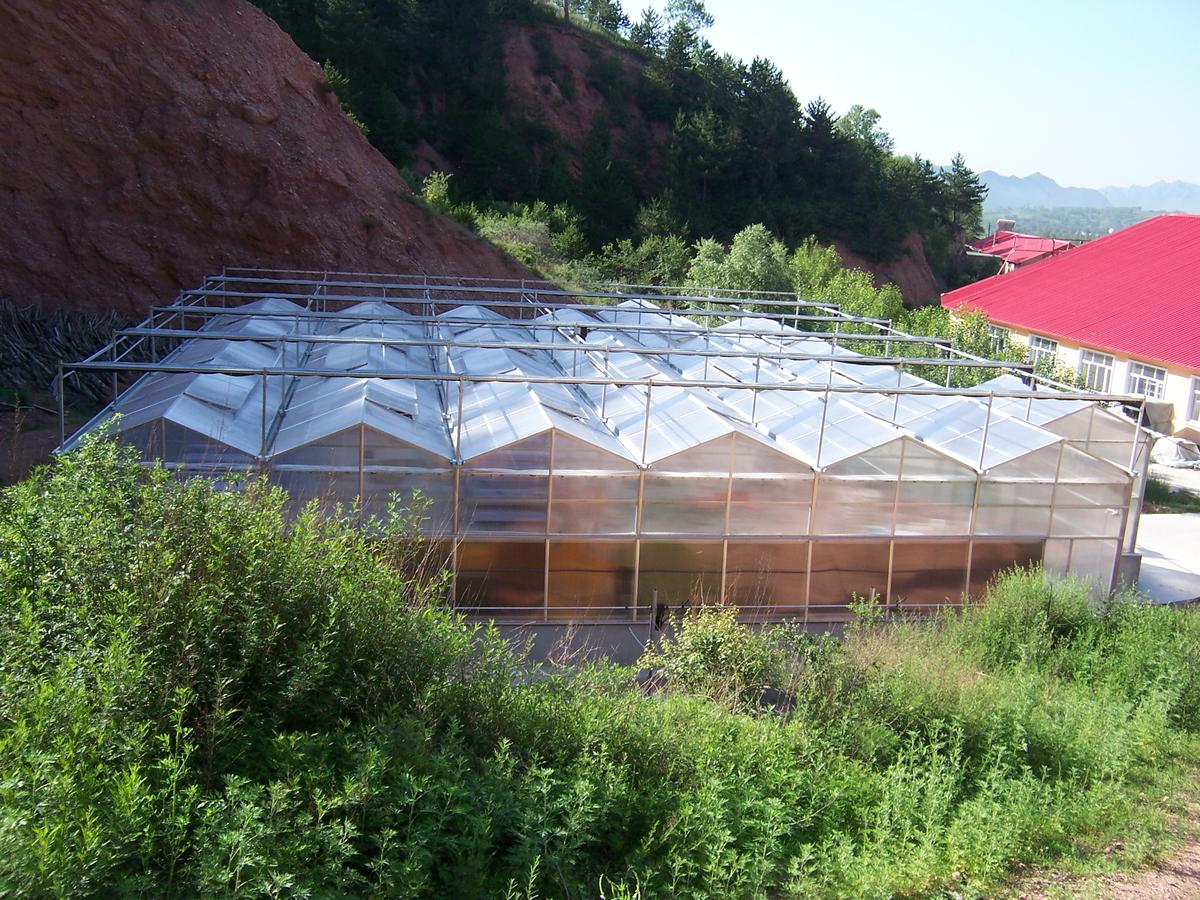
A large commercial grower in Shaanxi province built a 10,000 m² multi-span greenhouse for vegetable and seedling production. The requirement was a glazing that would hold heat through the cold winter while transmitting enough diffuse light for healthy growth. Our factory supplied 8 mm twin-wall polycarbonate in the 2,100 mm width, mounted on the standard galvanised steel frame. The twin-wall air core keeps the U-value low, so heating costs stay controlled across a long, cold season.
2. Cold-climate greenhouse: snow load and thermal performance
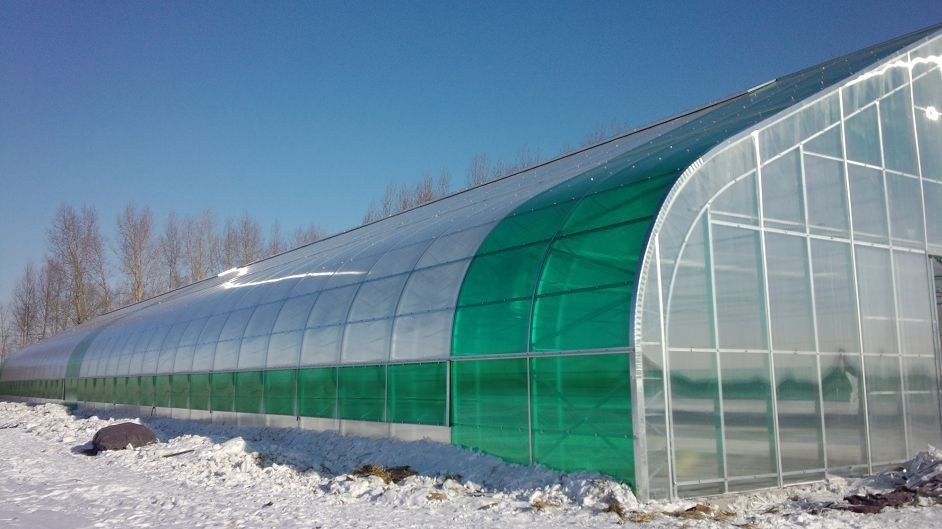
In Heilongjiang, where winter temperatures drop well below -20°C and snow loads are heavy, the greenhouse glazing had to survive sustained cold without cracking and carry snow on the roof without deforming. Multiwall polycarbonate is rated for service from -40°C to +120°C and is far more impact-resistant than glass, so panels withstand snow, hail and wind without shattering. The air channels in twin-wall and triple-wall panels add insulation that film and single-layer glazing cannot match, which is why cold-climate growers choose multiwall over film.
3. Light transmission for flower and seedling production
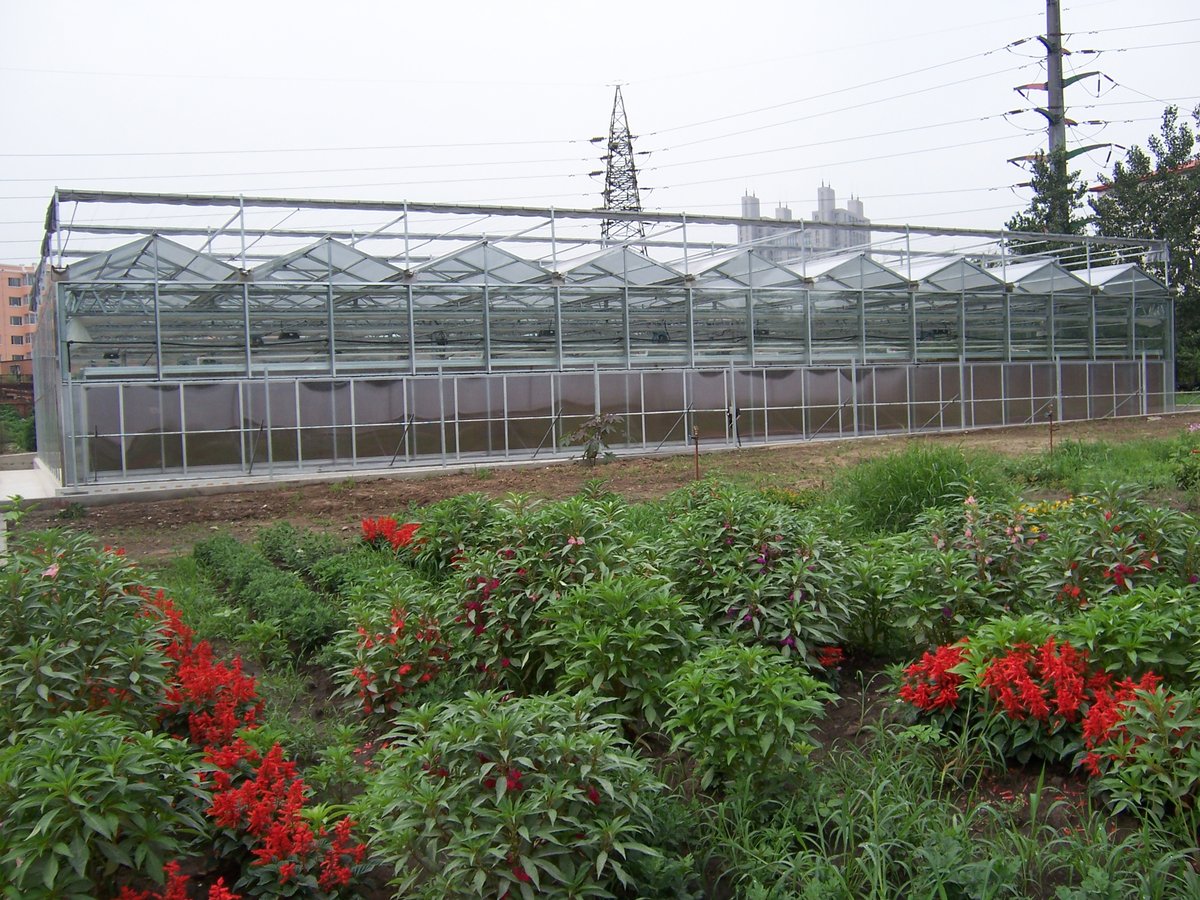
For flower and ornamental production, light quality matters as much as heat. Clear twin-wall polycarbonate transmits up to 82% of light, and the structured multi-wall core scatters it into an even, diffuse glow that reaches lower leaves without scorching. Growers get the brightness of glass with a fraction of the weight and none of the shattering risk, and opal or diffusing grades are available where even softer, more uniform light is needed.
Technical specifications (multiwall polycarbonate sheet)
| Parameter | Range |
|---|---|
| Thickness | 4, 6, 8, 10, 12, 14, 16, 20, 25, 30 mm |
| Structure | Twin-wall, triple-wall, 4-wall, 5-wall X-reinforced, honeycomb |
| Standard width | 2,100 mm (1,220 / 1,560 / 1,820 mm custom) |
| Standard length | 6 m (custom 1–12 m) |
| Light transmission | 25–82% |
| U-value | 1.5–3.9 W/m²·K |
| Weight | 1.0–3.5 kg/m² |
| UV protection | Co-extruded UV layer, single or double side (30–50 μm) |
| Fire rating | B1, UL94 V-0 ~ V-2 |
| Service temperature | -40°C to +120°C |
| Colours | Clear, opal, lake blue, grass green, bronze, red, orange, custom RAL |
Why multiwall polycarbonate for greenhouses
Multiwall polycarbonate combines the four properties a greenhouse glazing must deliver: light (25–82% transmission with a diffusing multi-wall core), insulation (U-values down to 1.5 W/m²·K from the air channels), strength (impact-resistant and hail-proof, rated -40°C to +120°C), and low weight (1.0–3.5 kg/m², so the supporting frame stays lighter and cheaper than with glass). It lasts through repeated seasons with a co-extruded UV layer that stops yellowing, which is why commercial growers keep choosing it over glass and film in 2026.
Frequently asked questions
What thickness of multiwall polycarbonate is best for a greenhouse?
8 mm twin-wall is the most common choice for commercial greenhouses, balancing light transmission and insulation. In very cold climates, 10-16 mm triple-wall or 5-wall panels add insulation; in mild climates, 6 mm twin-wall is often enough.
Does multiwall polycarbonate transmit enough light for plant growth?
Yes. Clear twin-wall panels transmit up to 82% of light, and the multi-wall core diffuses it evenly so lower leaves are reached without scorching. Opal/diffusing grades are available where softer light is preferred.
Can multiwall polycarbonate handle snow and cold winters?
Yes. Multiwall polycarbonate is rated for service from -40°C to +120°C and is far more impact-resistant than glass, so it withstands heavy snow, hail and wind without cracking or shattering.
What width are the panels and can they be cut to length?
The standard width is 2,100 mm, with 1,220 / 1,560 / 1,820 mm available on request. Panels are supplied cut to length up to 12 m to match your greenhouse span.
How long will multiwall polycarbonate last on a greenhouse roof?
With a co-extruded UV layer, multiwall polycarbonate typically lasts 10-15 years outdoors while keeping most of its light transmission, far longer than agricultural film.
Why Jietai
Jietai is a manufacturer of multiwall polycarbonate sheet with in-house extrusion and cutting. We supply twin-wall, triple-wall and multi-wall panels from 4 mm to 30 mm in the standard 2,100 mm width, with co-extruded UV protection and cut-to-length service, for greenhouse projects of any scale. Contact our team for a quote — tell us your span, climate and crop, and we will recommend the right thickness and structure.