When planning a construction or renovation project that requires transparent or translucent panels, one of the most common questions is whether to use polycarbonate or acrylic sheeting. Both materials offer excellent optical clarity and lightweight properties, but they serve very different purposes in real-world applications. Choosing the wrong material can lead to cracks, yellowing, structural failure, or unnecessary expenses.
This article provides an honest, side-by-side comparison of polycarbonate and acrylic sheets from a B2B procurement perspective. We will examine impact resistance, UV stability, thermal performance, fire ratings, workability, and total cost of ownership — helping you make an informed decision for your specific project.
1. Impact Resistance: The Biggest Differentiator
The single most important difference between polycarbonate and acrylic is impact strength. Polycarbonate is approximately 250 times stronger than glass and 30 times stronger than acrylic. This makes it the preferred choice for applications where safety, vandalism resistance, or extreme weather conditions are factors.
Polycarbonate: Virtually unbreakable under normal conditions. It can withstand hailstorms, falling branches, and attempted break-ins. Commonly used for security glazing, machine guards, storm shelters, and public infrastructure.
Acrylic: Stronger than glass but can crack or shatter under concentrated impact. Suitable for indoor applications where impact risk is minimal, such as signage, displays, and light diffusers.
| Property | Polycarbonate | Acrylic |
|---|---|---|
| Impact Strength (Izod) | 600-900 J/m | 15-30 J/m |
| Flexural Strength | 90-100 MPa | 70-80 MPa |
| Safety Rating | Excellent (burglar-proof grade available) | Moderate (indoor use only) |
2. UV Resistance and Weathering
Both materials can be manufactured with UV protection, but the mechanisms and durability differ significantly.
Polycarbonate is naturally UV-sensitive and will yellow and degrade if not properly protected. High-quality polycarbonate sheets come with co-extruded UV protection layers on one or both sides. With proper UV stabilization, polycarbonate can last 10-20 years outdoors without significant yellowing.
Acrylic has inherent UV stability due to its chemical structure. It resists yellowing better than polycarbonate over the long term, making it an excellent choice for applications requiring long-term optical clarity, such as skylights and display cases.
3. Temperature Range and Fire Performance
Polycarbonate performs exceptionally well across a wide temperature range, from -40°C to 120°C. It maintains its structural integrity in both extreme cold and hot environments. Polycarbonate is also inherently flame-retardant (UL 94 V-2 or V-0 rating depending on grade) and self-extinguishes when the flame source is removed.
Acrylic has a narrower operating range (-30°C to 80°C) and tends to soften or deform at higher temperatures. It is combustible and continues to burn if ignited, producing toxic fumes. For this reason, acrylic is not recommended for applications with fire safety requirements.
4. Weight and Workability
| Factor | Polycarbonate | Acrylic |
|---|---|---|
| Density | 1.2 g/cm³ | 1.18 g/cm³ |
| Weight (3mm sheet) | ~3.6 kg/m² | ~3.5 kg/m² |
| Cold Bending | Excellent (can cold bend to radius) | Poor (cracks under cold bending) |
| Drilling/Cutting | Easy, no cracking | Requires care, prone to chipping |
| Thermal Expansion | Higher (0.065 mm/m°C) | Lower (0.05 mm/m°C) |
Polycarbonate is significantly easier to work with on-site. It can be cut with standard woodworking tools, drilled without cracking, and cold-bent for curved installations. Acrylic is more brittle and requires specialized tools and techniques to avoid breakage during fabrication.
5. Cost Comparison
Acrylic sheets are generally 20-40% cheaper than polycarbonate on a per-sheet basis. However, total cost of ownership tells a different story:
- Polycarbonate: Higher upfront cost but lower replacement rate. A single polycarbonate installation can last 15-20+ years in harsh outdoor environments.
- Acrylic: Lower upfront cost but higher risk of damage and replacement. In outdoor applications, acrylic may need replacement every 3-7 years due to weathering or impact damage.
For projects where panels are exposed to weather, debris, or human traffic, polycarbonate often proves more economical in the long run despite the higher initial investment.
6. When to Choose Each Material
Choose Polycarbonate When:
- Impact resistance is critical (schools, hospitals, public buildings)
- The installation is outdoors or exposed to extreme weather
- Fire safety regulations require flame-retardant materials
- Cold bending or curved installation is needed
- The panel will be in a high-traffic or vandalism-prone area
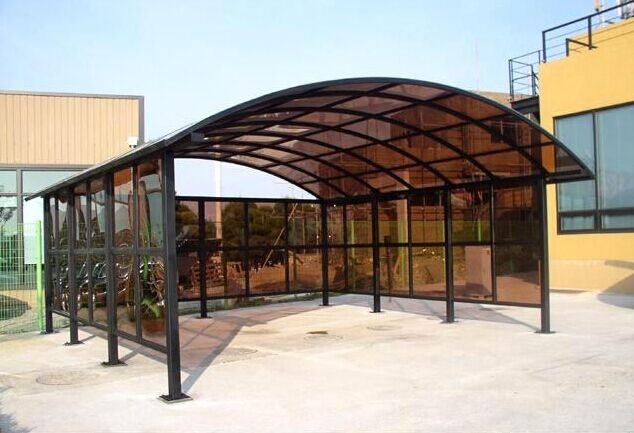
- Applications: skylights, roofing, greenhouses, noise barriers, machine guards, security glazing, stadiums
Choose Acrylic When:
- Optical clarity is the top priority (long-term transparency with minimal yellowing)
- The installation is indoor with low impact risk
- Budget is the primary constraint and replacement cost is manageable
- Applications: signage, retail displays, picture framing, aquariums, light diffusers
Frequently Asked Questions
Can polycarbonate replace acrylic in all applications?
Technically yes, but not always cost-effectively. Polycarbonate is over-engineered for indoor, low-impact applications where acrylic performs adequately at a lower price point.
Does polycarbonate yellow over time?
Unprotected polycarbonate will yellow. However, quality polycarbonate sheets with co-extruded UV protection layers resist yellowing for 10-20 years. Always confirm UV protection specifications before purchasing.
Which material is better for greenhouses?
Polycarbonate is the industry standard for greenhouses worldwide. It provides better insulation, impact resistance against hail, and diffuses light more evenly than acrylic. Twin-wall and multi-wall polycarbonate sheets offer superior thermal performance.
Is acrylic easier to clean than polycarbonate?
Acrylic is softer and scratches more easily. Polycarbonate can be cleaned with mild soap and water using a soft cloth. Avoid ammonia-based cleaners on both materials. Polycarbonate with a hard coating offers better scratch resistance.
What thickness should I choose?
For polycarbonate, typical applications use 4-10mm for vertical glazing and 10-20mm for roofing. For acrylic, 3-6mm is common for indoor displays and signage. Always consult load-bearing requirements for structural applications.
Final Verdict
For most construction and industrial applications, polycarbonate is the safer, more durable choice. Its superior impact resistance, wider temperature range, and fire-retardant properties make it suitable for demanding environments where safety and longevity matter.
Acrylic has its place in indoor display and signage applications where optical clarity and budget are the primary concerns. But for any outdoor, structural, or safety-critical installation, polycarbonate is the clear winner.
Contact our team for a quote on polycarbonate sheets tailored to your project requirements. We supply solid, multiwall, corrugated, interlocking, and U-lock polycarbonate panels with full UV protection and custom sizing options.