Bottom line: multiwall polycarbonate sheets are straightforward to install if you respect three rules — keep the UV-protected side facing outward, leave room for thermal expansion (about 6 mm per metre), and seal every flute against dust and condensation. Get those three right and a multiwall roof or skylight will stay clear and weather-tight for 10 or more years.
What multiwall polycarbonate sheet is
Multiwall (hollow) polycarbonate sheet is an extruded panel with two or more walls joined by internal ribs, forming rows of air chambers. Those chambers deliver thermal insulation (U-value as low as 1.5 W/m²·K), low weight (about one-twelfth of glass) and impact strength around 200 times that of glass, while clear grades still transmit up to 82% of light.
Tools and materials you will need
- Circular saw with a fine-tooth carbide-tipped blade (or a jigsaw for curves)
- Drill with HSS bits
- Stainless-steel or galvanised screws with EPDM (neoprene) washers
- Aluminium glazing bars, H-section connectors and U-channels
- Solid aluminium tape (top edge) and anti-dust breather tape (bottom edge)
- Neutral-cure silicone sealant (never acid-cure)
Step 1 — Build the frame at the right slope
Pitch the frame at a minimum slope of 5% (about 1 in 20) so rainwater drains. Run the ribs (flutes) downhill, never across the slope, or water will pool inside the channels. Size the purlin spacing to the sheet’s load rating for your wind and snow zone.
Step 2 — Cut to size
Keep the protective film on while cutting. Use a fine-tooth blade at a steady feed rate — a slow feed with a fine blade avoids chipping the ribs. After every cut, blow or vacuum the swarf out of the open flutes; trapped chips show up as dark lines and can block drainage. Cut each sheet roughly 10 mm shorter than the opening to leave expansion room at both ends.
Step 3 — Orient the UV-protected side out
One face carries the co-extruded UV layer and is marked by printed film or a label. That side must face outward toward the sun. Fitting the sheet UV-side-down is the single most common cause of premature yellowing.
Step 4 — Drill oversize holes
Drill fastener holes 2–3 mm larger than the screw shank so the sheet can move. Space fasteners along the ribs and never drill closer than about 40 mm from an edge. Pre-drilled oversize holes stop the sheet from buckling or cracking when it expands in hot weather.
Step 5 — Fasten without over-tightening
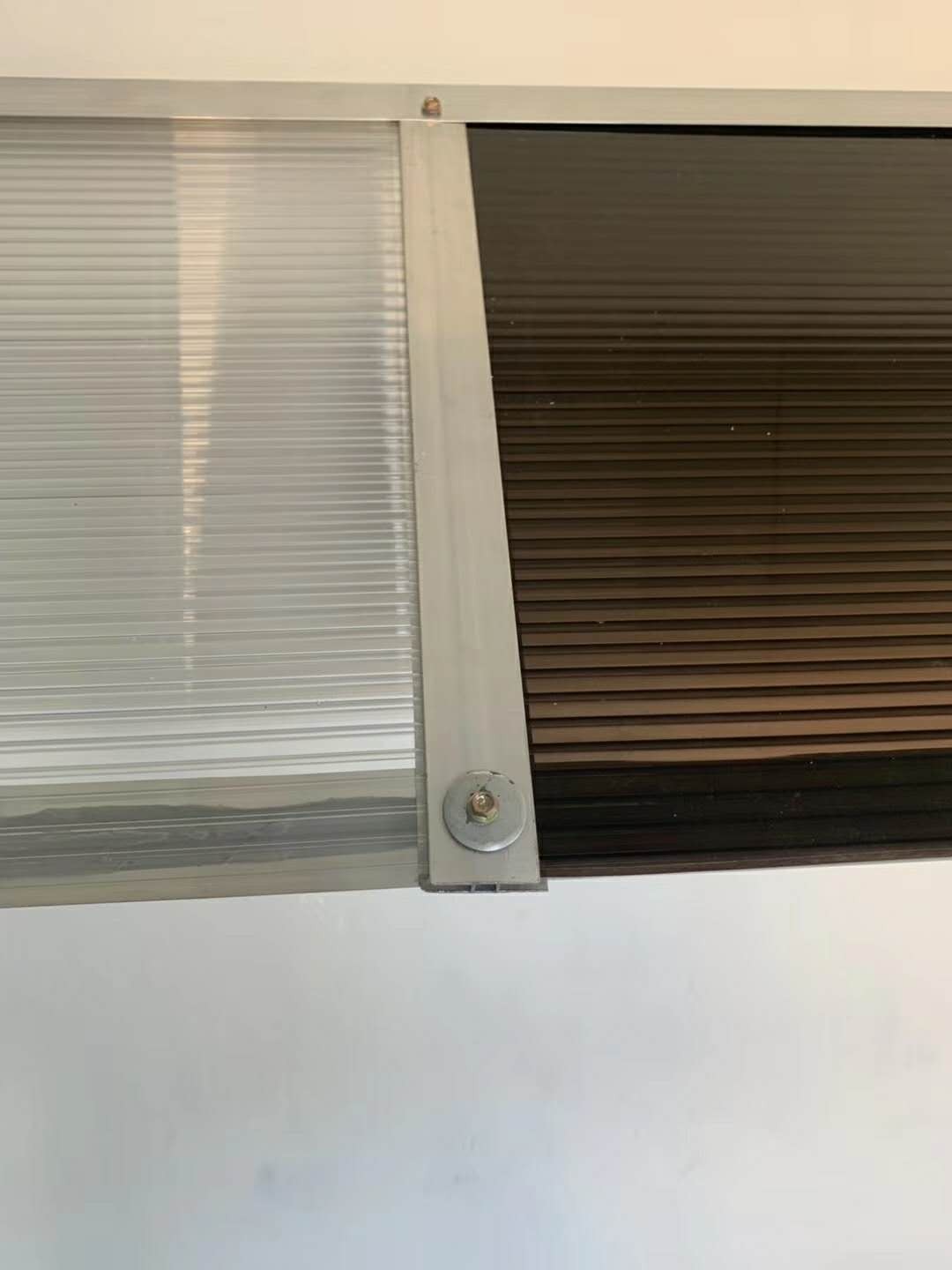
Use screws with EPDM washers, driven perpendicular to the sheet. Tighten only until the washer contacts the surface — snug, never compressed. Over-tightening dimples the sheet and cracks the ribs. Where the design allows, prefer glazing bars or H-section connectors over direct screwing, so the sheet can slide freely.
Step 6 — Seal the flutes
Seal the top (upper) edge with solid aluminium tape to keep water and insects out. Seal the bottom (lower) edge with anti-dust breather tape, which blocks dust but lets condensation drain. Leave the sheet ends inside the U-channels slightly open so any trapped moisture can escape.
Multiwall polycarbonate sheet specifications
| Parameter | Range |
|---|---|
| Thickness | 4, 6, 8, 10, 12, 14, 16, 20, 25, 30 mm |
| Structure | 2-wall, 3-wall, 4-wall, 5-wall X-reinforced, honeycomb |
| Standard width | 2100 mm |
| Standard length | 6 m (custom 1–12 m) |
| Light transmission | 25–82% (by colour and thickness) |
| U-value | 1.5–3.9 W/m²·K |
| Weight | 1.0–3.5 kg/m² |
| Service temperature | -40 °C to +120 °C |
| Fire rating | B1 (GB 8624), UL94 V-0~V-2, Euroclass B-s1,d0 |
Where multiwall sheets are used
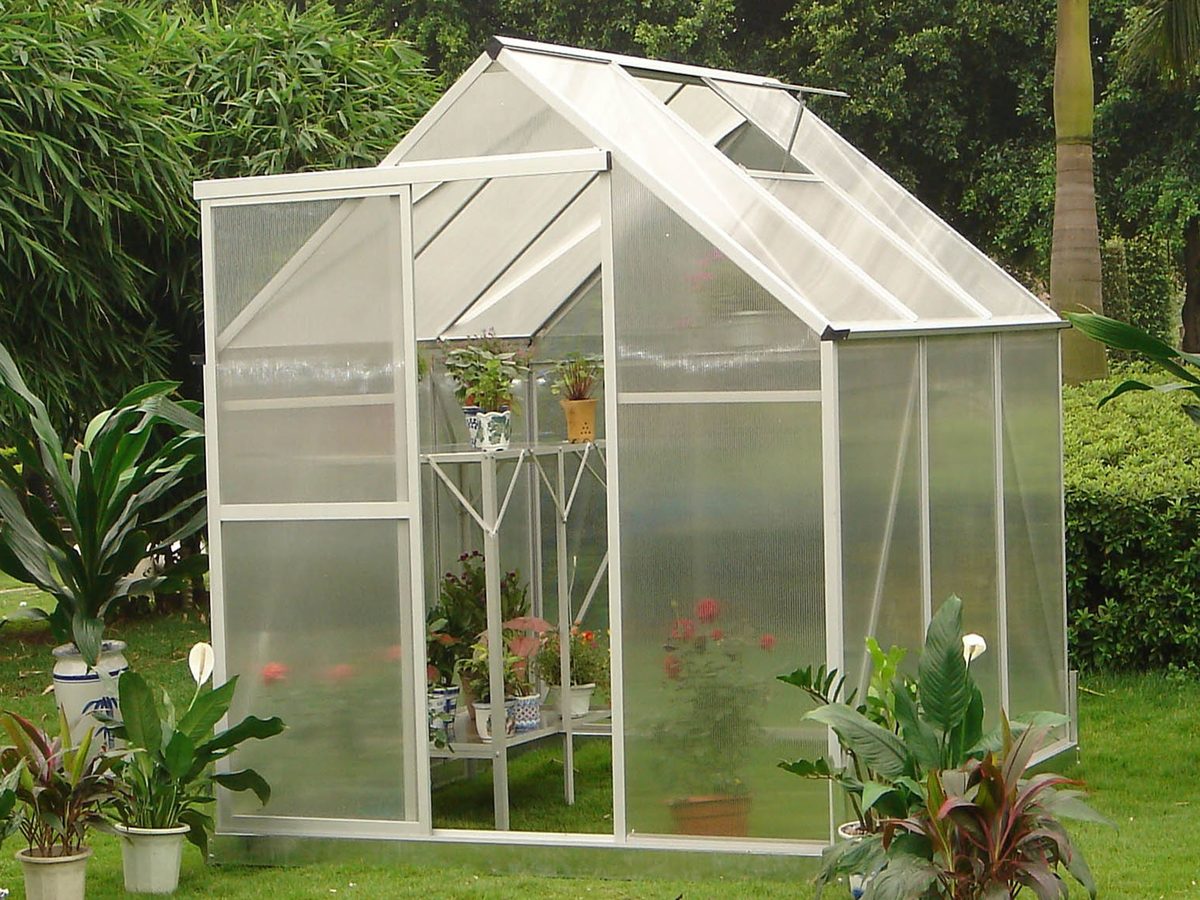
Greenhouses and ecological restaurants, skylights and atriums, carports and canopies, factory daylighting strips, stadium and swimming-pool roofs, and interior partitions.
Frequently asked questions
Which side of multiwall polycarbonate sheet faces out?
The UV-protected side, marked by printed film or a label, must face the sun. Fitting the sheet the wrong way round leads to early yellowing.
How much expansion gap should I leave?
Leave about 6 mm per metre of sheet, and drill every fastener hole 2–3 mm larger than the screw shank. Polycarbonate expands roughly 0.065 mm per metre per degree Celsius.
Can I install multiwall sheets flat?
No. Give the roof a minimum 5% slope (about 1 in 20) and run the ribs downhill so water drains instead of pooling in the flutes.
How do I seal the open flutes?
Solid aluminium tape on the top edge and anti-dust breather tape on the bottom edge. The breather tape keeps dust out while letting condensation drain.
How do I cut multiwall sheet without chipping it?
Use a fine-tooth carbide-tipped blade, keep the protective film on, feed steadily, then blow the swarf out of the flutes when you are done.
Multiwall polycarbonate sheet rewards careful installation: cut clean, leave expansion room, point the UV side out and seal the flutes — and the roof will stay clear and leak-free for years. Contact our team for a quote and we will supply cut-to-size, pre-drilled sheets together with the matching glazing profiles, tapes and fasteners for your project.