If you’ve ever seen an old plastic panel that turned yellow, brittle, and cracked after a few years in the sun, you’ve witnessed what happens when UV protection fails. For polycarbonate sheets—one of the most widely used glazing materials in construction, agriculture, and industrial design—UV resistance isn’t a nice-to-have feature. It’s the difference between a panel that lasts 3 years and one that performs for 15+.
How Does UV Protection Work in Polycarbonate Sheets?
Pure polycarbonate resin is naturally vulnerable to UV radiation. Left unprotected, sunlight breaks down the polymer chains on the surface, causing gradual yellowing, loss of impact strength, and eventual brittleness. The industry solved this with co-extrusion UV protection—a thin, permanent protective layer bonded to the sheet surface during manufacturing.
During co-extrusion, a concentrated UV absorber is embedded into a thin layer (typically 30–50 microns thick) and fused to one or both sides of the sheet. This layer acts as a sacrificial shield: it absorbs incoming UV radiation before it reaches the bulk polycarbonate underneath. Unlike spray-on or film-applied coatings that can peel or wear off, co-extruded UV protection is molecularly bonded to the sheet and won’t delaminate over time.
For multi-wall and corrugated polycarbonate sheets, the UV-protected side is marked with a peel-off film or printed label that reads “THIS SIDE OUT” or “UV PROTECTED SIDE.” Installing the sheet with the protected side facing the sun is critical—mounting it backwards leaves the bulk material exposed and dramatically shortens service life.
Why UV Protection Matters for Your Project
Here’s what proper UV protection delivers in real-world applications:
- Longevity: Co-extruded UV-protected polycarbonate sheets carry 10-year limited warranties against yellowing and significant light transmission loss. Unprotected sheets can show visible degradation within 12–18 months of outdoor exposure.
- Light Transmission Stability: For greenhouse and skylight applications, maintaining consistent light transmission is essential. UV-protected sheets typically retain ≥85% of their original light transmission after a decade outdoors.
- Impact Resistance Retention: UV degradation doesn’t just change color—it weakens the material. Protected sheets maintain their 200x-stronger-than-glass impact rating throughout their service life, which matters for hail-prone regions and high-traffic areas.
- Appearance: Yellowed panels ruin the look of any architectural project. UV protection keeps polycarbonate looking clear and professional for years.
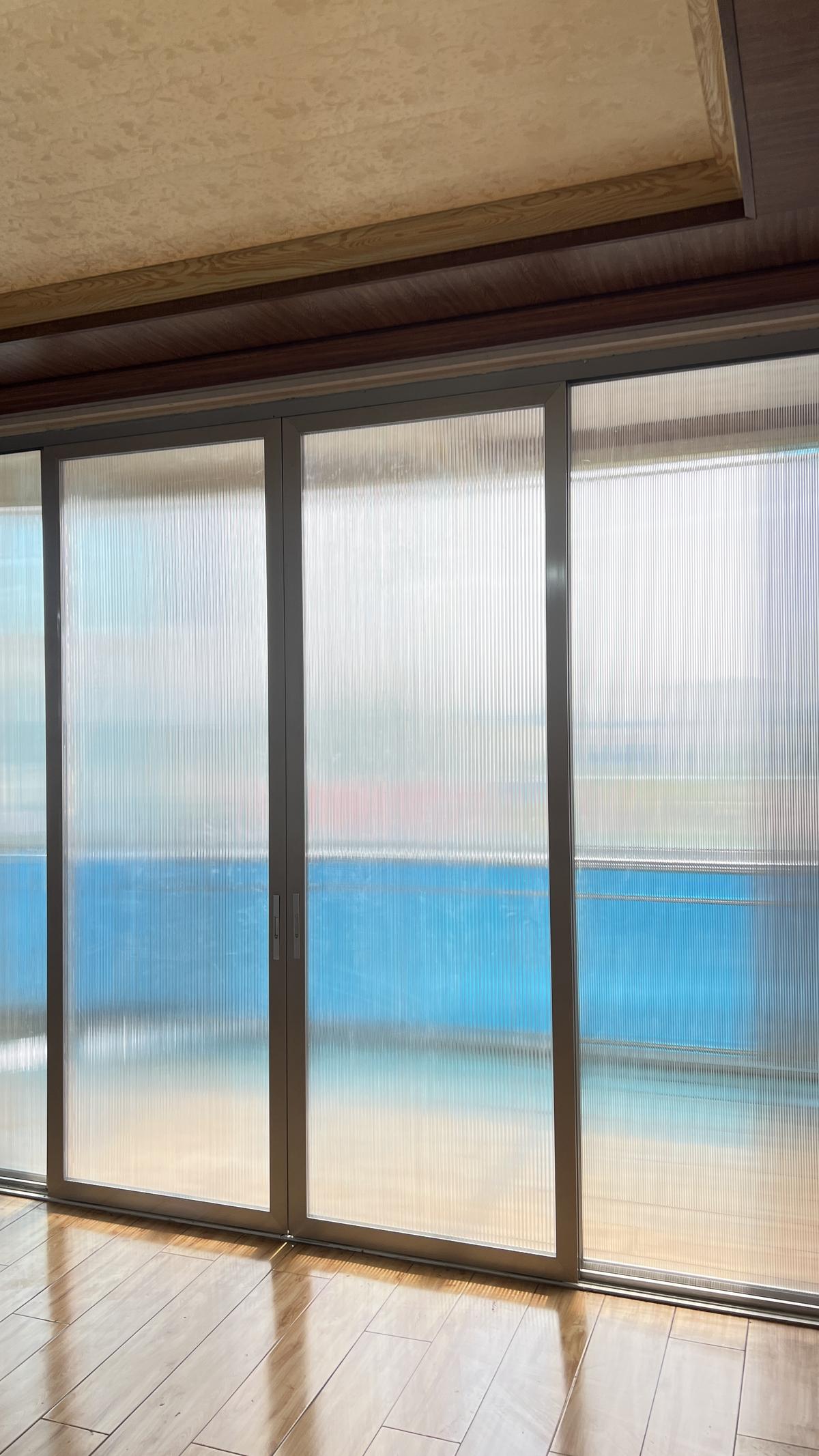
Single-Sided vs. Double-Sided UV Protection
Most polycarbonate sheets on the market come with single-sided UV protection—one face is treated, the other is not. This is sufficient for the vast majority of applications (roofing, wall cladding, glazing) where only one side faces the sun. The non-protected side faces the interior and isn’t exposed to direct UV.
Double-sided UV protection is available as a premium option and is recommended for:
- Freestanding partitions or screens exposed to sunlight from both sides
- Elevated walkway canopies where reflected UV from water or light-colored surfaces hits the underside
- High-altitude installations where UV intensity is significantly higher
How to Verify UV Protection Quality
Not all UV protection is created equal. When sourcing polycarbonate sheets, here’s what to look for:
- Manufacturer warranty terms: Reputable suppliers offer written warranties specifying yellowing index (ΔYI) limits and light transmission retention over 10 years. If a supplier can’t provide a warranty document, that’s a red flag.
- Co-extrusion, not coating: Ask whether the UV protection is co-extruded or applied as a post-production coating. Co-extrusion is permanent; coatings are temporary.
- Third-party testing: Look for compliance with EN 438 (exterior-grade laminates), ISO 4892 (accelerated weathering), or ASTM G154 (UV exposure testing). Test reports should be available on request.
- Visual inspection: High-quality UV-protected sheets have a uniform, slightly glossy surface on the protected side with no streaks, haze, or unevenness in the protective layer.
Common Questions About Polycarbonate UV Protection
Does UV protection affect light transmission?
The impact is minimal—typically less than 2% reduction in visible light transmission. The UV-absorbing layer is engineered to block wavelengths below 380nm (the UV spectrum) while allowing visible light (400–700nm) to pass through. For greenhouse applications, this is actually beneficial: it blocks plant-damaging UV while preserving the photosynthetically active radiation (PAR) that plants need.
Can I add UV protection to existing sheets?
No. UV protection must be integrated during manufacturing. Aftermarket sprays, films, or coatings provide short-term protection at best and typically fail within 1–2 years. If your existing polycarbonate sheets are showing UV damage, replacement is the only long-term solution.
What happens if I install the sheet backwards?
The unprotected side faces the sun and degrades rapidly—visible yellowing within 6–12 months, significant embrittlement within 2–3 years, and complete failure within 5 years. Always check the protective film labeling before installation.
The Bottom Line
UV protection is the single most important factor determining how long your polycarbonate sheets will last outdoors. It’s not an upsell or optional extra—it’s the core technology that separates a professional-grade building material from a disposable plastic panel. When evaluating suppliers, make UV protection specifications your first question, not your last.
Contact our team for a quote on UV-protected polycarbonate sheets with full warranty documentation and test reports for your project requirements.