Light transmission is one of the most critical performance characteristics of polycarbonate sheets — yet it’s often the least understood. Whether you’re designing a greenhouse that needs maximum sunlight, a skylight requiring balanced daylighting, or a privacy screen that calls for soft diffused light, understanding how polycarbonate sheets transmit and diffuse light will help you make the right material choice.
In this guide, we will break down the science of light transmission across all major polycarbonate sheet types, explain the difference between direct transmission and diffusion, and give you practical selection criteria for your next project.
What Is Light Transmission in Polycarbonate Sheets?
Light transmission refers to the percentage of visible light (380–780 nm wavelength) that passes through a polycarbonate sheet. It is measured using a spectrophotometer and expressed as a percentage — the higher the number, the more light gets through.
Raw polycarbonate resin has a natural light transmission of approximately 89–91%, which is comparable to glass. However, the final transmission rate of a PC sheet depends on three key factors:
- Sheet structure — solid, multiwall, or corrugated profiles affect how light passes through
- Wall count and thickness — more internal walls and greater thickness reduce transmission
- Color and surface treatment — tints, opal finishes, and textured surfaces alter both transmission and diffusion
Light Transmission by Polycarbonate Sheet Type
Solid Polycarbonate Sheets — Up to 89% Transmission
Clear solid polycarbonate sheets offer the highest light transmission among all PC sheet types, reaching up to 89% — virtually identical to glass. With no internal walls or air gaps to scatter light, solid sheets deliver crisp, undistorted visibility. This makes them the go-to choice for applications where optical clarity matters: security glazing, machine guards, bus stop shelters, and transparent partitions.
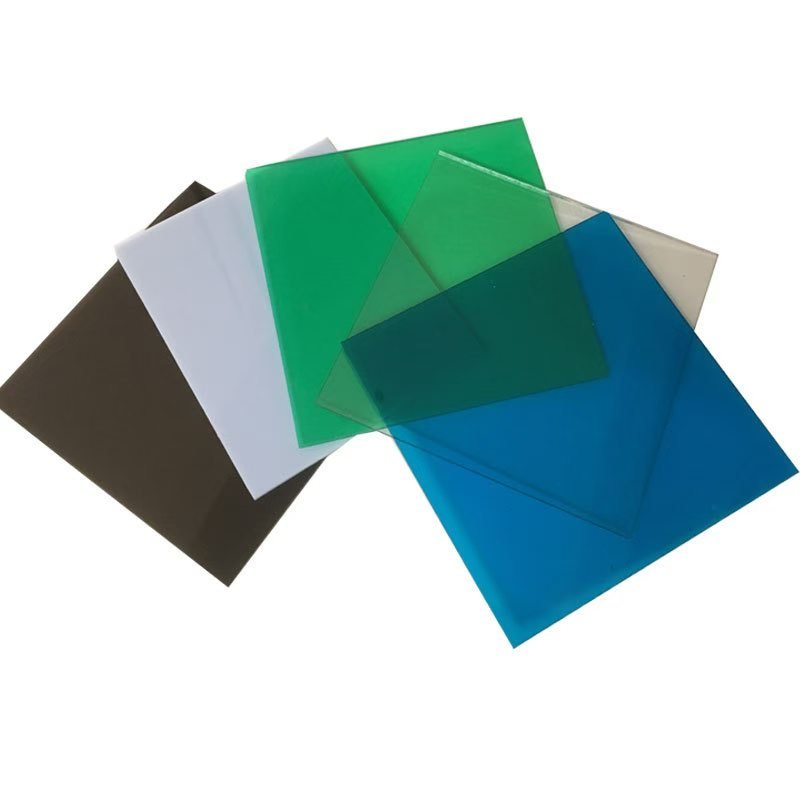
Solid sheets are available in a wide range of colors — bronze, opal white, blue, green, and grey — each with its own transmission profile. Bronze-tinted sheets, for instance, reduce transmission to around 30–50% while providing solar heat control, making them ideal for skylights in hot climates.
Multiwall Polycarbonate Sheets — 25% to 82% Transmission
Multiwall (hollow) polycarbonate sheets balance light transmission with thermal insulation. The internal rib structure — whether twin-wall, triple-wall, or honeycomb — creates air chambers that provide excellent U-values while still allowing substantial light through.
Transmission rates vary significantly by structure:
- Twin-wall (2-wall, 4–10mm): 75–82% — excellent daylighting with basic insulation
- Triple-wall (3-wall, 10–16mm): 65–75% — good light with improved thermal performance
- Honeycomb / X-structure (16–30mm): 50–65% — balanced light and maximum insulation
- Opal/colored multiwall: 25–60% — for applications requiring light control
The trade-off is straightforward: thicker sheets with more internal walls provide better insulation but lower light transmission. For greenhouse applications, most growers opt for 8–10mm twin-wall sheets to maximize PAR (photosynthetically active radiation) while maintaining adequate thermal performance.
Interlocking Polycarbonate Panels — 20% to 82%
Interlocking (tongue-and-groove) panels are designed primarily for vertical facade and curtain wall applications. Their multi-cavity structure — ranging from 3-wall to honeycomb and 9-chamber configurations — produces a wide transmission range. Thinner 10–16mm panels in clear finish can achieve 70–82% transmission, while thicker 40–50mm panels with complex internal structures may transmit as little as 20–30%.
These panels are rarely selected for their light transmission alone; their primary value lies in the seamless, fastener-free joint system. However, for applications like covered walkways or atrium walls where both natural light and architectural aesthetics matter, the higher-transmission variants perform excellently.
Corrugated Polycarbonate Sheets — 70% to 85%
Corrugated PC sheets (wave profile roofing panels) provide strong light transmission in the 70–85% range for clear variants, making them popular for industrial skylighting and agricultural roofing. Their single-wall wave profile means less material between the light source and the interior, resulting in consistently high transmission rates across different wave types (760, 840, 900, 930, 950).
Specialty Sheets: Diffusion, Frosted, and Textured
Beyond the standard product categories, several specialty PC sheet types are purpose-built for light management:
- PC Light Diffusion Sheets: 60–88% transmission with 60–95% haze — engineered to scatter light evenly, eliminating hot spots in LED light boxes and backlit signage
- PC Frosted Sheets: 60–85% transmission — single or double-sided matte finish provides privacy while maintaining high light throughput, ideal for office partitions and bathroom enclosures
- PC Embossed/Textured Sheets: 50–80% — diamond or lychee-pattern surfaces diffuse light while adding decorative appeal and anti-slip functionality
Light Diffusion: More Than Just Transmission
Transmission tells you how much light gets through. Diffusion tells you how that light behaves once it’s inside your space. Direct transmission produces sharp shadows and can create glare — think of clear glass on a sunny day. Diffused transmission scatters light rays in multiple directions, producing soft, even illumination without harsh shadows.
Polycarbonate sheets achieve diffusion through several mechanisms:
- Internal rib/wall structure — multiwall and honeycomb configurations naturally scatter light as it passes through multiple material-air interfaces
- Surface texturing — frosted, embossed, or matte finishes break up incoming light at the surface level
- Embedded diffusion particles — light diffusion grades contain micro-additives that scatter light throughout the sheet thickness
For greenhouses, a moderate level of diffusion is actually beneficial — diffused light reaches lower leaves and reduces plant stress from direct radiation. For office partitions, high diffusion with good transmission creates bright, private spaces. For skylights in commercial buildings, balanced diffusion eliminates glare on computer screens while maintaining natural daylight levels.
How Color Affects Light Transmission
Adding color to polycarbonate sheets reduces light transmission, but the degree varies significantly by hue and saturation:
| Color | Typical Transmission (Solid Sheet) | Best Application |
|---|---|---|
| Clear | 86–89% | Maximum daylight, security glazing |
| Opal White | 55–75% | Privacy with brightness, light boxes |
| Blue | 40–60% | Decorative glazing, pool enclosures |
| Green | 40–55% | Greenhouse shading, aesthetic roofing |
| Bronze | 20–40% | Solar heat control, skylights |
| Grey / Dark Grey | 10–25% | Glare reduction, architectural facades |
It’s important to note that colored sheets don’t just reduce total light — they also alter the spectral composition. Green-tinted sheets, for example, transmit more green wavelengths while absorbing more red and blue, which can affect plant growth in greenhouse applications. Always specify the right color based on both aesthetic goals and functional requirements.
How to Choose the Right Light Transmission Level
Here’s a practical decision framework based on application type:
- Greenhouses and plant growth: Target 75–85% transmission (8–10mm twin-wall clear multiwall). Avoid anything below 70% for food crops. Diffusion of 30–50% is beneficial for even light distribution.
- Skylights and atriums: 50–70% transmission is usually ideal — enough natural light to reduce artificial lighting costs, but not so much that it causes overheating or glare. Consider bronze or opal tints for south-facing installations.
- Industrial roofing and factories: 70–80% transmission for corrugated or multiwall sheets used as daylight panels. The goal is to replace daytime electric lighting, so higher transmission saves more energy.
- Office partitions and interiors: 60–80% transmission with high diffusion — frosted or light diffusion grades that let light through but obscure direct visibility.
- Canopies and walkway covers: 50–75% with moderate diffusion — enough light for safe navigation without the greenhouse effect of trapped heat.
- Privacy screens and decorative walls: 20–50% transmission — colored, textured, or thick multiwall panels that prioritize visual screening over light throughput.
Frequently Asked Questions
Does polycarbonate sheet light transmission degrade over time?
Quality polycarbonate sheets with co-extruded UV protection maintain stable light transmission for 10+ years. Without UV protection, polycarbonate yellows and transmission can drop by 15–30% within 3–5 years. Always specify UV-protected sheets for outdoor applications.
Can I get both high transmission and good insulation?
Yes, but there is always a trade-off. 8–10mm twin-wall multiwall sheets offer the best balance: approximately 78–82% light transmission with a U-value of 3.0–3.5 W/m²·K. For colder climates requiring U-values below 2.0, you will need thicker sheets (16–25mm) and should expect transmission in the 50–65% range.
What is the difference between light transmission and clarity?
Transmission measures how much light passes through — clarity measures how clearly you can see through the material. A frosted PC sheet can have 80% transmission (lots of light gets through) but near-zero clarity (you cannot see details through it). Solid clear sheets offer both high transmission and high clarity.
How does multiwall sheet orientation affect light transmission?
Multiwall sheets should be installed with ribs running vertically (in the direction of the slope for roofing) to allow condensation drainage. Light transmission is slightly higher when light passes parallel to the ribs rather than perpendicular. For maximum greenhouse light, orient the sheet so the sun’s arc aligns with the rib direction during peak growing hours.
Get Expert Guidance on Your Project
Choosing the right polycarbonate sheet for your specific light transmission requirements doesn’t have to be complicated. Whether you need maximum daylight for a commercial greenhouse, balanced diffusion for an office atrium, or privacy screening with soft ambient light, our team can help you evaluate the options and find the perfect match.
Contact our team for a quote — we will work with you to specify the right sheet type, thickness, color, and UV protection level for your project’s unique requirements.