Introduction
Many buyers in Southeast Asia have encountered PC sheet yellowing after just 1-2 years of outdoor use. The transparency decreases, the appearance becomes old and unsightly, and in severe cases the structural strength drops significantly. This phenomenon is one of the most common complaints about polycarbonate sheets, especially in tropical regions with intense sunlight exposure year-round.
Understanding why polycarbonate turns yellow and how to choose anti-yellowing PC sheets is essential for anyone planning to use this material for roofing, greenhouses, carports, or any outdoor application. This guide examines the root causes of PC yellowing and provides practical advice for selecting sheets that stay clear and strong for years.
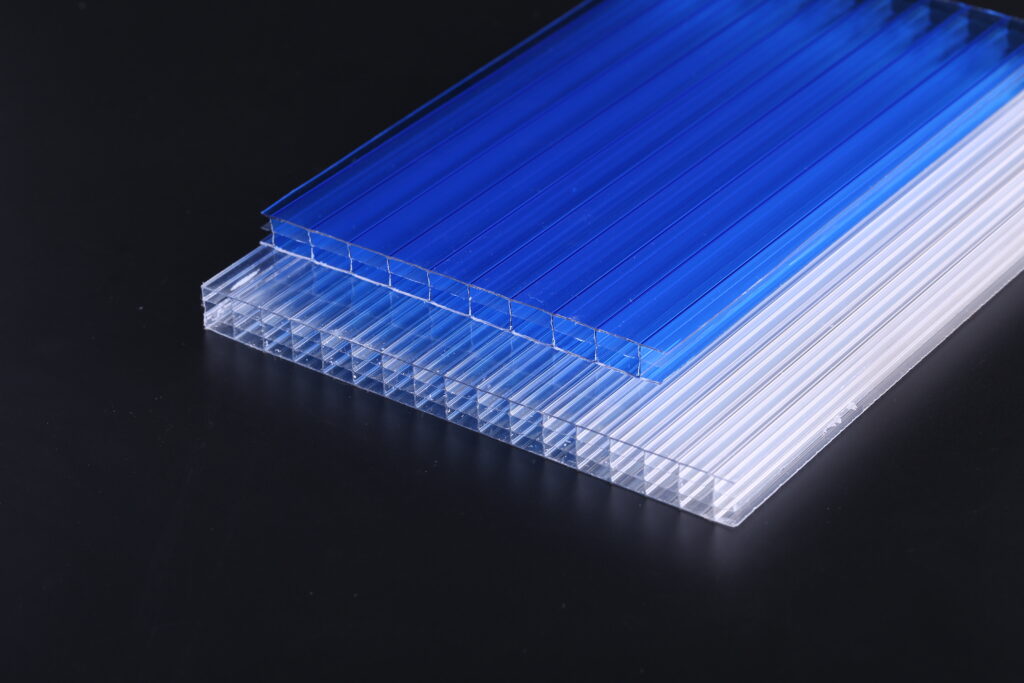
What Causes Polycarbonate Sheet to Turn Yellow?
Polycarbonate yellowing is primarily caused by UV degradation of the polymer molecular structure. When unprotected polycarbonate is exposed to sunlight, ultraviolet radiation breaks down the chemical bonds in the polymer chains. This process, known as photo-oxidation, creates chromophores — molecular structures that absorb visible light and give the material a yellow or amber appearance.
There are several specific factors that accelerate yellowing:
No UV Protective Layer — Low-cost sheets often lack a co-extruded UV protection layer. These sheets use recycled or low-grade materials and are not designed for long-term outdoor use. Without a UV barrier, degradation begins immediately upon exposure to sunlight.
Use of Recycled Raw Materials — Recycled PC materials contain impurities, color contaminants, and degraded polymer chains. These unstable components break down much faster under sunlight, causing rapid yellowing within months rather than years. Quality PC sheets should use 100% virgin polycarbonate resin.
Incorrect Installation Direction — Quality PC sheets have a UV-coated side that must face outward toward the sun. Installing the UV-coated side inward leaves the unprotected surface directly exposed to sunlight, accelerating aging dramatically. Many yellowing problems are actually installation errors.
Exposure to Chemical Corrosion — Contact with acidic rain, alkaline cleaning agents, or oily substances can damage the surface layer of polycarbonate sheets. This chemical attack weakens the protective coating and creates entry points for UV degradation to begin.
How to Choose Anti-Yellowing PC Sheets
Selecting the right polycarbonate sheet requires attention to three critical factors that determine long-term performance and resistance to yellowing.
Choose UV Co-Extruded Sheets — The most important feature is a co-extruded UV protective layer. Unlike spray-on coatings that wear off within months, co-extrusion bonds a UV-resistant layer directly onto the sheet surface at the molecular level during manufacturing. Look for a UV protection layer of at least 50 microns thickness with a 10-year warranty against yellowing.
Verify 100% Virgin Raw Materials — Always confirm that the sheets are made from 100% virgin polycarbonate resin, not recycled materials. Virgin material has stable, consistent molecular structure with maximum resistance to UV degradation. Reputable manufacturers clearly state their material source and can provide certificates of analysis.
Check UV Protection Standards and Certifications — Quality anti-yellowing PC sheets should meet international standards for UV resistance. Look for certification from recognized testing laboratories and request UV weathering test reports (QUV or Xenon-arc accelerated testing) from the manufacturer. These tests simulate years of sunlight exposure in weeks and provide reliable performance data.
Common Applications Where Anti-Yellowing Matters Most
Anti-yellowing properties are critical in any outdoor polycarbonate application, but some uses demand particularly high UV resistance:
• Greenhouse Roofing — Plants require consistent light transmission for photosynthesis. Yellowing reduces PAR (photosynthetically active radiation) by as much as 30-40%, directly affecting crop yields. Quality anti-yellowing PC greenhouses maintain 85%+ light transmission for 10+ years.
• Carports and Canopies — Visible yellowing on a carport detracts from property appearance and indicates structural weakening. Anti-yellowing sheets keep carports looking new and maintain impact resistance against hail and falling branches.
• Skylights and Roof Glazing — Building occupants expect natural light, not discolored illumination. Yellowed skylights create an unpleasant ambiance and reduce the energy-saving benefits of natural daylighting.
• Safety and Security Glazing — UV-degraded polycarbonate becomes brittle and loses its legendary impact resistance. For security barriers, machine guards, and anti-ballistic glazing, anti-yellowing properties directly correlate with long-term safety performance.
Why Choose Jietai for Anti-Yellowing PC Sheets
Jietai is a professional polycarbonate sheet manufacturer with years of experience producing UV-resistant PC sheets for global markets. All our sheets feature co-extruded UV protection layers exceeding 50 microns, using 100% virgin polycarbonate raw materials imported from leading international suppliers.
• Factory-Direct Supply — No middlemen, competitive pricing, and direct access to the manufacturing team
• 10-Year UV Warranty — Each sheet is backed by a comprehensive warranty against yellowing and UV degradation
• Custom Manufacturing — Available in various thicknesses, colors, sizes, and profiles to match specific project requirements
• Global Export Experience — Reliable packaging and logistics for Southeast Asia, Middle East, Africa, and Americas