Bottom line: polycarbonate sheet comes in twelve production types across four families — hollow multiwall, solid flat, corrugated and specialty surface panels — and each type is built for a different job. This guide puts the complete thickness, width, structure and light-transmission ranges for every type into one comparison table, so you can line them up side by side and pick the right panel the first time.
The four families at a glance
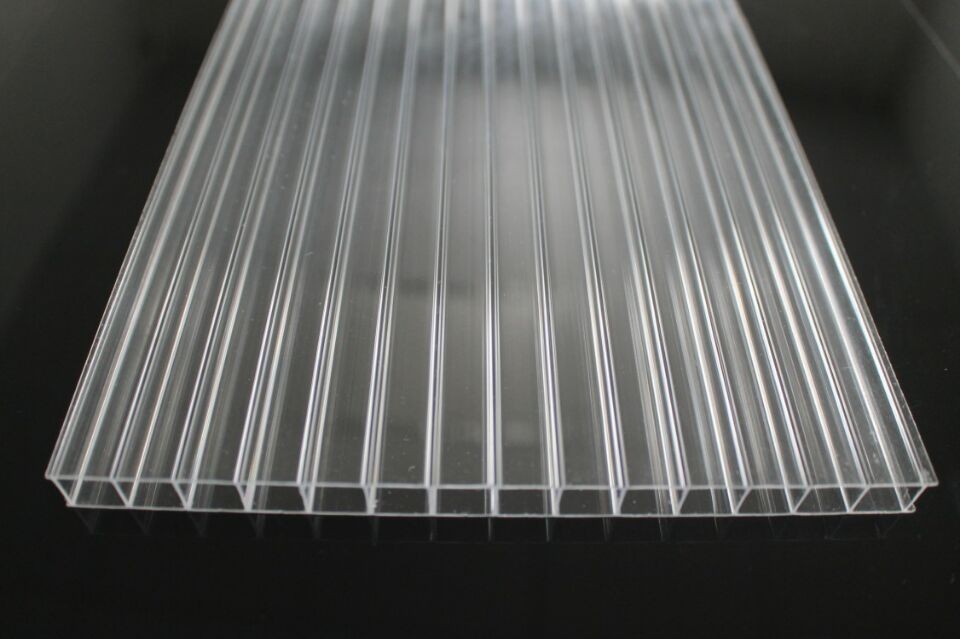
Polycarbonate panels split into four broad families by how they are made. Hollow multiwall sheets (twin-wall, triple-wall and multi-chamber) put air pockets between solid skins, which cuts weight and lifts insulation — the go-to for greenhouses and skylights. Solid flat sheets are a single dense layer with glass-like clarity and 200–250× the impact strength of glass, used for glazing, machine guards and safety screens. Corrugated sheets carry a wave profile that matches standard metal-roof profiles for easy mixed roofing. Specialty surfaces (frosted, textured, light-diffusing, high-gloss, reeded, particle-corrugated and hollow-corrugated) add a finish or profile on top of a solid or corrugated base for specific light, privacy and design jobs.
Complete specifications comparison table
As a manufacturer we produce all twelve types to the industry-standard ranges below. Custom thicknesses, widths, colours and cut-to-size panels are available on request.
| Type | Structure | Thickness | Standard width | Light transmission | Typical use |
| Multiwall | 2-wall / 3-wall / 4-wall / 5-wall X / honeycomb | 4–30 mm | 2100 mm (mainstream); 1220 / 1560 / 1820 mm custom | 25–82% | Greenhouses, skylights, carports, partitions |
| Solid | Solid single layer | 1–30 mm | 1220 / 1560 / 1820 / 2100 mm; 2500 mm custom | up to 89% (clear) | Glazing, machine guards, noise barriers, light boxes |
| Corrugated | Wave profile (840 / 900 / 930 / 950 / 1050 type) | 0.8–3.0 mm | 840–1050 mm effective | — | Factory daylighting, carports, corridors |
| Interlocking | 3-wall → 5-wall X → honeycomb / 9-chamber | 10–50 mm | 500 mm (mainstream); 600 / 700 / 800 mm custom | 20–82% | Facade curtain walls, storefronts, partitions |
| U-Lock | 2-wall → 6-wall → honeycomb | 6–40 mm | 500 / 600 / 1050 mm | — | Roof skylights, greenhouses, curved canopies |
| Light-diffusing | Solid with micro-diffuser surface | 1–10 mm | 1220 / 1560 mm | 60–88% (haze 60–95%) | LED diffusers, light boxes |
| High-gloss | Solid mirror-gloss surface | 1–5 mm | 1220 / 1560 mm | — | Display cabinets, signage, appliance panels |
| Textured | Solid with diamond / pebble surface | 1–8 mm | 1220 / 1560 / 2100 mm | — | Partitions, furniture doors, anti-slip walkways |
| Particle corrugated | Corrugated + particle surface | 1.5–3.0 mm | 840 / 900 / 930 / 950 type | — | Sunroom carports, wall cladding, skylight tiles |
| Frosted | Solid single / double matte surface | 1–10 mm | 1220 / 1560 mm | 60–85% | Bathroom screens, office dividers, diffusers |
| Reeded solid | Solid with reeded stripe texture | 2–5 mm | 1220 mm | — | Interior partitions, cabinet doors, feature walls |
| Hollow corrugated | Corrugated with hollow chambers | 0.5–0.8 mm wall | 840–950 mm effective | — | Insulated greenhouse roofs, farm buildings |
Multiwall polycarbonate sheets
Multiwall (or multiwall) polycarbonate is the workhorse of the range. Two or more solid skins are joined by vertical ribs, leaving air channels that insulate while keeping the panel light. Standard production runs 4 mm to 30 mm thick with a 2100 mm width as the main size, and 1220 mm, 1560 mm and 1820 mm available as custom widths. A co-extruded UV layer (30–50 μm) protects the weather side, and light transmission spans 25–82% depending on structure and tint. For a greenhouse or skylight you usually pick multiwall first, then choose the wall count by how much insulation you need.
Solid polycarbonate sheets
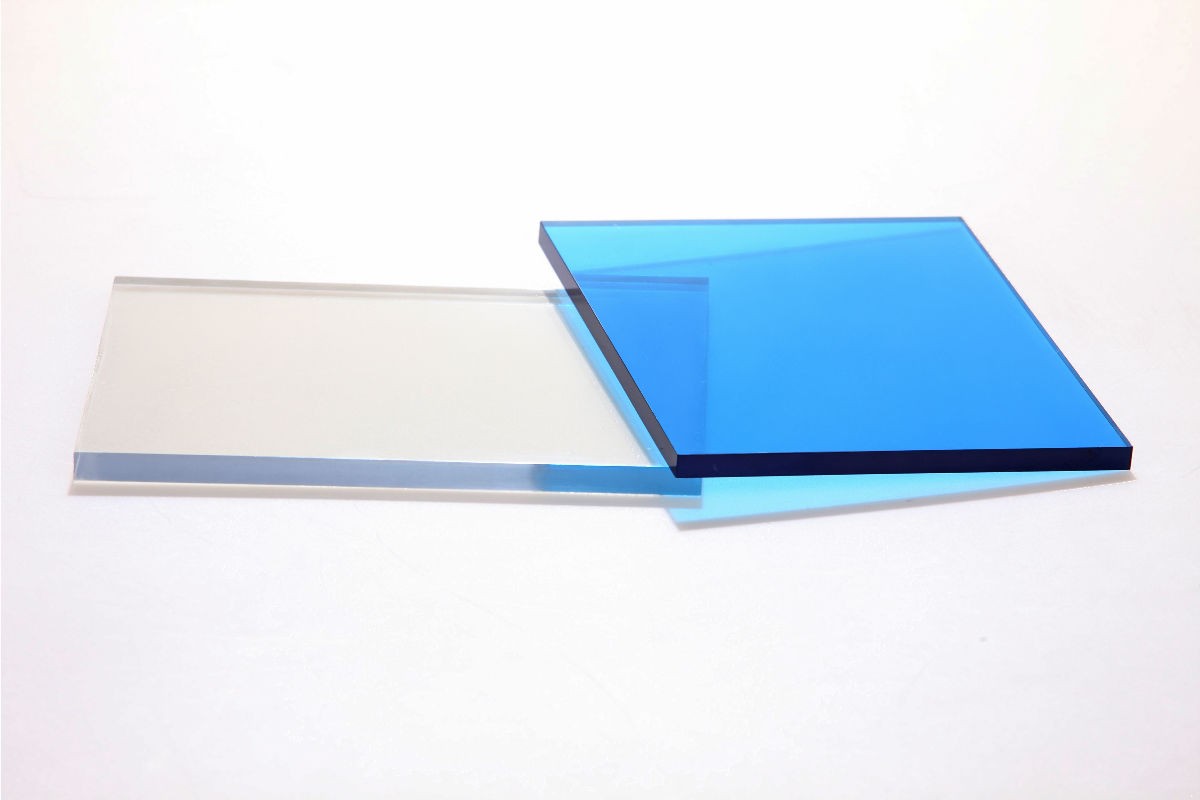
Solid polycarbonate is a single dense layer that looks and glazes like glass but is far tougher — roughly 200–250 times the impact strength of glass. It is made 1 mm to 30 mm thick in four standard widths (1220 mm, 1560 mm, 1820 mm, 2100 mm) with 2500 mm as a custom option, and clear grades transmit up to 89% of light. This is the type for machine guards, safety glazing, noise barriers, bus-stop shelters and backlit signage, where you need full clarity plus impact and weather resistance.
Corrugated polycarbonate sheets
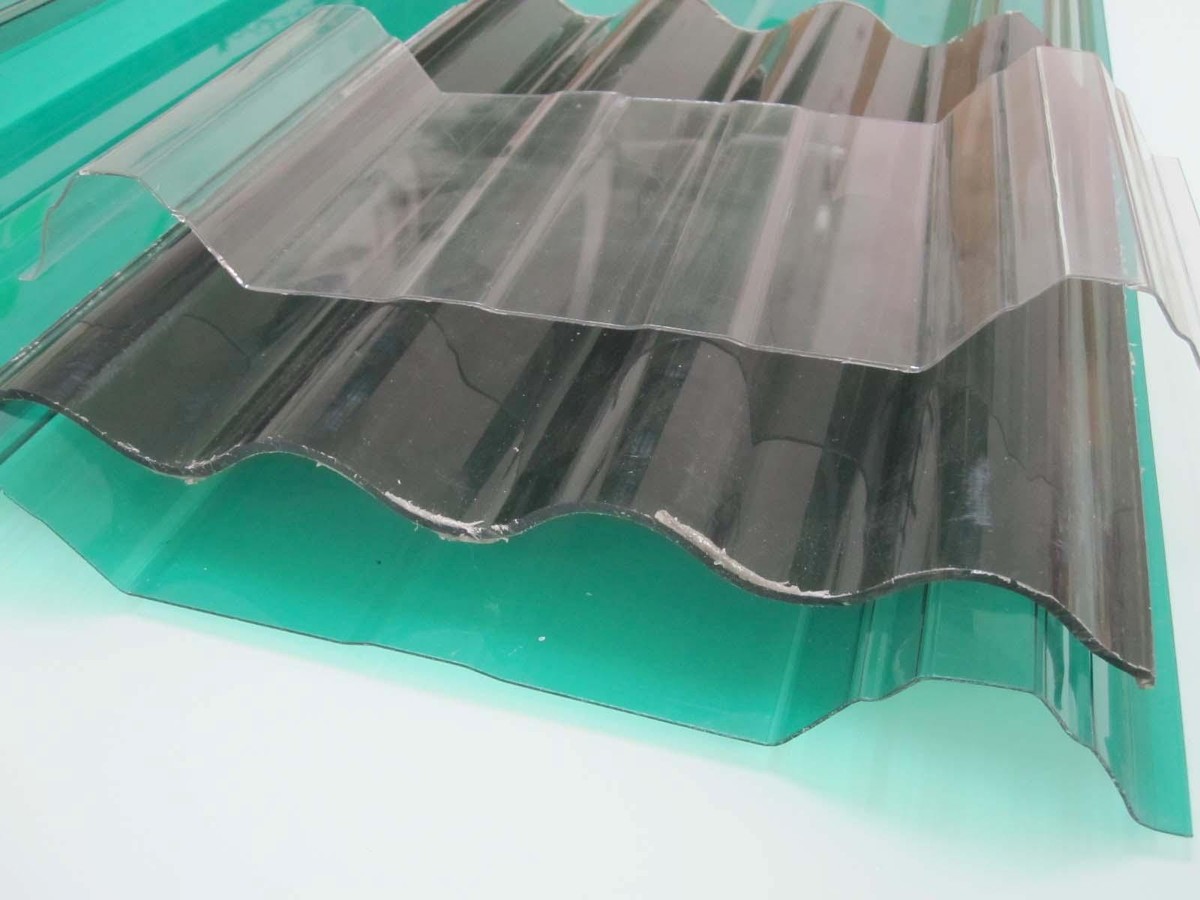
Corrugated polycarbonate carries the same wave profiles as standard color-steel roofing (840, 900, 930, 950 and 1050 types), so it drops straight into mixed industrial roofs. It runs 0.8 mm to 3.0 mm thick and is the standard way to add a daylight strip to a factory, carport, corridor or livestock house. Colour options cover clear, blue, green, bronze and opal.
Interlocking and U-Lock panel systems
Two engineered systems fill opposite ends of the building envelope. Interlocking panels join edge-to-edge with a tongue-and-groove that needs no metal connectors, so they form a clean, flat facade — the choice for curtain walls, storefronts and partitions. They run 10 mm to 50 mm thick (500 mm mainstream width, with 600–800 mm custom) and are for vertical cladding only, not open roofs. U-Lock panels are the roofing counterpart: a U-shaped lock plus an aluminium channel, I-beam and EPDM gasket make a weather-tight standing system that can cold-bend to a 3–8 m radius, so they suit factory skylights, greenhouses, stadium canopies and curved roofs in 6 mm to 40 mm thickness.
Specialty and decorative types
Seven specialty surfaces extend the range for light control, privacy and design. Light-diffusing sheet (60–88% transmission, 60–95% haze) hides LED hot spots in light boxes. High-gloss sheet (90–100 GU) gives a mirror finish for displays and appliance panels. Textured sheet carries a diamond or pebble surface for anti-slip floors and furniture doors. Frosted sheet (single- or double-sided, 60–85% transmission) is the privacy screen for bathrooms and offices. Particle corrugated adds a textured surface to the wave profile for decorative carports and wall cladding. Reeded solid sheet mimics fluted glass for interior partitions and feature walls. Hollow corrugated combines a wave profile with hollow chambers for insulated greenhouse roofs. All of these keep the impact strength and weather resistance of standard polycarbonate.
How to choose the right type
Start from the job, not the material. For a roof or skylight, choose multiwall for insulation, corrugated for mixed metal roofs, or U-Lock for large or curved spans. For a vertical facade or partition, choose interlocking for a seamless flat wall, solid for full clarity, or frosted/textured for privacy. For safety glazing and machine guards, solid sheet is the default. Then pin the thickness from the span and wind or impact load, and confirm the width against your framing centres. We quote the full range and can cut to size, so you never have to compromise between the type you need and the size you can get.
Frequently Asked Questions
What are the main types of polycarbonate sheets?
The four main families are hollow multiwall, solid flat, corrugated and specialty surface sheets. Within those, production covers twelve types: multiwall, solid, corrugated, interlocking, U-Lock, light-diffusing, high-gloss, textured, particle-corrugated, frosted, reeded-solid and hollow-corrugated panels.
What is the difference between multiwall and solid polycarbonate sheet?
Multiwall sheet has air channels between two or more solid skins, so it is lighter and insulates better — ideal for greenhouses and skylights. Solid sheet is a single dense layer with glass-like clarity and the highest impact strength, used for glazing, machine guards and safety screens.
What thickness polycarbonate sheet do I need for a roof or glazing?
For lightweight glazing and partitions 2–4 mm is typical; 6–10 mm multiwall covers most greenhouses, carports and skylights; 10–16 mm multiwall suits larger spans and higher insulation. Solid safety glazing and machine guards usually run 4–6 mm. Confirm the final thickness against your span and wind or impact load.
Is polycarbonate sheet better than acrylic or glass?
For impact and safety, yes — polycarbonate is roughly 200–250 times tougher than glass and far stronger than acrylic, and it keeps its clarity outdoors with a UV-protected side. Acrylic is cheaper and clearer when new but cracks more easily; glass is heaviest and shatters. Choose polycarbonate wherever impact, weather or overhead safety matters.
Can polycarbonate sheets be cut, drilled and cold-bent?
Yes. Flat and corrugated sheets cut cleanly with a fine-tooth saw or CNC router and drill without cracking when the back is supported. U-Lock and multiwall panels can be cold-bent to a limited radius (U-Lock about 3–8 m). Interlocking panels are for flat vertical use and are not bent.