Bottom line: solid polycarbonate sheet is the pick for flat glazing that needs top clarity and impact resistance — machine guards, signage, security windows and cold-bent curves — while multiwall polycarbonate sheet is the pick for roofing and skylights where insulation, low weight and wide spans matter more: greenhouses, canopies, carports and factory daylighting.
What is solid polycarbonate sheet?
Solid polycarbonate sheet is a single-layer, fully dense sheet extruded from virgin polycarbonate resin. With no internal air channels it gives the clearest view of any polycarbonate product — clear sheet reaches about 89% light transmission, on par with glass — and roughly 200–250 times the impact strength of glass at about half the weight. Because it is solid, it cold-bends smoothly (minimum radius around 150× its thickness) and machines cleanly for cutting, drilling and routing.
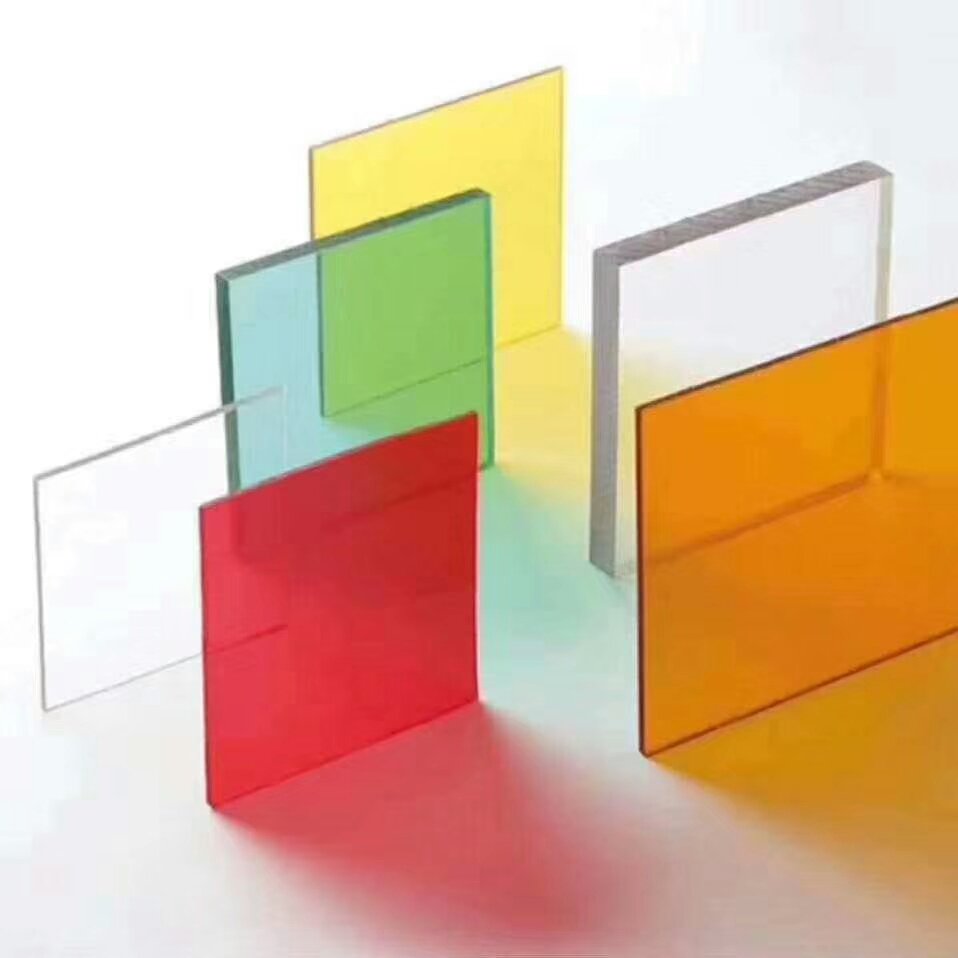
We extrude solid sheet from 1 mm up to 30 mm thick, in standard widths of 1220 mm, 1560 mm, 1820 mm and 2100 mm, with 6 m standard lengths and full custom sizes. That range covers everything from thin sign faces to thick security glazing.
What is multiwall polycarbonate sheet?
Multiwall polycarbonate sheet (also called twin-wall or hollow sheet) is extruded with two or more walls joined by vertical ribs, forming parallel air channels that run the length of the sheet. Those trapped air layers are what make it a better insulator — U-values run from about 1.5 to 3.9 W/m²·K depending on structure — and what keep it light, at 1.0 to 3.5 kg/m². Structures range from simple 2-wall up to 5-wall X-braced and honeycomb cores for large, snow-bearing spans.
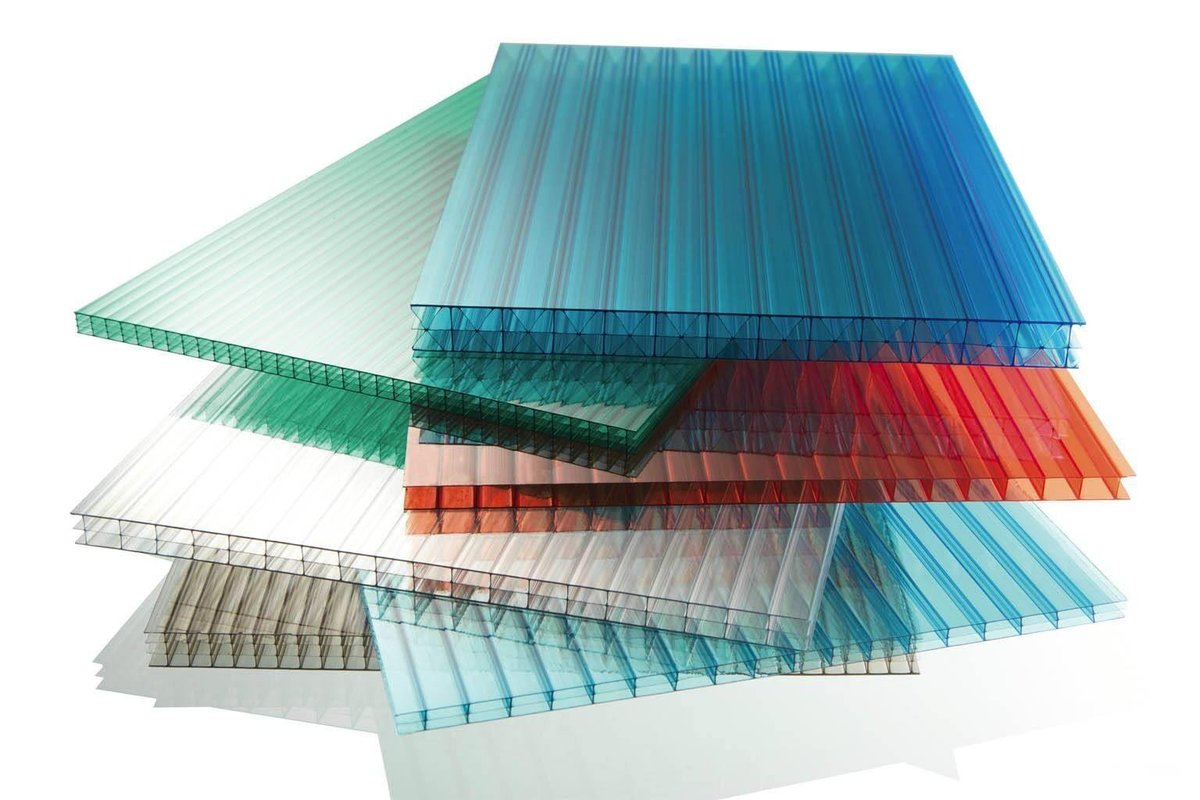
Standard multiwall sheet is 2100 mm wide and 6 m long (custom lengths available), in thicknesses from 4 mm to 30 mm. It is the default material for greenhouses, skylights, carports and factory daylighting strips.
Solid vs multiwall: the key differences
| Feature | Solid PC Sheet | Multiwall PC Sheet |
|---|---|---|
| Structure | Single solid layer | 2–5 wall, X-braced or honeycomb |
| Thickness range | 1–30 mm | 4–30 mm |
| Standard width | 1220 / 1560 / 1820 / 2100 mm | 2100 mm |
| Light transmission | up to 89% (clear) | 25–82% |
| Thermal insulation | Single layer, modest | U-value 1.5–3.9 W/m²·K |
| Weight | 1.2–7.2 kg/m² | 1.0–3.5 kg/m² |
| Impact strength | 200–250× glass | 200× glass |
| Cold bending | Yes — min radius 150× thickness | Limited — along rib direction only |
| Best for | Glazing, guards, signage | Roofing, greenhouses, canopies |
When to choose solid polycarbonate
Pick solid sheet when the job is flat or curved glazing rather than a roof. It is the right call for machine guards and safety shielding, transparent sound barriers, bus shelters, signage and light boxes, swimming-pool enclosures and any application where you need to see through the panel clearly or where impact resistance is the priority. Its cold-bend ability also makes it the go-to for curved walkway canopies and bent glazing.
When to choose multiwall polycarbonate
Pick multiwall sheet when you are building a roof, skylight or enclosure and care about insulation and weight. It is the standard for greenhouses and agricultural tunnels, carports and pergolas, factory daylighting, swimming-pool roofs and large-span atriums. The air channels cut heat loss, and the low weight lets you span wider with lighter framing.
Frequently asked questions
What is the main difference between solid and multiwall polycarbonate?
Structure. Solid sheet is one dense layer, so it is clearer and harder to break; multiwall sheet has hollow air channels between its walls, so it is lighter and insulates better. Most other differences — clarity, weight, insulation, bending — follow from that single structural difference.
Which is stronger, solid or multiwall polycarbonate?
Solid polycarbonate is stronger against impact — about 200–250 times the impact strength of glass, versus roughly 200 times for multiwall. If the panel might take a hit, choose solid sheet.
Which offers better thermal insulation?
Multiwall. The trapped air between its walls brings U-values down to about 1.5 W/m²·K, far better than a single solid layer. For heated or cooled buildings, multiwall is the energy-saving option.
Can both be cold-bent into curves?
Solid sheet cold-bends easily (minimum radius about 150× its thickness). Multiwall sheet can be gently arched along the direction of its ribs but cannot be bent across them, so tight or cross-wise curves call for solid sheet.
Which should I use for a greenhouse roof?
Multiwall polycarbonate. It balances light transmission with the insulation a greenhouse needs, and its low weight keeps the structure simple. Solid sheet is overkill and loses heat faster in that role.
Still not sure which sheet fits your project? Tell our team the span, snow load, light and insulation requirements and we will recommend the right grade and thickness.