For horticultural buildings — flower markets, eco-parks and commercial greenhouses — multiwall polycarbonate is the most cost-effective glazing on the market in 2026. It delivers high light transmission, thermal insulation and impact resistance in a single lightweight panel, which is why these three installations chose twin-wall and multi-wall PC sheets over glass and agricultural film.
Project Overview
This case study reviews three representative daylighting projects:
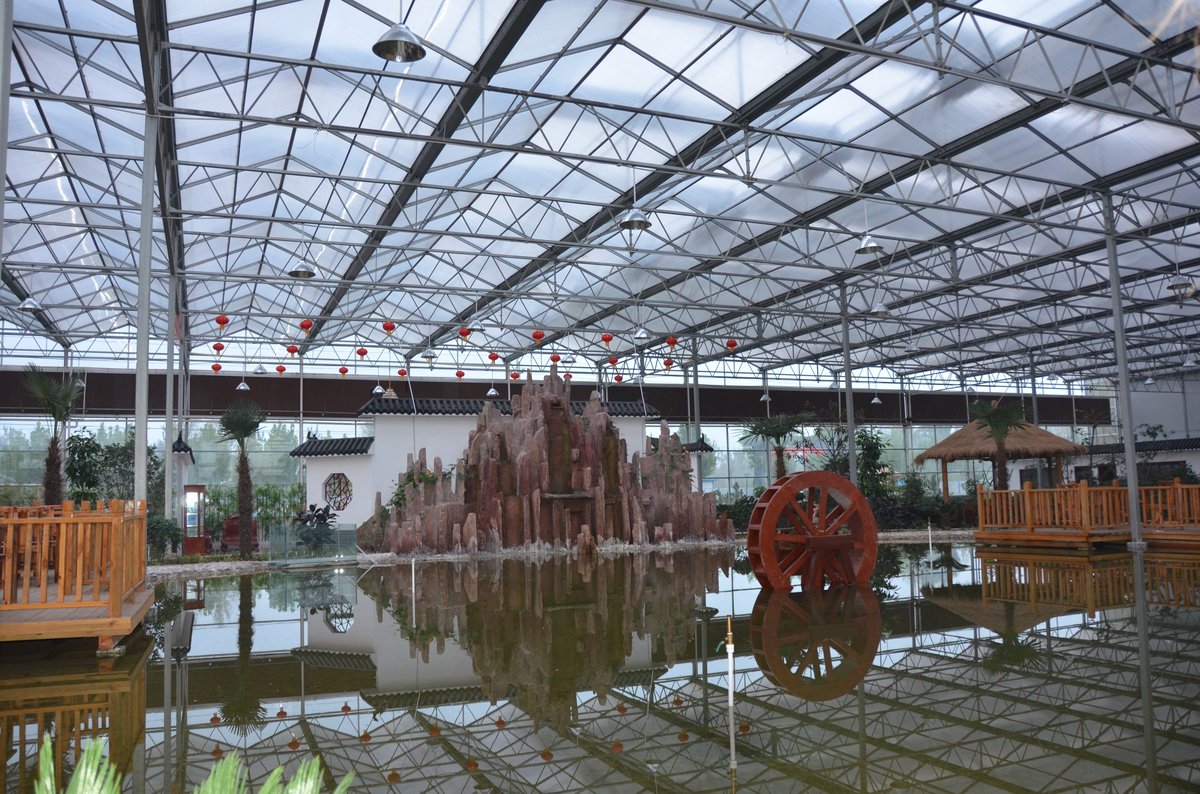
- A 30,000 m² flower market (Beijing South 4th Ring Road) using multiwall PC for the main skylight roof.
- A 10,000 m² ecological park (Shanxi Changzhi) where a steel space-frame carries clear multiwall panels over an indoor garden landscape.
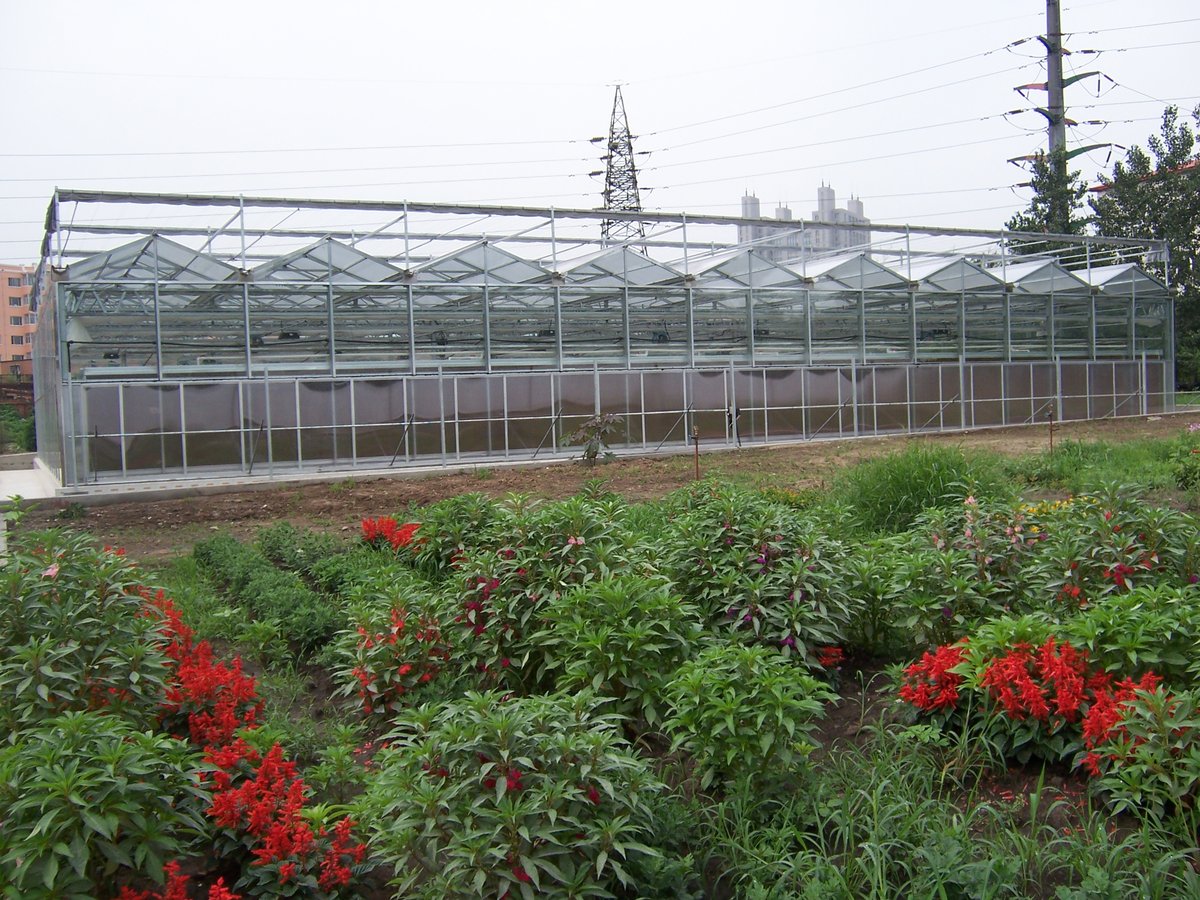
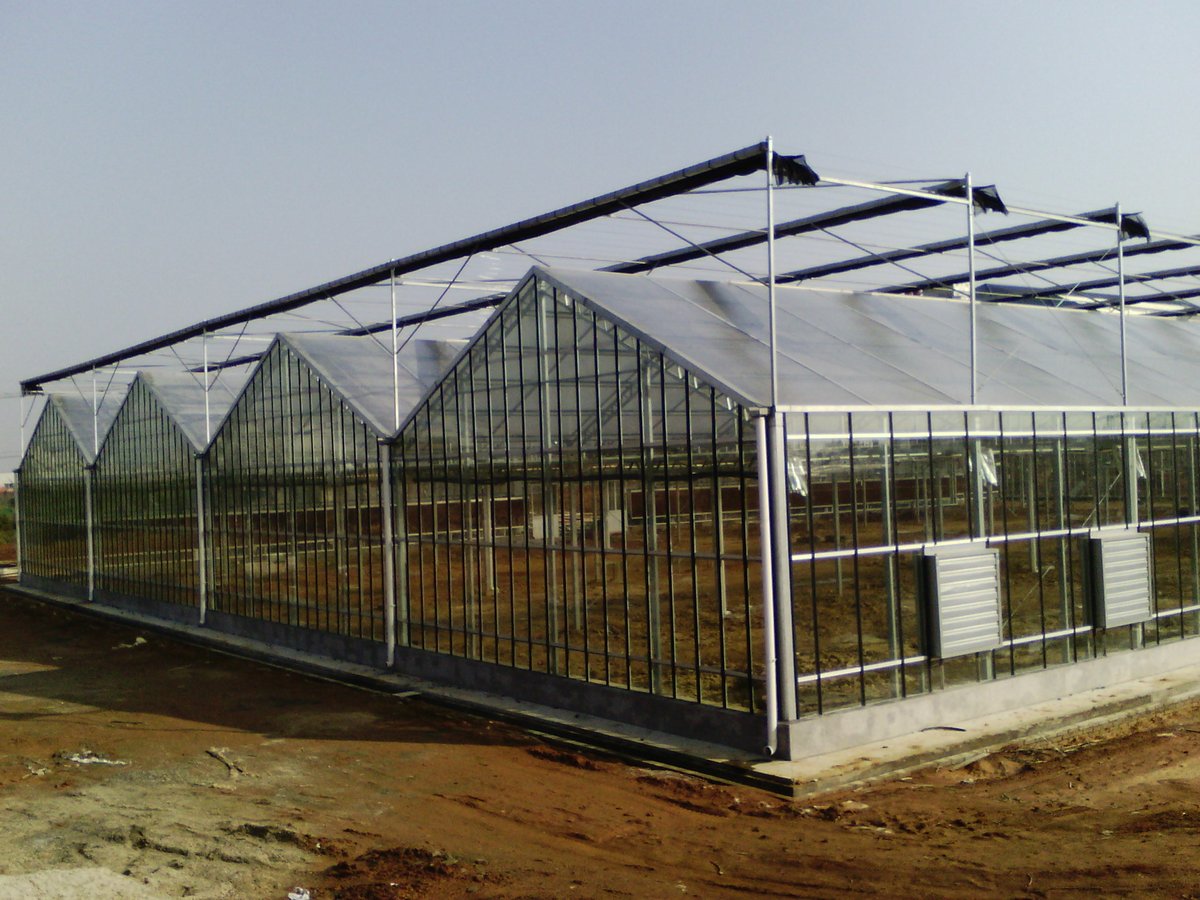
- Commercial multi-span greenhouses covered with twin-wall PC on arched and gable roofs for year-round crop production.
The Challenge
A greenhouse or flower market roof has to deliver three things at once, and most materials fail on at least one:
- Light — plants need 70–82% light transmission, so clear glazing is non-negotiable.
- Insulation — heating is the largest running cost in cold regions, so the roof must hold heat (U-value down to 1.5 W/m²·K).
- Strength — hail, wind and daily handling; polycarbonate is about 250 times more impact-resistant than glass.
Glass is heavy and fragile and lets too much heat escape; agricultural film tears within one to three seasons. A wide-span roof also needs a lightweight panel so the steel frame stays economical.
Our Solution
Jietai supplied multiwall polycarbonate in the industry-standard 2,100 mm width, with 1,220 / 1,560 / 1,820 mm custom widths available, and matched panel thickness to each project’s snow load and span.
| Parameter | Available range |
|---|---|
| Panel width | 2,100 mm standard; 1,220 / 1,560 / 1,820 mm custom |
| Thickness | 4 / 6 / 8 / 10 / 12 / 16 / 20 / 25 / 30 mm |
| Structure | Twin-wall, triple-wall, 4-wall, 5-wall X, honeycomb |
| Light transmission | 25–82% (clear sheets up to 82%) |
| U-value | 1.5–3.9 W/m²·K |
| Panel length | 6 m standard, custom 1–12 m |
| UV protection | Co-extruded layer, 30–50 μm |
Results
- The 30,000 m² flower market now gets even, glare-free daylight, keeping plants healthy and trimming daytime lighting costs.
- The 10,000 m² ecological park holds a bright, climate-controlled indoor landscape that operates all year round.
- The commercial greenhouses keep stable night temperatures in winter, cutting fuel use without sacrificing light.
Why Jietai
Jietai is a manufacturer serving domestic and export buyers. We carry the full multiwall PC range with co-extruded UV protection and custom cut-to-length, and we help you match panel thickness, width and structure to your local snow, wind and light conditions — before you order, not after. Contact our team for a quote.
Frequently Asked Questions
What thickness of multiwall polycarbonate is best for a greenhouse?
8 mm twin-wall is the standard for general greenhouses. For large spans or cold climates, 10–16 mm triple-wall or 4-wall panels give better insulation.
How long do polycarbonate greenhouse panels last?
With a co-extruded UV layer on the weather side, multiwall PC panels typically last 10–15 years, and longer when installed with proper thermal-expansion gaps.
Can multiwall polycarbonate be bent for an arched roof?
Yes. Multiwall PC cold-bends along the flute direction to a minimum radius of roughly 150 times the panel thickness, which suits arched and curved greenhouse roofs.
What is the standard width of greenhouse polycarbonate?
2,100 mm is the industry-standard width and gives the best steel-frame economy. 1,220 / 1,560 / 1,820 mm are available as custom widths.
Is polycarbonate strong enough for hail and snow?
Yes. Polycarbonate is about 250 times stronger than glass, and panel thickness is matched to the local snow load at the design stage.