Ask most people what polycarbonate is for and they will mention light — skylights, greenhouse roofs, glazing. But the same sheets earn their keep in a less obvious job: blocking noise. Because polycarbonate is lightweight, nearly unbreakable, and easy to cut and mount, it turns up again and again in sound-related work: highway noise walls, machine guards, factory partitions, and office dividers. Here is how polycarbonate handles sound, which sheet type blocks more of it, and where it performs best.
How Polycarbonate Sheets Cut Down Noise
Sound moves through a panel by vibrating it. The more mass a panel has, the harder it is to vibrate, so less sound passes to the other side. That is why a thicker sheet always insulates better than a thin one.
Polycarbonate is not the heaviest glazing material — glass is denser — but it brings two things glass cannot: it won’t shatter, and it is far easier to handle. A solid polycarbonate sheet is roughly 200 times more impact-resistant than glass of the same thickness, which is exactly why it is used along highways where stones and debris hit the barrier every day. A glass panel in that spot would crack; a polycarbonate one keeps working.
Solid vs. Multiwall Sheets for Sound Insulation
The sheet structure changes how much noise gets through.
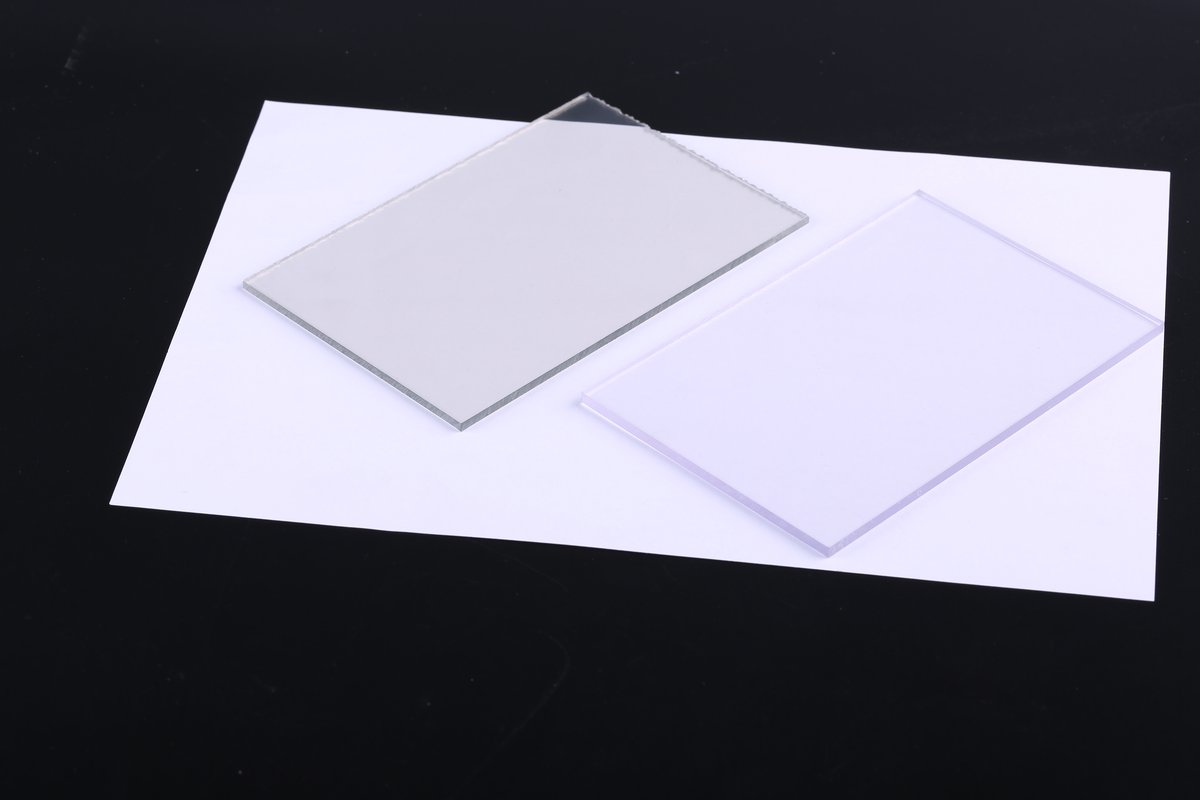
Solid sheets carry more material per square metre, so they follow the mass rule directly — the thicker the sheet, the higher the sound reduction. A 6 mm solid sheet blocks noticeably more sound than a 2 mm one. Solid sheets are the usual choice for machine guards and small partitions where you want a clean, flat, see-through panel.
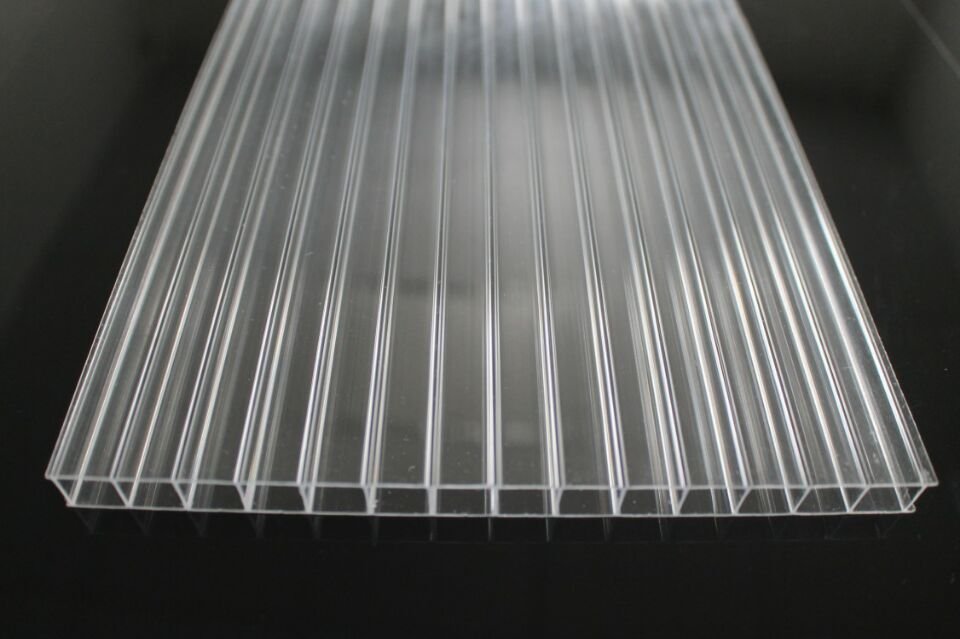
Multiwall sheets work a little differently. Their hollow internal channels trap air, and that trapped air acts as an extra barrier that dampens mid- and high-frequency sound — the frequencies we find most annoying. Multiwall will not match a solid sheet of equal thickness on raw mass, but it adds thermal insulation at the same time, which is why it is popular for factory skylights and enclosure walls where you want both quiet and climate control.
For the strongest result, projects often combine the two ideas: two solid panels with an air gap between them, or a thick multiwall panel. The air gap is itself one of the most effective sound insulators you can add for the money.
What Actually Affects Sound Insulation
Four factors move the needle most:
- Thickness — more material, less sound. This is the biggest lever.
- Air gaps — a sealed cavity between two sheets blocks more than a single thick sheet.
- Sealing — sound leaks through cracks and joints. Gaps around the edges undo most of the benefit, so a well-sealed frame matters as much as the sheet.
- Mounting — flexible mounts and gaskets stop vibration from travelling through the frame itself.
Where Polycarbonate Sound Barriers Are Used
Polycarbonate’s mix of impact resistance, weather resistance, and sound control makes it a fit for several demanding spots:
- Highway and rail noise barriers — thick solid or multiwall panels that shrug off stones and UV.
- Machine guards and enclosures — see-through shields that also quiet noisy production equipment.
- Factory and warehouse partitions — separate loud areas from quiet ones while keeping the space bright.
- Office dividers and acoustic screens — lightweight panels that cut noise without closing a room in.
FAQ
Is polycarbonate a good sound insulator?
It is good, not exceptional. For serious acoustic work, mass and air gaps do the heavy lifting. But where you also need impact resistance, weather resistance, and light transmission, polycarbonate is often the best all-round choice.
Which is better for sound — solid or multiwall polycarbonate?
For pure sound blocking at the same thickness, solid wins on mass. Multiwall adds useful damping from its air channels and gives you thermal insulation too. Pick based on whether you need thermal performance as well.
How thick should a noise barrier sheet be?
It depends on the noise level and distance, but most barriers use at least 8–10 mm solid sheets, or a double-layer system with an air gap. For exact sizing, we will match the spec to your project.
Get the Right Sheet for Your Project
Whether you are planning a noise barrier, a machine enclosure, or a partition wall, the right thickness and structure make the difference. Contact our team for a quote — we will help you pick the polycarbonate sheet that fits your noise and budget targets.