Polycarbonate (PC) sheets come in a wide range of thicknesses — from ultra-thin 0.8mm corrugated panels to heavy-duty 50mm interlocking systems. Choosing the wrong thickness means either overspending on material you don’t need, or worse, installing sheets that fail under load. This guide walks you through the key factors that determine which thickness is right for your specific application.
Why Thickness Matters
Thickness directly affects four critical performance characteristics:
- Structural strength — Thicker sheets resist higher wind loads, snow loads, and impact forces
- Thermal insulation — More thickness (or more wall layers) means lower U-values and better energy efficiency
- Span capability — Thicker panels can bridge wider gaps between support beams without sagging
- Sound reduction — Heavier, thicker sheets provide better acoustic isolation
Thickness Guide by Product Type
1. Multiwall Polycarbonate Sheets (Sunlight Panels)
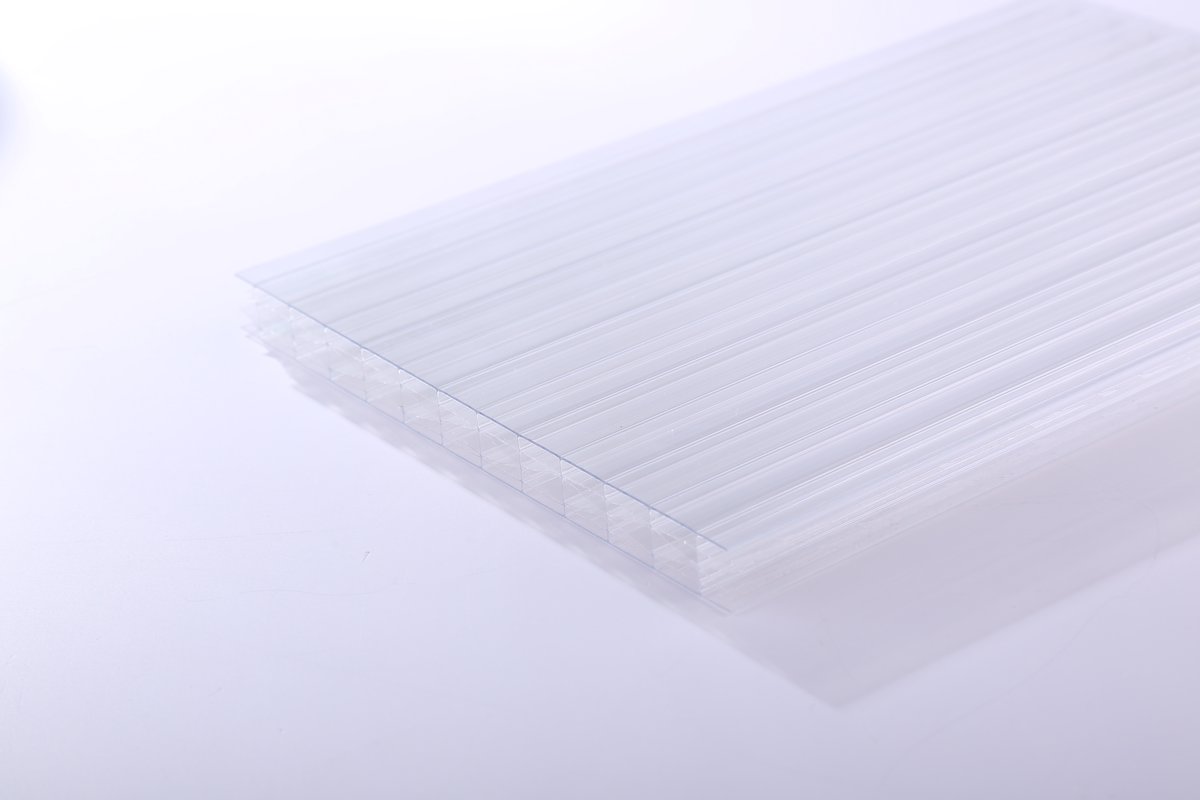
Available in thicknesses from 4mm to 30mm, multiwall sheets are structured with two to five parallel walls separated by air channels. The number of walls — not just overall thickness — determines insulation performance.
- 4–6mm (twin-wall) — Light-duty applications: small canopies, DIY cold frames, partition screens. U-value ~3.5–3.9 W/m²·K. Max span ~600–700mm.
- 8–10mm (twin-wall / triple-wall) — Medium-duty: carports, patio covers, small greenhouses. U-value ~2.5–3.2 W/m²·K. Max span ~800–1000mm.
- 12–16mm (triple-wall / four-wall) — Heavy-duty: commercial greenhouses, large skylights, stadium roofing. U-value ~1.8–2.5 W/m²·K. Max span ~1000–1400mm.
- 20–30mm (five-wall / honeycomb) — Industrial-grade: climate-controlled greenhouses, cold-region buildings, sound barriers. U-value ~1.5–1.8 W/m²·K. Max span ~1400–1800mm.
2. Solid Polycarbonate Sheets
Solid sheets range from 1mm to 30mm. Unlike multiwall, they have no internal air gaps — every millimeter adds weight, strength, and cost proportionally.
- 1–2mm — Indoor glazing, picture frame covers, light diffuser panels. Not for structural use.
- 3–5mm — Machine guards, bus stop shelters, advertising light boxes, interior partitions. Impact-resistant but flexible.
- 6–10mm — Security glazing, swimming pool enclosures, noise barriers. Start of structural-grade performance (200x stronger than glass).
- 12–20mm — Bullet-resistant glazing, high-security barriers, large-span canopies.
- 25–30mm — Maximum security applications, bank teller screens, blast-resistant windows.
3. Corrugated Polycarbonate Sheets
Thinner than multiwall or solid sheets, corrugated panels range from 0.8mm to 3.0mm. They rely on their wave profile for rigidity rather than material thickness alone.
- 0.8–1.2mm — Lightweight roofing for pergolas, walkway covers, patio awnings. Easy to cut and install.
- 1.5–2.0mm — Industrial factory skylights, warehouse roofing. Better hail resistance.
- 2.5–3.0mm — Heavy snow-load regions, livestock building roofs, long-span agricultural sheds.
4. Interlocking & U-Lock Polycarbonate Systems
These specialized tongue-and-groove panel systems use thicker profiles for large-scale facade and roofing applications.
- Interlocking panels (10–50mm): Designed for vertical facade and curtain wall applications. Thicker panels (30mm+) support floor-to-ceiling spans without intermediate framing. Thinner (10–16mm) for interior decorative walls and partitions.
- U-Lock panels (6–40mm): Built for roofing and overhead applications. 6–12mm for small canopies; 20–40mm for large-span stadium roofs, factory skylights, and commercial greenhouses where snow and wind loads are significant.
Key Factors to Consider When Choosing Thickness
1. Span Between Supports
This is the number one engineering consideration. As a rule of thumb: the wider the gap between your support beams or purlins, the thicker your panel needs to be. A 6mm twin-wall panel spanning 600mm between supports is fine; the same panel spanning 1200mm will sag noticeably within a year. Always check the manufacturer’s load/span tables for your specific product.
2. Wind and Snow Load
Your local building code specifies design wind speed and ground snow load. Coastal areas, high-altitude sites, and open plains all require thicker panels or reduced support spacing. For example, a 10mm multiwall panel adequate for a carport in a mild climate may need to be 16mm or more in a region with 50+ psf snow load.
3. Thermal Insulation Requirements
If you’re building a heated greenhouse or climate-controlled space, prioritize U-value over thickness alone. A 16mm five-wall X-structure panel often outperforms a 20mm basic twin-wall panel in insulation because the additional internal walls trap more air. For unheated applications (carports, walkway covers), insulation matters less and you can optimize for cost.
4. Impact Resistance Needs
Areas prone to hail, falling debris, or accidental impact (e.g., sports facilities, school buildings) should use thicker solid or multiwall panels. Solid polycarbonate at 6mm+ offers 200x the impact resistance of glass. Multiwall panels at 10mm+ resist most hail sizes.
5. Budget vs. Longevity
Thicker panels cost more upfront but last longer and perform better. A 4mm twin-wall greenhouse panel may need replacement in 5–7 years; a 16mm five-wall panel can last 15–20 years with proper UV-protected co-extruded surfaces. Factor in replacement labor costs, not just material prices.
Quick Reference: Thickness vs. Application
| Application | Recommended Type | Recommended Thickness |
|---|---|---|
| Small DIY greenhouse | Multiwall | 4–6mm twin-wall |
| Residential carport | Multiwall / U-Lock | 8–10mm |
| Commercial greenhouse | Multiwall | 12–16mm triple/four-wall |
| Factory skylight | U-Lock / Corrugated | 16–25mm (U-Lock) / 2.0–3.0mm (Corrugated) |
| Swimming pool enclosure | Solid | 6–10mm |
| Noise barrier (highway) | Solid | 8–15mm |
| Security window | Solid | 12–20mm |
| Facade / curtain wall | Interlocking | 20–40mm |
| Stadium roof / large span | U-Lock | 25–40mm |
| Interior partition | Interlocking / Solid | 10–16mm (Interlocking) / 3–6mm (Solid) |
Common Mistakes to Avoid
- Assuming thicker always means better insulation — A 16mm five-wall panel insulates better than a 20mm twin-wall. Wall count matters as much as total thickness.
- Ignoring support spacing — Even a 25mm panel will sag if supports are too far apart. Always match panel thickness to your framing grid.
- Using interior-grade thickness outdoors — Panels under 3mm solid or 6mm multiwall aren’t rated for wind and snow exposure.
- Mixing metric and imperial — Suppliers quote in millimeters; your architect’s drawings may be in inches. Double-check conversions to avoid ordering 6mm when you need 6mm (which is about 1/4 inch).
- Skipping thermal expansion allowance — Thicker panels expand more in absolute terms. A 20mm panel needs wider expansion gaps at its edges than a 6mm panel. See our thermal expansion guide for detailed calculations.
FAQ
What thickness polycarbonate sheet do I need for a greenhouse?
For hobby greenhouses, 4–6mm twin-wall polycarbonate is the most popular choice — it’s affordable, easy to cut, and provides adequate insulation for three-season growing. For year-round commercial greenhouses in cold climates, step up to 10–16mm triple-wall or five-wall panels for superior thermal performance and snow load capacity.
Is 4mm polycarbonate strong enough for a carport roof?
Generally, no. Carports need to handle wind uplift, occasional snow, and potential impact from falling branches. 8–10mm multiwall or U-Lock panels are the minimum recommendation. For regions with heavy snow, 12–16mm is safer.
Can I use 2mm solid polycarbonate for outdoor glazing?
2mm solid polycarbonate is too thin for outdoor structural use. It’s suitable for indoor picture frames, display cases, and light diffusers. For outdoor glazing, 4mm is the practical minimum, with 6mm+ recommended for any application exposed to wind.
How do I calculate the right span for my panel thickness?
Each manufacturer publishes load/span tables for their specific products. As a general starting point: twin-wall panels can span approximately 50–60x their thickness in millimeters between supports (e.g., 10mm panel ≈ 500–600mm span). Always verify with the manufacturer’s engineering data for your local wind and snow conditions.
Still not sure which thickness you need? Contact our team for a quote — we’ll help you select the right product based on your project location, span requirements, and budget.