Introduction
Compare polycarbonate (PC) lighting tiles vs FRP roofing materials — durability, light transmission, fire rating, cost, and lifespan. This complete guide covers the key differences between PC and FRP to help you choose the right material for your project.
With the growing demand for roof lighting, energy efficiency, and durability in the construction industry, polycarbonate (PC) lighting tiles and FRP (Fiberglass Reinforced Polyester) roofing materials have become mainstream choices for industrial plants, agricultural greenhouses, public buildings, and other scenarios. Both offer light transmission and light weight, but there are significant differences in material composition, performance, application scenarios, and long-term maintenance. This article briefly compares their core differences to provide professional reference for construction material selection and project procurement.
Core Difference 1: Different Material Compositions
Differences in material composition are the root cause of all other discrepancies.
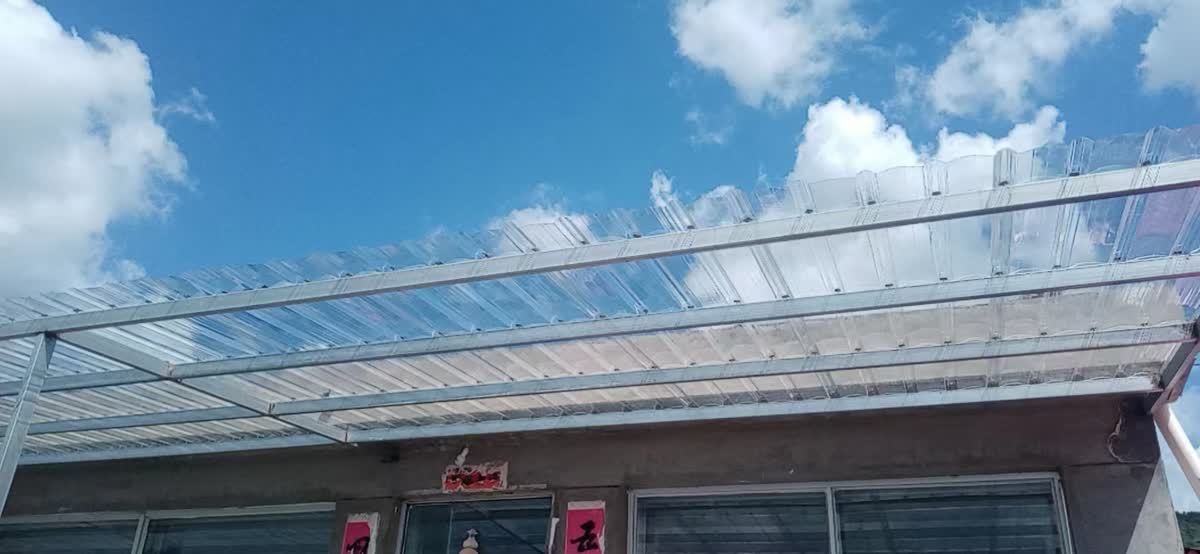
Polycarbonate (PC) lighting tiles are made from polycarbonate resin through extrusion molding. High-quality products are co-extruded with a 50μm anti-ultraviolet (UV) layer on the surface, and some feature a hollow structure. They belong to the category of high-performance engineering plastics, which are environmentally friendly, durable, and free of toxic and harmful substance emissions.
Key Features and Benefits
FRP roofing materials, commonly known as fiberglass lighting tiles, are mainly composed of a surface film, unsaturated resin, and glass fiber. Unsaturated resin serves as the main base material, while glass fiber acts as a reinforcing agent. Styrene solvent is used in the production process; some inferior products may have slight residues of toxic substances, and the resin itself tends to decompose above 50℃, resulting in poor stability[1][4]. Core Difference 2: Comparison of Key Performances
A comprehensive comparison of the two materials across the core performance dimensions of roofing applications is provided below:
Performance DimensionPolycarbonate (PC) Lighting TilesFRP Roofing MaterialsImpact ResistanceExtremely strong, known as “unbreakable plastic”—250 to 300 times stronger than ordinary glass. They are tough, resistant to breakage from hail or heavy impacts, and do not produce sharp fragments when damaged[5].High in strength but insufficient in toughness, with much lower impact resistance than PC tiles. They are prone to cracking and breakage when subjected to external forces, producing sharp fragments[4].Light TransmittanceLight transmittance ranges from 85% to 92%, with pure, transparent light, no fogging, no glare, and a slow decline in light transmittance during long-term use[1][4].Light transmittance ranges from 50% to 85%.
Performance Characteristics
Due to the presence of glass fiber, light scatters diffusely, resulting in poor transparency and a “foggy” visual effect[1][4].Weather ResistanceExcellent. The UV layer blocks 99% of harmful ultraviolet rays, and the tiles can withstand temperatures ranging from -40℃ to 120℃, with a service life of 15 to 25 years[1][4].Poor. Unsaturated resin is prone to aging; 80% of inferior products turn yellow within 1 to 2 years, with a service life of only 5 to 8 years[1][4].Thermal InsulationHollow structure with a thermal conductivity of 0.166 W/m·K, offering thermal insulation performance twice that of FRP[1][4].Thermal conductivity of 0.158 W/m·K, with no hollow structure, resulting in poor thermal insulation[1][4].Flame RetardancyAchieves B1-level flame retardancy without additives and emits no toxic gases when burned[4][5].Flammable, difficult to reach B1-level flame retardancy, posing potential fire hazards and may emit toxic gases when burned[1][4].Corrosion ResistanceModerate; sensitive to organic solvents and not suitable for highly corrosive environments[5].Strong; resistant to acids, alkalis, and chemical gases, making it suitable for chemical workshops[3][4]. Core Difference 3: Construction and Maintenance
PC lighting tiles are lightweight (half the weight of FRP), easy to cut, bend, and splice. They do not require complex reinforcement frames, ensuring high installation efficiency and low maintenance costs[4][5]. FRP roofing materials are relatively heavy, requiring additional support frames during construction.
Common Applications
They are brittle and prone to cracking during processing, demanding high construction standards. Additionally, their poor weather resistance leads to high long-term maintenance costs[1]. Core Difference 4: Application Scenarios
PC lighting tiles are suitable for scenarios requiring high safety, light transmission, energy efficiency, and durability, such as large industrial plants, agricultural greenhouses, stadiums, and high-end public buildings[3][5]. FRP roofing materials are suitable for cost-sensitive, highly corrosive environments with low requirements for light transmission and durability, such as small and medium-sized industrial plants, warehouses, and chemical workshops[3][4]. Purchase Suggestions
For projects prioritizing long-term durability, safety, and energy efficiency, PC lighting tiles are recommended. Choose products with a UV coating and ISO certification[3][5].
PC vs FRP: Summary of Differences
When comparing PC vs FRP roofing materials, consider these key factors: polycarbonate lighting tiles offer superior impact resistance (250-300x stronger than glass), higher light transmittance (85-92%), longer lifespan (15-25 years), and B1-level flame retardancy without toxic emissions. In contrast, FRP roofing materials provide better corrosion resistance and lower upfront cost but have shorter lifespan (5-8 years), lower light transmittance (50-85%), and potential fire hazards. For PC roofing comparison, choose polycarbonate for projects prioritizing durability, safety, and energy efficiency.
Why Choose Jietai
For projects in highly corrosive environments with limited budgets, FRP roofing materials are suitable. Pay attention to the quality of the surface film and the flame retardant ratio[1][4]. Select regular manufacturers with test reports and comprehensive after-sales service to avoid quality issues[3]. Conclusion
PC lighting tiles and FRP roofing materials are differentiated products designed for different scenarios. PC tiles excel in safety, durability, energy efficiency, and light transmission, while FRP materials are superior in corrosion resistance and cost-effectiveness. Selecting materials based on project requirements, budget, and service environment can balance lighting, durability, and cost performance.