Introduction
Southeast Asia experiences high temperatures and intense sunlight year-round, leading many buyers to ask: How does heat affect polycarbonate sheets? In this article, we explain the science behind PC sheet thermal performance and provide practical guidance for installation and material selection in hot climates.
Polycarbonate is one of the most heat-tolerant transparent plastics available. A high-quality PC sheet can withstand continuous operating temperatures from -40°C to 120°C. This means it performs reliably even under the intense tropical sun of Southeast Asia, where surface temperatures on rooftops can exceed 70°C. Unlike acrylic (which softens at 70°C) or PVC (which degrades above 60°C), polycarbonate maintains its mechanical strength and dimensional stability across the entire temperature range encountered in real-world conditions.
How Heat Affects Polycarbonate Sheet Performance
When polycarbonate sheets are exposed to high temperatures, several physical and chemical processes begin to occur. Understanding these changes is essential for proper material selection and installation planning.
Thermal expansion is the most immediate and visible effect. As temperature rises, the molecular structure of polycarbonate expands slightly. While this expansion is reversible (sheets contract when cooled), the dimensional changes must be accommodated during installation. Without proper expansion gaps, sheets can buckle, warp, or crack at fixing points.
Softening and load-bearing capacity also change with temperature. At very high temperatures (above 120°C), polycarbonate begins to soften, reducing its load-bearing capacity. This is why PC sheets should not be used near open flames, industrial furnaces, or in direct contact with hot exhaust pipes.
UV degradation acceleration is another concern. High temperatures accelerate the chemical reactions triggered by UV radiation. In sheets without UV protection, heat and UV together can cause yellowing, surface embrittlement, and loss of impact strength much faster than UV exposure alone.
Thermal Expansion: What You Need to Know
The coefficient of thermal expansion for polycarbonate is approximately 6.5 × 10⁻⁵ /°C. While this is higher than glass or metal, it is a predictable and manageable property. The key is to design for it.
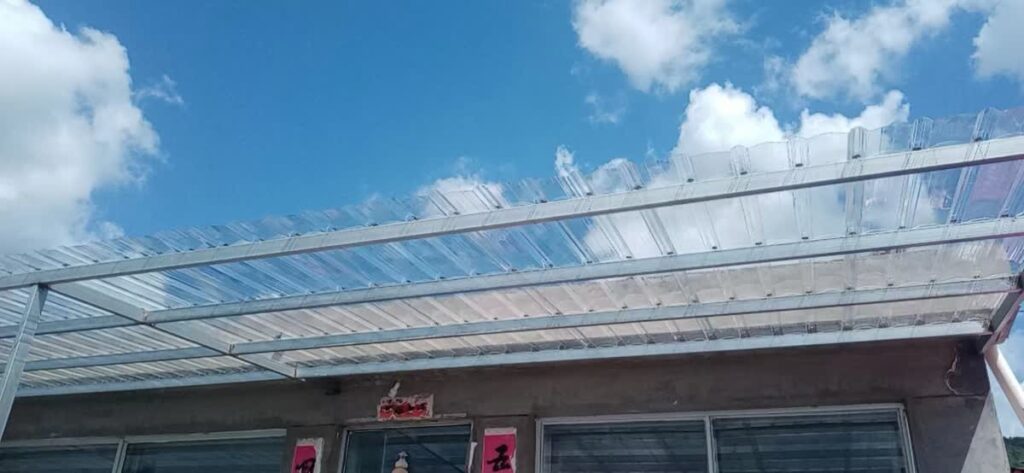
Always leave adequate expansion gaps — typically 3–5 mm per meter of sheet length — during installation. For a standard 6-meter sheet, this means allowing 18–30 mm of total expansion space. Without these gaps, sheets may buckle, arch, or crack at the fixing points when temperatures fluctuate between day and night.
Additional tips for managing thermal expansion:
- Use oversized holes for screw fixings (typically 2–3 mm larger than the screw diameter)
- Do not overtighten screws — leave a small gap for sheet movement
- Install rubber washers under screw heads to allow slight lateral movement
- For multiwall PC sheets, use aluminum profiles with expansion slots built in
- Avoid rigid sealants that bond the sheet to the frame; use flexible gaskets instead
UV and Heat: A Dangerous Combination
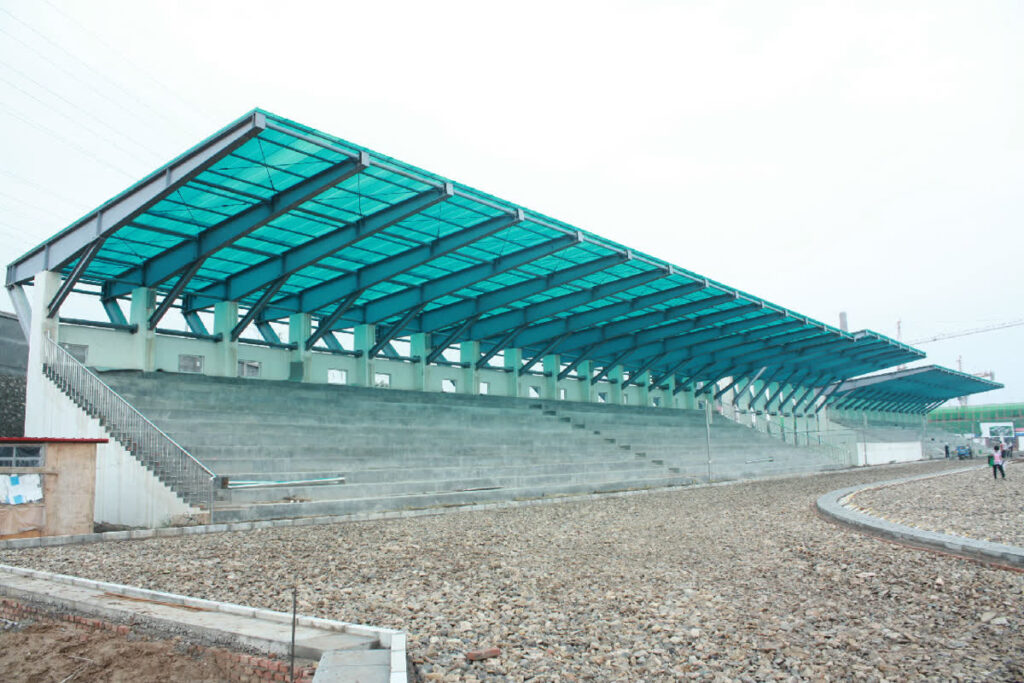
High temperature combined with intense UV radiation can accelerate the aging of polycarbonate sheets — but only if they lack proper UV protection. Premium PC sheets come with a co-extruded UV-resistant layer on one or both sides. This UV coating prevents yellowing, embrittlement, and loss of impact strength for 10+ years, even in extreme tropical climates.
The synergy between heat and UV is important to understand. UV radiation breaks the polymer chains on the surface of the sheet, creating micro-fractures and discoloration. Heat speeds up this molecular breakdown process, meaning that a PC sheet exposed to both high UV and high temperatures will degrade faster than one exposed to UV in a cooler climate.
Always verify that your supplier provides genuine UV-coated virgin material. The UV coating should be co-extruded (bonded during manufacturing), not sprayed or applied as a separate layer, which can delaminate over time.
Virgin vs. Recycled PC: Why Material Quality Matters
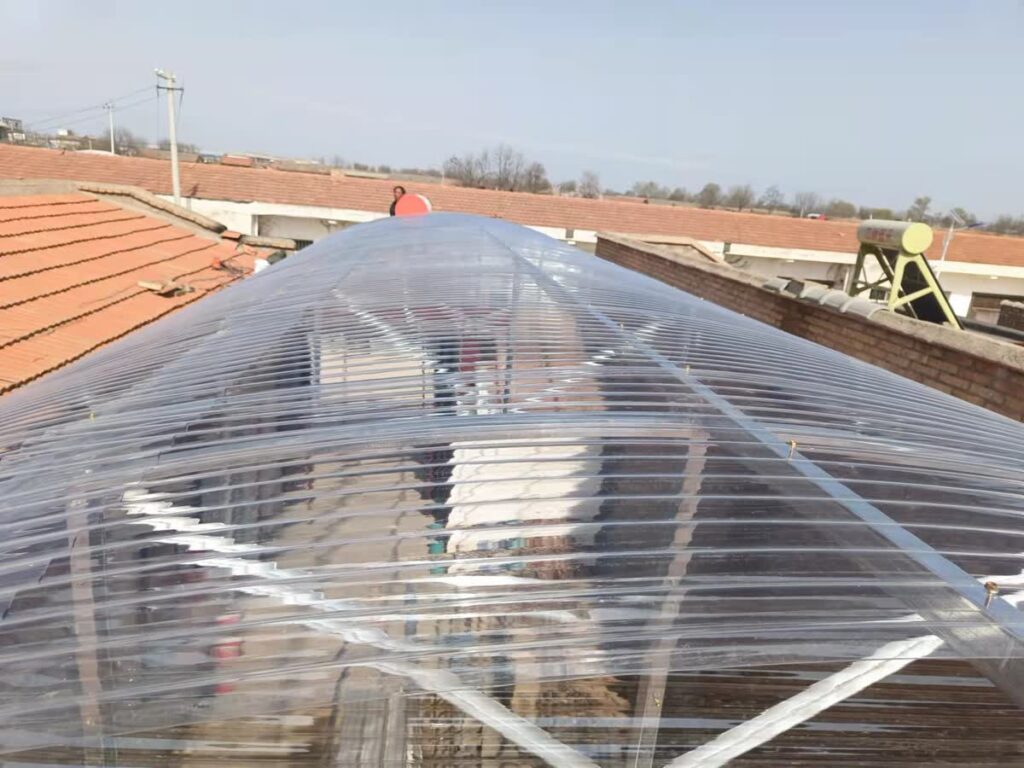
The quality of the raw material dramatically affects high-temperature performance. Sheets made from 100% virgin polycarbonate resin maintain their structural integrity, clarity, and impact resistance even after prolonged heat exposure. Recycled or regrind PC sheets, however, contain degraded polymers that may soften, warp, or discolor when subjected to high temperatures.
When purchasing PC sheets for hot-climate applications, always insist on virgin-material products. Key indicators of virgin material quality include:
- Consistent color and clarity (no yellowing or haziness)
- Uniform thickness across the sheet
- Manufacturer warranty of 10+ years against UV degradation
- Test certifications showing impact resistance above 10 kg·cm/cm² (Izod)
Installation Tips for High-Temperature Environments
Proper installation is critical for the long-term performance of PC sheets in hot climates. Follow these best practices to maximize sheet lifespan and prevent heat-related damage:
- Pre-drill all holes — never nail or screw directly through the sheet without pre-drilling, as this creates stress points that can crack under thermal expansion.
- Use light-colored or reflective profiles — dark aluminum frames absorb more heat and transfer it to the sheet edges, increasing thermal stress.
- Consider sheet orientation — in multiwall panels, orient the flutes vertically to allow hot air to escape through natural convection, reducing internal heat buildup.
- Apply UV-protective tape — seal the top edge of multiwall sheets with UV-resistant tape to prevent dust and moisture from entering the flutes, which can amplify heat absorption.
- Provide adequate ventilation — for enclosed structures like greenhouses or carports, ensure there is airflow above the sheets to prevent heat trapping.
Why Choose Jietai
At Jietai, we manufacture polycarbonate sheets using 100% virgin raw materials and co-extruded UV protection layers. Our sheets are tested for thermal stability, impact resistance, and UV durability to ensure reliable performance in even the most demanding tropical climates.
We offer a full range of PC products suitable for high-temperature environments:
- Multiwall PC sheets — for greenhouses, skylights, and roofing with excellent thermal insulation
- Solid PC sheets — for security glazing, machine guards, and high-impact applications
- Corrugated PC sheets — for factory roofing, carports, and agricultural buildings
All our products come with a 10-year warranty against UV degradation and yellowing. We support custom sizes, thicknesses, and colors to match your project requirements. Factory-direct pricing with fast shipping throughout Southeast Asia.