One of the most common questions from buyers sourcing polycarbonate sheets is: “How long will these sheets last outdoors?” The answer largely depends on UV protection — the single most critical factor determining the service life of polycarbonate panels in outdoor applications.
Why UV Protection Matters
Polycarbonate is an incredibly tough thermoplastic, but without UV stabilization, it degrades rapidly when exposed to sunlight. UV radiation breaks down the polymer chains, causing yellowing, loss of impact strength, and eventual brittleness. Within 2-3 years of unprotected outdoor exposure, standard polycarbonate can lose up to 80% of its mechanical properties.
This is why virtually all polycarbonate sheets intended for outdoor use come with UV protection — not as an optional add-on, but as an integral part of the product.
Co-Extrusion: The Gold Standard
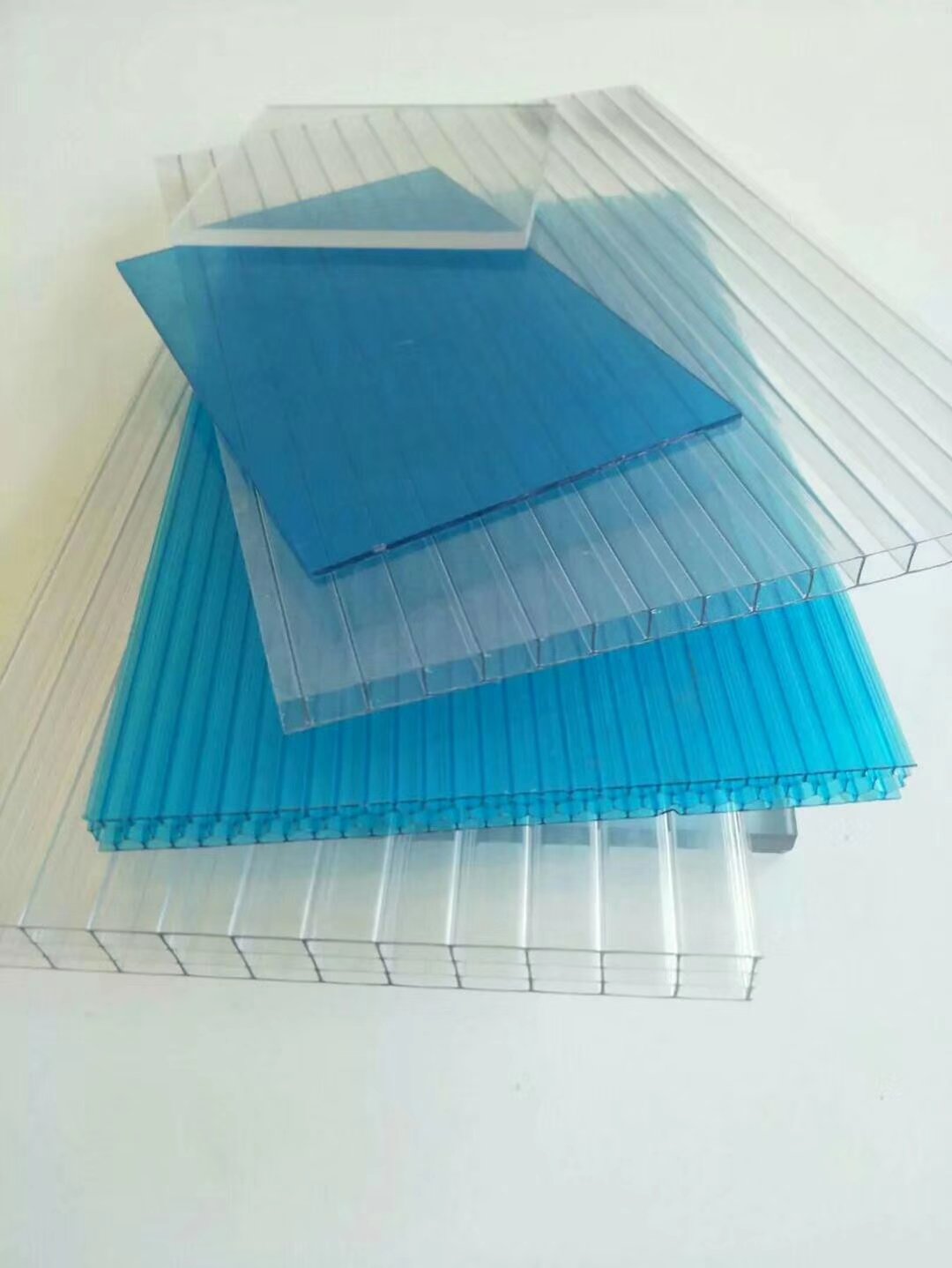
The industry standard for UV protection is co-extrusion. During manufacturing, a thin layer of UV-resistant material (typically containing UV absorbers and stabilizers) is bonded to one or both sides of the polycarbonate sheet at the molecular level. This is not a surface coating that can peel or scratch off — it is fused into the sheet itself.
Key benefits of co-extruded UV protection:
- Permanent bond: The UV layer cannot separate from the base sheet
- Uniform coverage: Even protection across the entire surface
- Long service life: Properly UV-protected sheets typically carry 10-year warranties against yellowing and loss of light transmission
- Minimal maintenance: No need to reapply UV coatings
Single-Side vs. Double-Side Protection
For most applications — roofing, cladding, glazing — single-side UV protection is sufficient: the protected side faces the sun. However, for applications where both sides receive sunlight (vertical glazing, freestanding screens, greenhouse panels), double-side UV protection is recommended.
What Buyers Should Look For
When sourcing polycarbonate sheets, verify the following:
- UV protection specification: Look for “co-extruded UV layer” rather than “UV coated” — the difference is durability
- Warranty terms: Reputable manufacturers offer 10-year limited warranties covering yellowing (typically ΔYI < 5) and light transmission retention
- Layer thickness: The UV protective layer should be at least 30-50 microns for reliable long-term performance
- Test certifications: Ask for accelerated weathering test results (QUV or Xenon arc testing per ISO 4892 or ASTM G154)
Beyond UV: Complete Weathering Resistance
Modern polycarbonate sheets combine UV protection with other weathering enhancements, including impact-modified grades for hail resistance, anti-condensation coatings for greenhouse applications, and anti-dust surface treatments for low-maintenance roofing.
The Bottom Line
UV protection is not a feature to negotiate on — it is the baseline requirement for any outdoor polycarbonate application. Co-extruded UV protection, backed by manufacturer warranty and independent testing, ensures your project’s polycarbonate components maintain their clarity and strength through years of sun exposure.
Contact our team today to discuss UV-protected polycarbonate solutions for your specific project requirements.