Architects and facade contractors face a persistent challenge: finding a cladding material that combines aesthetic appeal, thermal performance, structural integrity, and fast installation — all within budget. Traditional options like glass curtain walls are heavy and expensive, aluminum composite panels offer poor insulation, and stone facades require extensive structural support. Interlocking polycarbonate panels solve all these problems in one modular system.
What Are Interlocking Polycarbonate Panels?
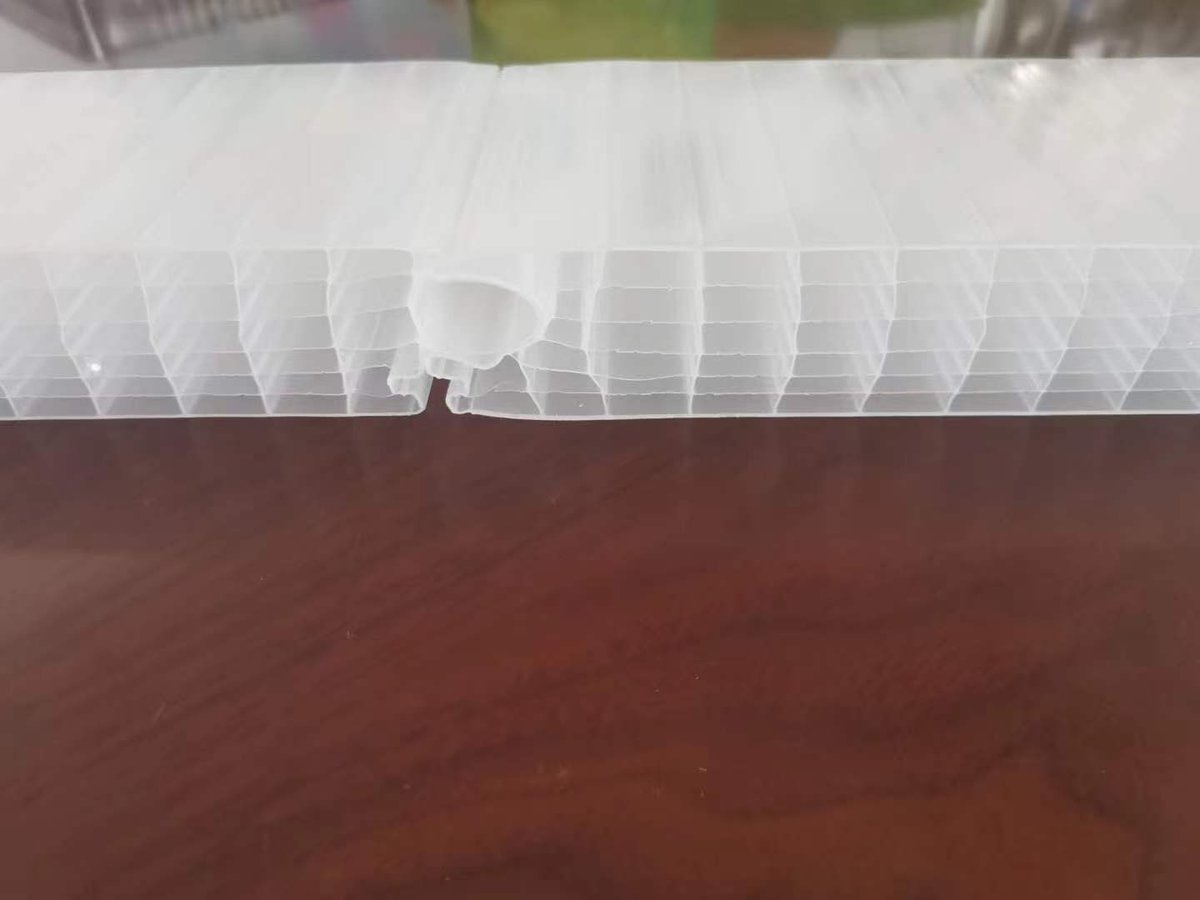
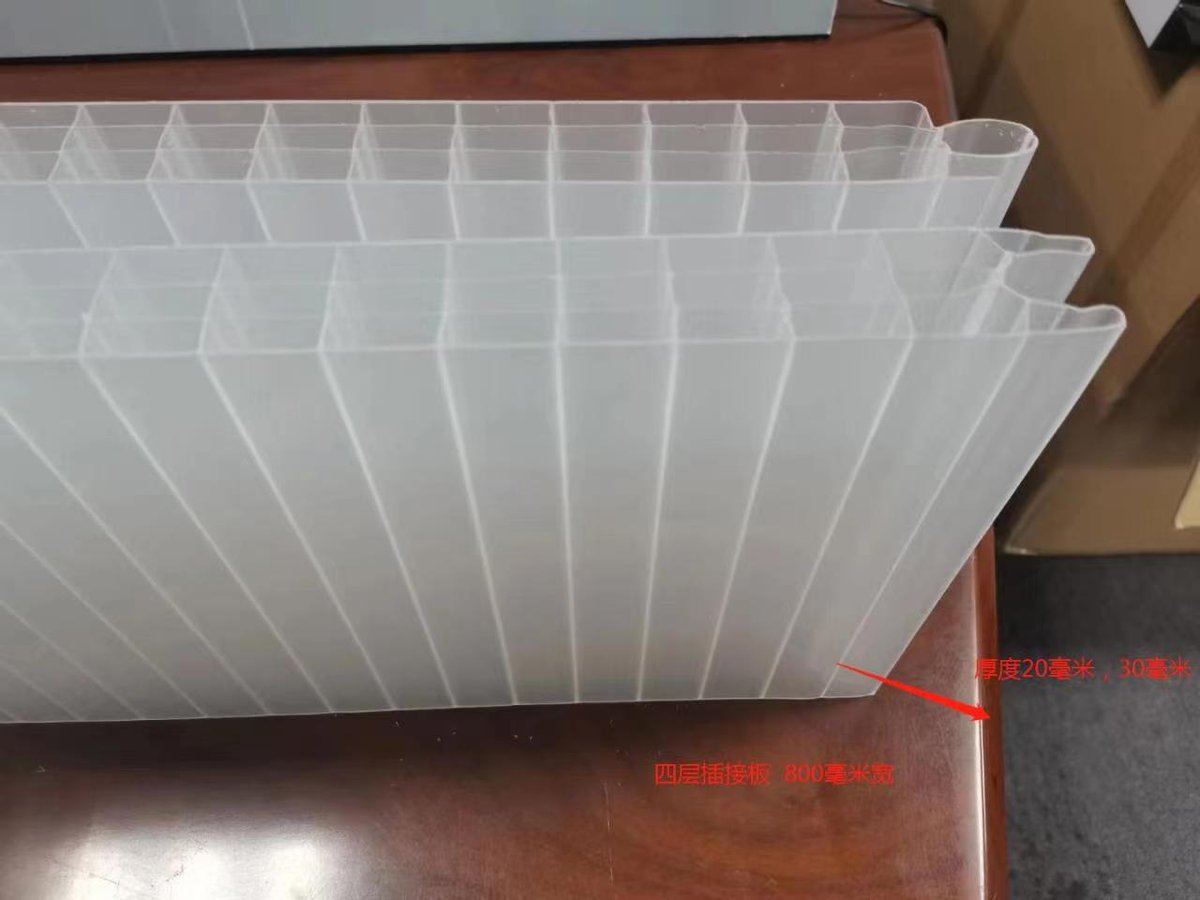
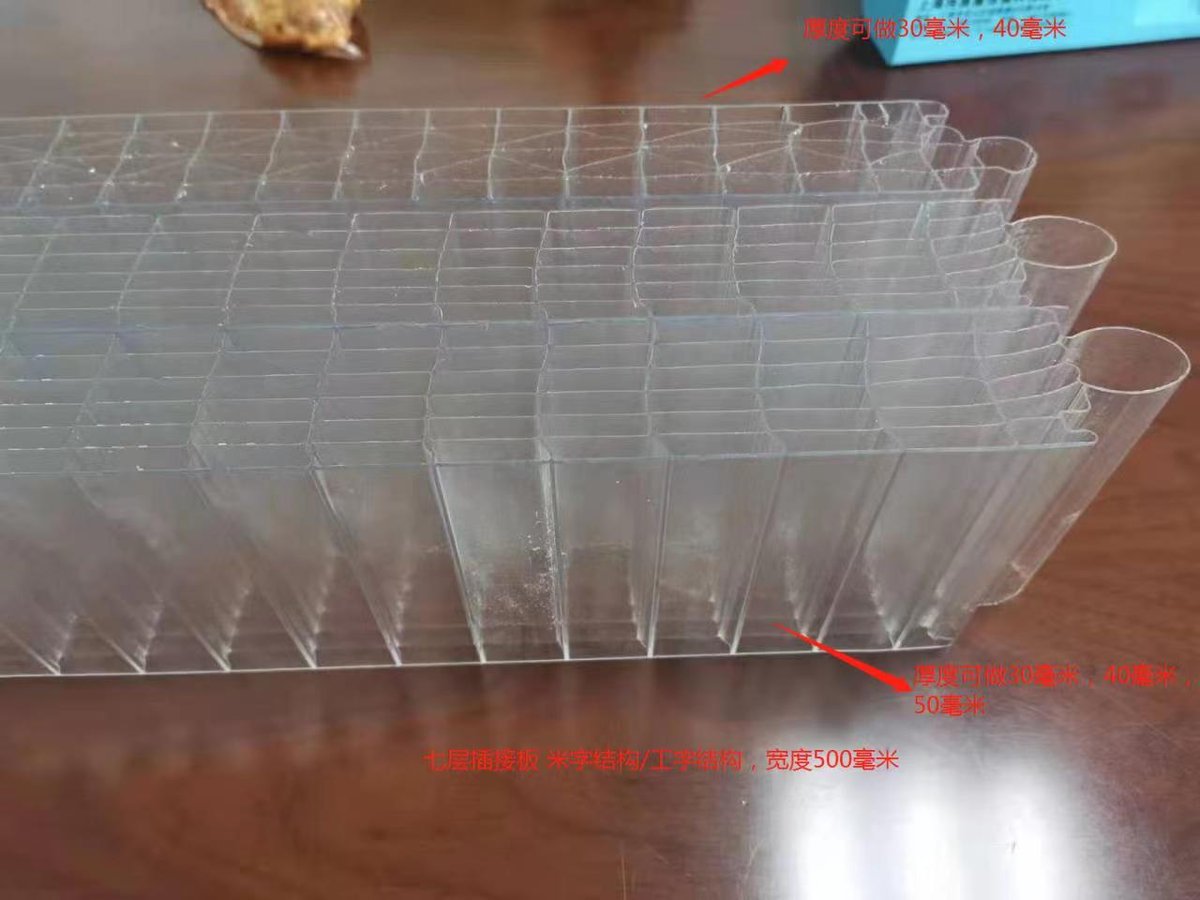
Interlocking polycarbonate panels are multi-wall hollow polycarbonate sheets with precision-engineered tongue-and-groove edges that snap together without metal connectors or exposed fasteners. Each panel features an internal honeycomb or X-reinforced multi-cell structure that delivers exceptional strength-to-weight ratio, thermal insulation, and light diffusion — all in a single self-supporting panel system.
Unlike traditional curtain wall materials, interlocking PC panels install directly onto a substructure with minimal hardware, reducing labor costs by up to 40% while achieving a clean, seamless exterior surface.
Key Benefits for Facade & Curtain Wall Applications
1. Faster Installation, Lower Labor Costs
The tongue-and-groove joining system eliminates the need for metal splice profiles, compression bars, or external fasteners. Panels simply click together, reducing installation time by 30-40% compared to traditional aluminum frame systems. One crew can cover significantly more area per day.
2. Superior Thermal Insulation
With U-values ranging from 0.71 to 3.5 W/m²K (depending on thickness and cell configuration), interlocking PC panels outperform single-glazed glass (U-value ~5.7) and aluminum panels (U-value ~5.5). This translates directly into lower HVAC costs for conditioned buildings and improved comfort for semi-enclosed spaces.
3. Lightweight Structural Advantage
Weighing just 2.0 to 8.0+ kg/m², interlocking panels impose significantly less load on the building frame than glass curtain walls (10-25 kg/m²) or stone cladding (40-75 kg/m²). This allows for lighter structural steel, reduced foundation costs, and easier handling during installation.
4. UV Protection & Weather Resistance
Double-sided co-extruded UV protection (30-50 microns) prevents yellowing and surface degradation for over 10 years of outdoor exposure. Combined with operating temperature range of -40°C to +120°C, these panels withstand extreme climates from Scandinavian winters to Middle Eastern summers.
5. Light Diffusion & Visual Comfort
The translucent multi-wall construction diffuses natural daylight evenly across the facade surface, eliminating harsh glare and hotspots while maintaining 20-82% light transmission depending on color and thickness. This creates visually comfortable interior spaces with reduced reliance on artificial lighting.
Technical Specifications
| Parameter | Available Range |
|---|---|
| Panel Width | 500 mm |
| Thickness Options | 10 mm, 12 mm, 16 mm, 20 mm, 25 mm, 30 mm, 40 mm, 50 mm |
| Structure Type | 3-wall → 5-wall X-reinforced → Honeycomb/Multi-cell → 9-cell Ultra-Thick |
| Standard Length | 6,000 mm (custom 1,000–12,000 mm, max 16,500 mm) |
| UV Protection | Double-sided co-extrusion, 30–50 microns |
| U-Value | 0.71 – 3.5 W/m²K |
| Light Transmission | 20–82% (depending on color & thickness) |
| Weight | 2.0 – 8.0+ kg/m² |
| Fire Rating | B1 (GB 8624), UL94 V-2, Euroclass B-s1,d0 |
| Temperature Range | -40°C to +120°C |
| Colors | Clear, Opal, Bronze, Blue, Green, Grey, Pink Diffusion, Custom RAL |
Applications
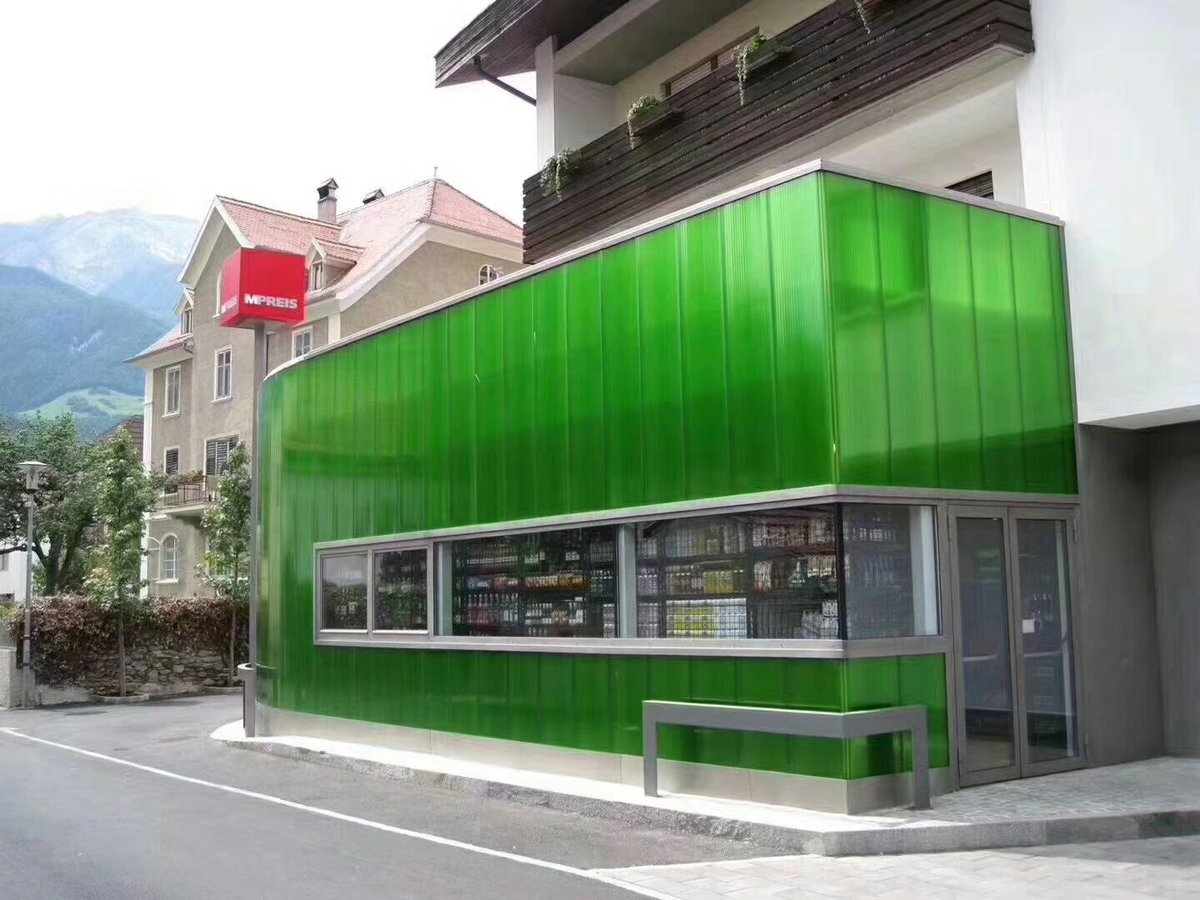
Interlocking polycarbonate panels are purpose-designed for vertical and near-vertical facade installations:
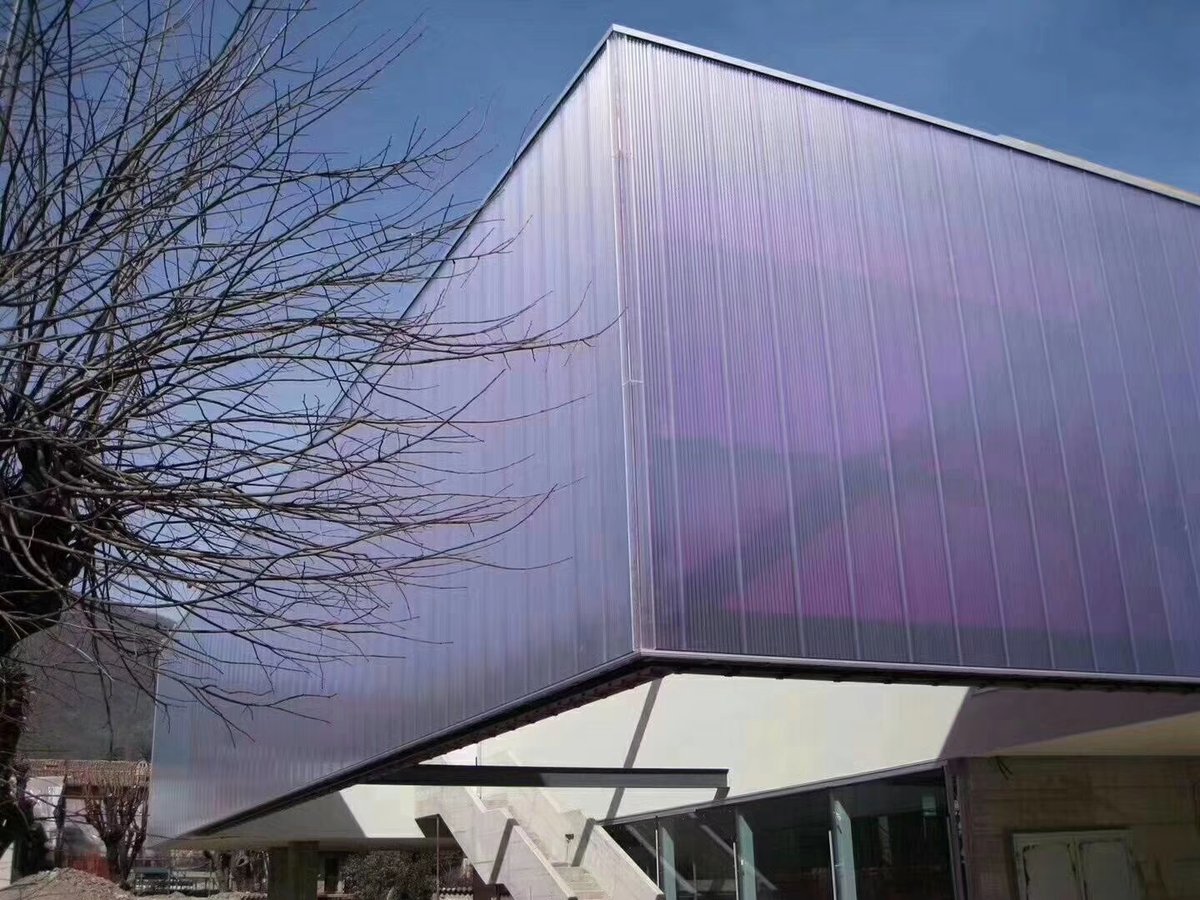
- Commercial Building Facades — Office towers, retail centers, and mixed-use developments seeking a modern translucent exterior
- Curtain Wall Systems — Self-supporting ventilated facade systems for new construction or retrofit projects
- Storefront Canopies — Branded entrance canopies and walkway covers for retail and hospitality
- Atrium & Courtyard Cladding — Interior light courts and building cores requiring diffused natural light
- School & Sports Facility Walls — Gymnasiums, pool enclosures, and multi-purpose halls needing impact resistance
- Architectural Renovation — Updating aging building exteriors with lightweight, energy-efficient cladding
Note: Interlocking panels are designed for vertical facade applications. For roofing and overhead glazing, please refer to our U-Lock Polycarbonate System.
Customization Options
As a specialized polycarbonate supplier, Jietai offers full customization to match project requirements:
- Custom Colors — Any RAL color matched for architectural consistency
- Custom Lengths — Panels cut to exact project dimensions, up to 16.5 meters
- Thickness Combinations — Different panel thicknesses within the same facade for visual rhythm
- UV Layer Options — Single or double-sided, standard or enhanced protection
- Aluminum Substructure — Complete T-bar aluminum support systems available
Certifications & Quality Assurance
Jietai interlocking polycarbonate panels carry multiple international certifications:
- B1 Fire Rating (GB 8624) — China national standard for flame-retardant building materials
- UL94 V-2 — Underwriters Laboratories flammability classification
- Euroclass B-s1,d0 — European fire performance standard
- 10-Year Limited Warranty against UV degradation and manufacturing defects
- ISO 9001 quality management system compliant supply chain
Frequently Asked Questions
How do interlocking PC panels compare to glass curtain walls?
Interlocking PC panels are 60-80% lighter than glass, provide better thermal insulation (U-value 0.71 vs glass 2.7-5.7), and cost significantly less per square meter installed. Glass offers higher clarity, while PC panels provide diffused light and superior impact resistance (250x stronger than glass).
Can interlocking panels be used on curved facades?
Interlocking PC panels are designed for flat vertical installations. For curved or arched facade applications, we recommend our U-Lock Polycarbonate System which supports cold bending with minimum radius of 3-8 meters.
What is the expected service life?
With proper installation and the double-sided UV protection layer, interlocking panels maintain their mechanical properties and appearance for 10+ years. The material does not yellow, crack, or become brittle within normal service conditions.
Do the panels require special cleaning or maintenance?
No. The smooth panel surface is self-cleaning to a degree — rain washes away most dust and dirt. For periodic cleaning, standard mild detergent and water with a soft cloth or sponge is sufficient. Avoid abrasive cleaners or high-pressure washing directly at panel edges.
What support system is needed for installation?
Panels install onto an aluminum T-bar substructure fixed to the building frame. The tongue-and-groove edges interlock directly — no additional clips, caps, or compression bars are required. A complete installation guide and technical drawings are available upon request.
Get a Quote for Your Facade Project
Ready to specify interlocking polycarbonate panels for your next curtain wall or facade project? Contact our team for competitive pricing, technical drawings, and free samples.
Request a quote or download our complete product catalog with full technical specifications.